
Introduction
India is one of the fastest-growing markets for imported products. However, before many products can be sold in the country, foreign manufacturers must comply with the quality and safety regulations established by the Bureau of Indian Standards (BIS). Obtaining a BIS License for Foreign Manufacturer is often a mandatory requirement for products covered under Indian regulations. If you are planning to export products to India, understanding the BIS Certificate for Foreign Manufacturer, BIS Certification for Foreign Manufacturer, and BIS Registration for Foreign Manufacturer is essential. This guide explains the complete process, eligibility, benefits, and compliance requirements.
What is a BIS License for Foreign Manufacturer?
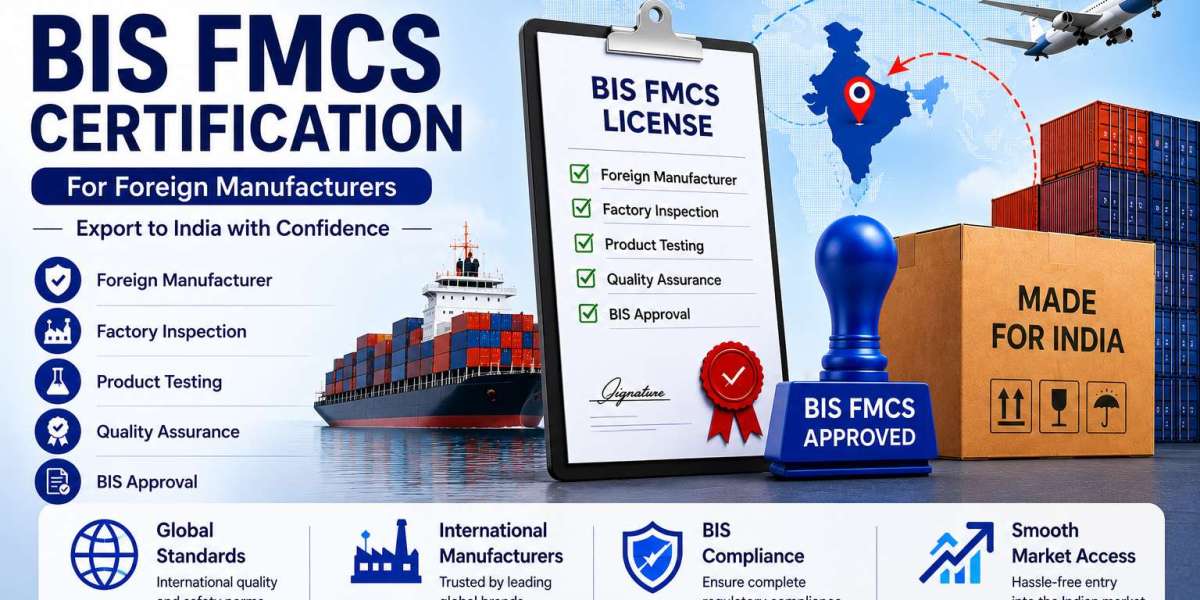
A BIS License for Foreign Manufacturer is an approval issued by the Bureau of Indian Standards (BIS) that allows overseas manufacturers to manufacture and export specified products to the Indian market after meeting applicable Indian Standards (IS). Foreign manufacturers must demonstrate that their products comply with the required quality, safety, and performance standards before they can legally sell regulated products in India. Depending on the product category, certification may be granted under different BIS schemes, such as the Foreign Manufacturers Certification Scheme (FMCS) or the Compulsory Registration Scheme (CRS).
What is a BIS Certificate for Foreign Manufacturer?
A BIS Certificate for Foreign Manufacturer is the official certification document issued after successful evaluation of the product, manufacturing facility, and quality management system.
The certificate confirms that:
The product complies with applicable Indian Standards.
The manufacturing process follows BIS requirements.
The factory has adequate quality control systems.
The product has successfully passed laboratory testing.
The manufacturer is authorized to supply certified products to India.
Holding a BIS Certificate increases the credibility of foreign manufacturers and simplifies access to the Indian market.
What is BIS Certification for Foreign Manufacturer?
BIS Certification for Foreign Manufacturer is the complete process through which overseas manufacturers obtain approval from BIS before exporting regulated products to India.
The certification process typically includes:
Product identification
Selection of the applicable Indian Standard
Laboratory testing
Document verification
Factory inspection (where applicable)
Certificate issuance
Ongoing surveillance and compliance
Manufacturers must maintain consistent product quality even after certification to retain their BIS approval.
What is BIS Registration for Foreign Manufacturer?
BIS Registration for Foreign Manufacturer refers to the formal application and approval process for products that fall under applicable BIS registration schemes. The registration process ensures that imported products satisfy Indian safety and quality requirements before entering the Indian market. Manufacturers are generally required to appoint an Authorized Indian Representative (AIR) if they do not have a registered office in India. The AIR acts as the official liaison between the foreign manufacturer and BIS throughout the certification process.
Who Needs a BIS License for Foreign Manufacturer?
Foreign manufacturers exporting regulated products to India may require BIS approval, including manufacturers of:
Electrical appliances
Electronic products
Steel products
Cement
Medical devices
Construction materials
Industrial machinery
Automotive components
Consumer goods
Chemicals and related products
The requirement depends on the applicable Indian Standard and Quality Control Order (QCO).
Step-by-Step Process for BIS Certification for Foreign Manufacturer
1. Identify the Applicable Standard
Determine the Indian Standard (IS) applicable to the product.
2. Prepare Required Documents
Compile all necessary documents, including:
Company registration certificate
Factory license
Manufacturing process details
Product specifications
Quality management documents
Testing reports (if available)
3. Appoint an Authorized Indian Representative (AIR)
If required, appoint an AIR to represent the manufacturer before BIS.
4. Submit the Application
Apply through the BIS portal with all required documents and applicable fees.
5. Product Testing
Samples are tested in BIS-recognized laboratories to verify compliance with Indian Standards.
6. Factory Inspection
For schemes such as FMCS, BIS officials may inspect the overseas manufacturing facility to assess production capabilities and quality control systems.
7. Grant of BIS License
Once BIS is satisfied with the documentation, inspection, and testing results, the manufacturer receives the BIS License.
Documents Required for BIS Registration for Foreign Manufacturer
The BIS Certificate for Foreign Manufacturer on the certification scheme, but generally includes:
Business registration certificate
Factory license
Manufacturing flow chart
Product drawings and specifications
Quality control manual
Testing reports
List of manufacturing equipment
Calibration certificates
Authorized Indian Representative documents
Trademark authorization (if applicable)
Submitting complete and accurate documentation helps avoid delays during the certification process.
Benefits of BIS Certification for Foreign Manufacturer
Obtaining BIS certification offers several advantages.
Legal Access to the Indian Market
Many regulated products cannot be imported into India without BIS approval.
Improved Customer Confidence
Certified products are trusted because they meet Indian quality and safety standards.
Regulatory Compliance
Certification ensures compliance with mandatory government regulations.
Competitive Business Advantage
BIS-certified products enjoy greater acceptance among distributors, retailers, and consumers.
Enhanced Brand Reputation
Demonstrating compliance with Indian Standards strengthens the manufacturer's reputation and credibility.
Common Challenges Faced by Foreign Manufacturers
While applying for BIS certification, manufacturers may encounter challenges such as:
Incomplete documentation
Incorrect product classification
Laboratory testing failures
Delays in appointing an Authorized Indian Representative
Non-compliance with Indian Standards
Quality control deficiencies identified during inspections
Careful planning and preparation can help minimize these issues.
Tips for Successful BIS Registration
To improve the chances of successful certification:
Understand the applicable Indian Standard before applying.
Maintain consistent product quality.
Ensure all documents are complete and accurate.
Conduct internal quality checks before laboratory testing.
Keep production records well organized.
Respond promptly to BIS queries and inspection requirements.
Following these best practices can reduce approval time and help maintain ongoing compliance.
Conclusion
Obtaining a BIS License for Foreign Manufacturer is an essential step for companies planning to export regulated products to India. Whether applying for a BIS Certificate for Foreign Manufacturer, completing the BIS Certification for Foreign Manufacturer process, or securing BIS Registration for Foreign Manufacturer, compliance with Indian Standards is critical for legal market access and long-term business success. A properly certified product demonstrates quality, safety, and regulatory compliance, helping manufacturers build trust with customers and expand their presence in the Indian market.