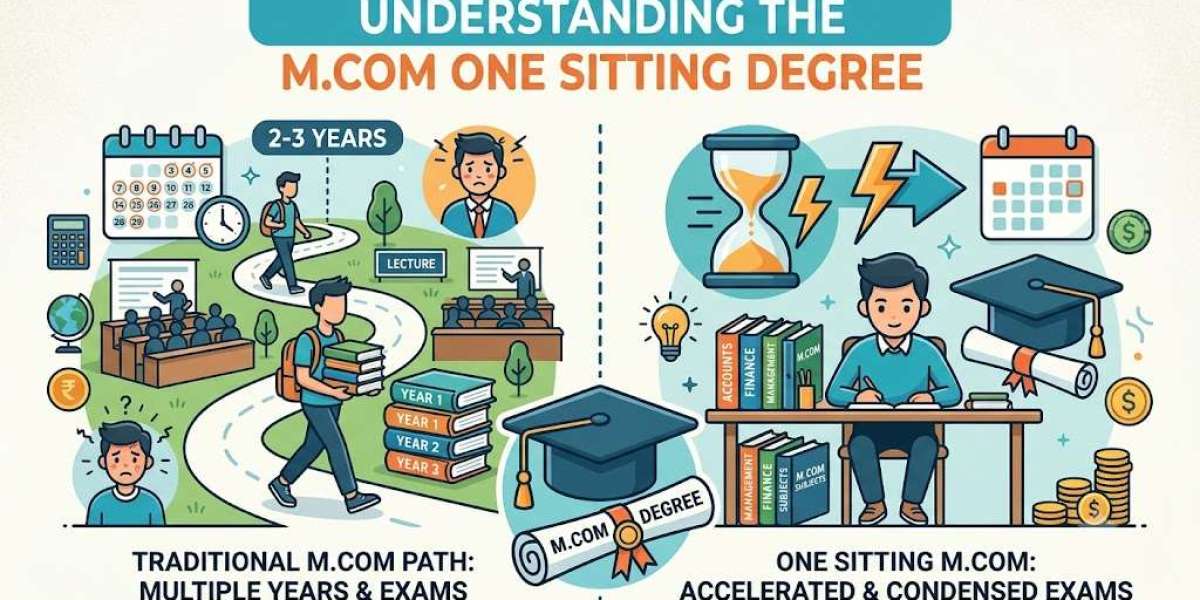

A Master of Commerce (MCom) is a postgraduate degree designed for students who want advanced knowledge in accounting, finance, taxation, economics, banking, business management, and related areas. It is a popular choice among commerce graduates who want to improve their career opportunities, prepare for teaching roles, or pursue further professional qualifications.
Many students and working professionals search online for an "MCom One Sitting Degree" as a way to complete their postgraduate education through a flexible learning pathway. Before applying, it is important to understand what this term means, who may be eligible, and how to select a recognised programme.
This guide explains everything you need to know about an MCom One Sitting Degree, including eligibility, admission, career opportunities, and important considerations.
What Is an MCom One Sitting Degree?
The phrase "MCom One Sitting Degree" is commonly used to describe flexible academic options that may involve mechanisms such as credit transfer, recognition of previous academic work (where applicable), or other university-approved provisions.
The exact process depends on the university and its academic regulations. The term "One Sitting Degree" is not a standard academic qualification, so students should carefully verify the university's recognition, admission process, and programme structure before enrolling. Some official guidance has previously addressed restrictions around enrolling students specifically for "one sitting" MCom programmes, making it important to confirm current rules with the institution.
Who Can Apply for an MCom Programme?
Eligibility depends on the university, but generally the following candidates may apply for MCom programmes:
BCom Graduates
Students who have completed a recognised Bachelor of Commerce (BCom) degree are commonly eligible for admission to MCom programmes. Many universities also consider related commerce and management qualifications according to their admission policies.
Working Professionals
Professionals working in accounting, finance, banking, taxation, insurance, or business administration may pursue an MCom to enhance their qualifications while continuing their careers.
Flexible learning options can help professionals manage work and higher education together.
Students with Academic Gaps
Students who had a break after completing their bachelor's degree may still apply for postgraduate programmes if they fulfil the university's eligibility requirements.
Graduates from Related Fields
Some universities may accept graduates from related disciplines, depending on their admission criteria. Applicants should check the specific eligibility rules of their chosen institution.
Eligibility Criteria for MCom
Although requirements vary, applicants generally need:
A recognised bachelor's degree.
Required marks or grades as specified by the university.
Academic documents from previous institutions.
Valid identity proof.
Passport-size photographs.
Additional documents requested during admission.
Always check the official admission notification before applying.
Documents Required
Applicants may need to submit:
Class 10 mark sheet and certificate.
Class 12 mark sheet and certificate.
Bachelor's degree certificate.
Graduation mark sheets.
Transfer certificate (if required).
Migration certificate (where applicable).
Government-issued identity proof.
Passport-size photographs.
Address proof.
Document requirements may differ between universities.
Why Choose an MCom Degree?
An MCom programme provides advanced knowledge and specialised skills in commerce and finance-related areas.
Key benefits include:
Advanced understanding of accounting and finance.
Better career opportunities in commerce-related fields.
Preparation for teaching and research careers.
Support for professional certifications.
Improved analytical and decision-making skills.
Subjects Covered in an MCom Programme
The curriculum varies by university, but common subjects include:
Advanced Accounting
Corporate Finance
Financial Management
Business Research Methods
Taxation
Banking and Financial Services
Cost Accounting
Auditing
Economics
Business Laws
Corporate Governance
Statistics
Investment Management
Project Work
These subjects help students develop advanced business and financial knowledge.
Career Opportunities After MCom
A recognised MCom degree can create opportunities in various sectors, including:
Banking and Financial Services
Accounting Firms
Insurance Companies
Corporate Finance Departments
Educational Institutions
Government Organisations
Tax Consultancy Firms
Research Organisations
Common job roles include:
Accountant
Finance Executive
Financial Analyst
Tax Consultant
Audit Associate
Banking Officer
Accounts Manager
Business Analyst
Lecturer (subject to applicable qualifications)
Research Assistant
Career growth depends on skills, experience, additional certifications, and employer requirements.
Higher Education After MCom
After completing MCom, students may explore several options:
PhD in Commerce or related fields
Professional certifications in finance and accounting
Research programmes
Teaching and academic careers
Management programmes such as MBA
Students interested in academic careers should check the eligibility requirements for teaching and research positions.
How to Choose the Right University
Before enrolling in any MCom programme, consider the following factors:
Verify Recognition
Choose a university that is recognised by appropriate educational authorities and offers programmes according to applicable regulations.
Check Programme Details
Understand:
Admission eligibility
Course duration
Examination pattern
Assessment methods
Learning mode
Degree award process
Compare Fees
Review the complete fee structure, including tuition fees, examination charges, and additional costs.
Check Student Support
A good institution should provide:
Academic guidance
Study materials
Online support
Examination assistance
Career counselling
Important Things to Remember
Before applying:
Verify the university's recognition status.
Read official admission guidelines carefully.
Avoid institutions making unrealistic promises.
Understand the programme structure before paying fees.
Keep copies of all academic documents.
Confirm the degree's acceptance for your career goals.
Choosing a transparent and recognised academic pathway helps protect your educational investment.
Frequently Asked Questions
Is an MCom One Sitting Degree recognised?
Recognition depends on the university, programme structure, and applicable educational regulations. Students should verify the institution's approval status and academic process before admission.
Can working professionals apply for MCom?
Yes. Many flexible learning programmes are designed for working professionals who meet the eligibility requirements.
Can I pursue teaching after MCom?
Yes, an MCom can support academic career paths, subject to meeting additional eligibility requirements for teaching positions.
Can I pursue a PhD after MCom?
Students may be eligible for doctoral programmes if they meet the admission requirements of the institution offering the PhD.
Is MCom useful for a finance career?
Yes. MCom provides advanced knowledge in accounting, finance, taxation, and business, which can support careers in financial services and corporate sectors.
Conclusion
An MCom degree is a valuable postgraduate qualification for students interested in commerce, finance, accounting, banking, and academic careers. Flexible education options have helped many learners continue their studies while managing professional and personal responsibilities.
However, the term "MCom One Sitting Degree" should be understood carefully. Before enrolling, verify the university's recognition, understand the admission process, and confirm that the programme follows applicable educational regulations. Selecting a recognised and reliable academic pathway will help you achieve your long-term career and education goals.