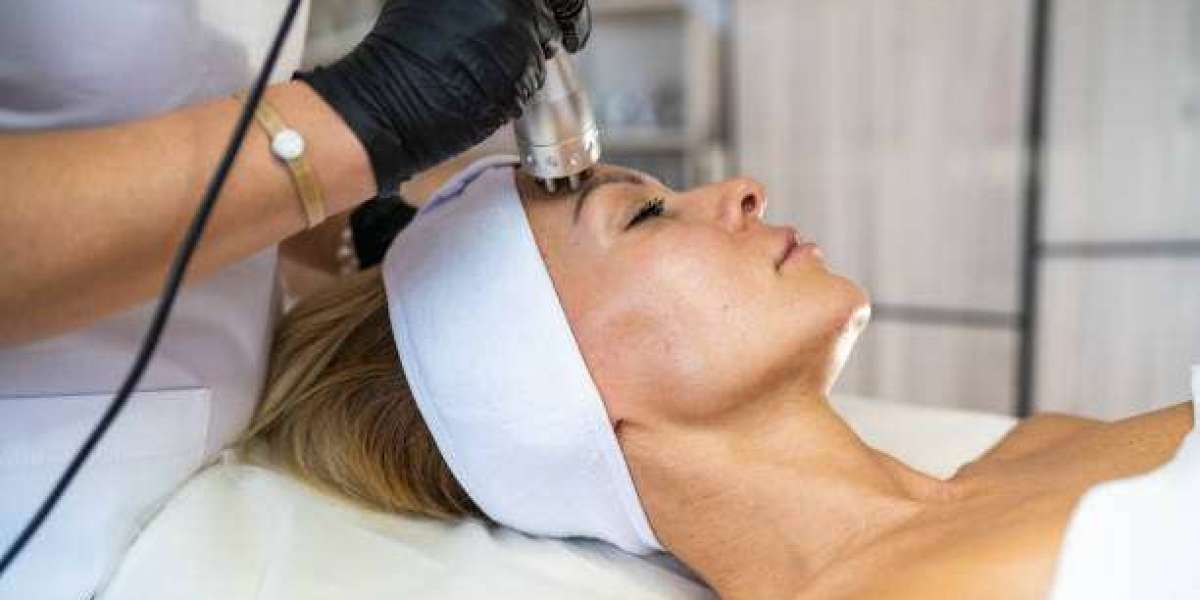

The forehead is the canvas upon which surprise, curiosity, and concern are painted. Over time, the horizontal creases that once appeared only with raised brows can settle into permanent etchings, creating an appearance of constant worry or exhaustion that belies your actual state of mind. Choosing Facial Botox Injections in Dubai for forehead lines means seeking to restore a smooth, calm brow while carefully preserving the arch and mobility that frame your eyes and convey your emotions.
The Anatomy of Forehead Lines and Brow Movement
The forehead presents a unique anatomical challenge because a single muscle, the frontalis, is responsible for both lifting the eyebrows and creating the horizontal lines that patients wish to eliminate. There is no way to relax this muscle without affecting brow position to some degree, which is why the art of forehead treatment lies in balance rather than elimination.
Understanding the Frontalis Muscle
The frontalis is a broad, thin, quadrilateral muscle that covers the entire forehead from the hairline to the brows. Unlike most facial muscles, which attach to bone at both ends, the frontalis is unique in that it has no bone origin. It arises from the galea aponeurotica, a tough fibrous sheet covering the top of the skull, and inserts into the skin of the eyebrows and the root of the nose.
This anatomy means the frontalis is the sole elevator of the eyebrows. When it contracts, it pulls the scalp forward and lifts the brows. The horizontal lines that form across the forehead are simply the skin folding over the contracting muscle fibers. Relaxing these fibers smooths the lines, but over-relaxing them removes the only upward force on the brows.
The Delicate Balance with Brow Depressors
The frontalis does not work alone. It is opposed by several depressors, the muscles that pull the brows downward. These include the corrugator supercilii, the procerus, and the orbicularis oculi. In a young face, these opposing forces are balanced, and the brows sit at a pleasant, youthful height with a gentle arch.
With age, the depressors often become stronger and more tonically active. The brows descend, and the frontalis compensates by contracting more forcefully to keep the eyes open and the brow elevated. This chronic overactivity deepens the forehead lines and creates a cycle of increasing tension.
The Injection Strategy for Natural Forehead Smoothing
Treating the forehead successfully requires a strategy that accounts for this muscular balance. The goal is not to silence the frontalis but to reduce its force sufficiently to smooth the skin while preserving enough upward pull to maintain brow position.
The Pattern and Placement That Works
The standard approach involves a series of small injections placed in the upper two-thirds of the forehead, well above the brow. Typically, five to seven injection points are arranged in a gentle horizontal arc that mirrors the curve of the hairline. The total dose is divided evenly, or slightly weighted toward the center where the muscle is often thickest.
The critical rule is never to inject within two finger-breadths, approximately 2 to 3 centimeters, of the bony brow ridge. This inferior portion of the frontalis is responsible for the final, delicate lift that defines the brow arch. Weakening it too close to the brow causes the lateral brow to drop, creating a hooded, heavy appearance over the outer eye.
Dosing Differences Between Men and Women
Men typically have thicker, stronger frontalis muscles and require higher doses, often 15 to 25 units compared to 10 to 20 units for women. However, the aesthetic goal also differs. The male brow should remain relatively straight and low on the orbital rim, while the female brow benefits from a subtle lateral arch.
An experienced injector adjusts both the dose and the injection pattern based on gender, existing brow position, and the patient's personal preference. Some women prefer a smooth, relatively immobile forehead. Others prioritize brow lift and are willing to accept subtle residual lines in exchange for more open, expressive eyes. These preferences should be discussed explicitly during consultation, not assumed.
Recognizing and Avoiding the "Heavy Brow" Sensation
The most common patient complaint after forehead treatment is not about appearance but about sensation. Patients describe a feeling of heaviness, as if a weight is sitting on their brows, or a sensation that their eyelids are harder to open fully.
Why the Heavy Feeling Occurs
This sensation occurs when the frontalis has been too thoroughly relaxed, and the brow depressors are now unopposed. The brows settle slightly lower, and the patient must consciously engage accessory muscles to lift them, creating a sensation of effort or weight.
The heavy feeling is usually temporary, fading as the frontalis gradually regains strength over several weeks. However, those weeks can be uncomfortable and distressing. Prevention through conservative dosing, especially in first-time patients whose muscle strength is unknown, is far better than management after the fact.
How Your Injector Can Prevent This
A skilled injector uses several strategies to avoid the heavy brow:
Conservative initial dosing: Treating with the minimum effective dose and bringing the patient back for a touch-up at two weeks if more is needed
The "chemical brow lift" approach: Simultaneously treating the glabellar depressors to reduce the downward pull, allowing the remaining frontalis activity to lift the brow more effectively
Dynamic assessment during injection: Having the patient animate repeatedly during the procedure to gauge muscle strength in real time rather than relying on static anatomy alone
Clear communication: Explaining the trade-off between complete line elimination and brow heaviness, and letting the patient decide their priority
What Makes Forehead Treatment Look Natural
A natural forehead is not a frozen forehead. The most beautiful results preserve some gentle movement, allowing the brows to lift slightly with surprise and the forehead to participate in animated conversation. The lines are softened, not erased, and the face retains its capacity for expression.
Signs of a natural forehead result:
Smooth skin at rest without a waxy, shiny appearance
The ability to gently raise the eyebrows in response to surprise or inquiry
A maintained or slightly enhanced brow arch, particularly laterally
No visible step-off between treated and untreated areas
Natural facial animation that does not draw attention as "done"
Achieving this result requires an injector who values subtlety and who sees the forehead as part of a global facial expression system, not as an isolated treatment area. The best forehead treatment is the one that makes people notice your eyes, not your lack of lines.