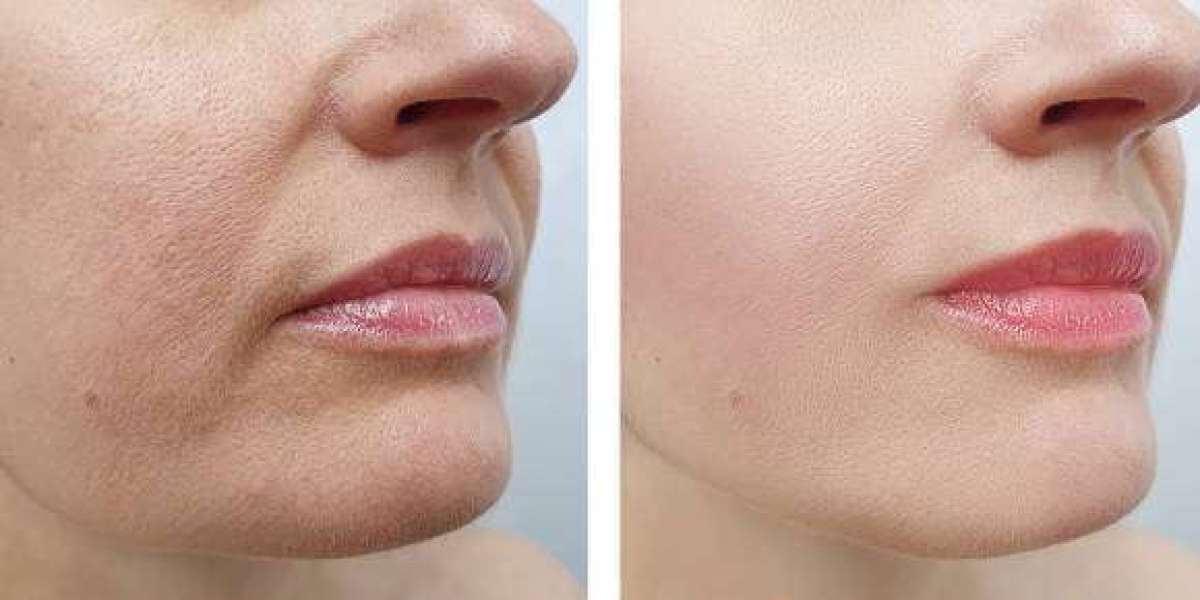

Facial aging is a complex, multi-layered biological process that involves far more than surface-level wrinkles. While fine lines are often the most visible early signs of aging, the primary driver of structural changes across the face is deep volume depletion. Starting in our mid-twenties, the body's natural synthesis of essential structural proteins—specifically collagen and elastin—declines steadily. Combined with the gradual resorption of deep fat pads and subtle bone remodeling, this structural breakdown eventually leads to hollowed temples, sunken mid-face contours, prominent nasolabial folds, and sagging along the jawline.
For individuals experiencing these structural changes, traditional aesthetic solutions often present a dilemma: rely on temporary surface fillers that require frequent re-application, or undergo invasive surgical procedures. Today, biostimulatory aesthetic medicine offers an advanced alternative. Understanding whether Sculptra fillers in Dubai can improve facial volume loss requires looking beyond instant surface smoothing and examining how Poly-L-lactic acid (PLLA) works beneath the skin to rebuild deep structural collagen.
Understanding the Biological Root of Facial Volume Loss
To evaluate how biostimulation addresses volume loss, it is necessary to examine the anatomical layers of the human face. Youthful facial volume relies on a balanced support system consisting of four primary layers: the facial bone foundation, deep fat compartments, superficial fat pads, and a thick, resilient dermal matrix.
As time progresses, three significant changes occur across these layers simultaneously:
Dermal Collagen Depletion: Total dermal collagen decreases by roughly 1% per year in adulthood. The skin thins, losing its internal spring and elasticity.
Fat Pad Atrophy and Displacement: Deep fat compartments—particularly in the temples, sub-malar cheeks, and chin—gradually shrink and shift downward due to gravity.
Skeletal Resorption: Bone density along the orbital rims, cheeks, and jawline subtly recedes, providing less structural support for overlying soft tissues.
When these layers deflate, the skin loses its firm, convex framework, resulting in a hollowed or tired appearance. Simply attempting to "stretch" the skin or fill isolated lines with superficial gels fails to repair the underlying structural defect. True volume restoration requires rebuilding the dermal matrix from within.
How Sculptra Restores Lost Volume Through Biostimulation
Sculptra differs fundamentally from conventional dermal fillers. Traditional hyaluronic acid (HA) products consist of pre-formed, cross-linked hydrogels that sit beneath the skin to create immediate, localized volume. While HA gels are exceptional for targeted adjustments—such as lip defining or sharp chin projection—they do not stimulate deep, widespread tissue synthesis.
Sculptra consists of microparticles of Poly-L-lactic acid (PLLA) suspended in a sterile fluid carrier. PLLA is a biocompatible, biodegradable synthetic material that has been safely utilized in human medicine for decades. Rather than serving as a static cushion, Sculptra acts as an architectural catalyst through a process called neocollagenesis.
The Mechanism of Neocollagenesis
When precisely injected into the deep dermis or sub-dermal planes, Sculptra initiates a controlled, natural cellular response:
Micro-Dispersal: PLLA microparticles are distributed evenly across target zones of structural deflation.
Fibroblast Activation: The presence of PLLA alerts sub-dermal connective tissue cells, known as fibroblasts, to assemble at the treatment site.
Collagen Synthesis: Fibroblasts continuously produce fresh Type I collagen fibers around the PLLA microparticle framework.
Organic Tissue Matrix: Over several months, the PLLA microparticles naturally degrade into water and carbon dioxide, leaving behind a dense, self-generated network of your own human collagen.
Because the volume created consists entirely of your own living tissue, the restored contours move fluidly with your natural facial expressions without looking stiff or artificial.
Key Facial Areas Where Sculptra Corrects Volume Loss
Sculptra is specifically engineered for multi-planar structural restoration across major anatomical zones of the face:
1. Temporal Hollowing
The temples are a critical structural anchor for the upper face. As temporal fat pads shrink, the outer tail of the eyebrow drops and the forehead appears indented. Injecting PLLA into the deep temporal plane restores smooth, gentle convexity, lifting the upper facial frame naturally.
2. Mid-Face and Cheek Deflation
Flattening across the mid-face diminishes cheekbone architecture and deepens the smile lines (nasolabial folds) running from the nose to the mouth. By rebuilding the mid-facial framework with Sculptra, overlying tissues are elevated naturally, softening lower-face folds without creating an over-inflated appearance.
3. Lower Face, Marionette Lines, and Jawline
Loss of structural collagen around the lower cheeks and oral commissures creates heavy shadow lines and early jowling along the jawline. Injecting Sculptra along the lower facial planes thickens the dermal wall, firming lax skin and sharpening mandibular definition.
What to Expect During the Treatment Experience
Receiving Sculptra is a structured, outpatient clinical process designed around patient comfort and anatomical precision.
Consultation and Pre-Treatment Mapping
A thorough clinical evaluation precedes any procedure. Your practitioner evaluates facial bone structure, skin quality, degree of fat pad atrophy, and muscle dynamics to map precise injection vectors tailored to your unique features.
The Injection Technique
A topical numbing agent is applied prior to treatment, and local anesthetic (lidocaine) is integrated directly into the reconstituted Sculptra solution. Experienced clinicians often use flexible, blunt-tipped micro-cannulas—devices that glide smoothly beneath dermal layers to distribute the product uniformly while minimizing tissue trauma, swelling, and bruising. The injection phase typically takes 30 to 45 minutes.
The Essential 5-5-5 Aftercare Rule
Patient compliance during the immediate post-treatment phase is critical to achieving a smooth, uniform outcome. Following every session, patients must observe the mandatory 5-5-5 Massage Rule:
Massage the treated areas for 5 minutes.
Perform these massages 5 times per day.
Continue the protocol for 5 consecutive days.
Firm circular massage ensures the PLLA microparticles remain evenly distributed across the target tissue layers, preventing product clustering and supporting smooth, bump-free collagen formation.
Understanding the Progressive Results Timeline
Because Sculptra relies on biological regeneration rather than instant gel expansion, results develop gradually over several weeks.
| Timeframe | Biological Process | Visual Expectation |
| Days 1–3 | Initial hydration from sterile water vehicle; mild localized swelling. | Temporary volume boost that subsides as the carrier fluid absorbs. |
| Weeks 2–4 | PLLA microparticles settle into deep tissue; initial fibroblast recruitment. | Brief return near baseline appearance while cellular activity begins. |
| Weeks 6–8 | Active neocollagenesis; fibroblasts deposit new Type I collagen matrices. | Early visible firmness; subtle, natural softening of hollows and folds. |
| Months 3–6 | Peak structural integration; PLLA breaks down as new collagen matures. | Restored, firm, youthful facial contours; significantly improved skin density. |
Because collagen synthesis occurs incrementally, most patients complete a tailored series of 2 to 3 sessions, spaced 4 to 6 weeks apart, to achieve optimal structural restoration.
Comparing Sculptra to Traditional Hyaluronic Acid Fillers
Evaluating your personal aesthetic priorities helps determine which treatment modality aligns best with your goals:
Instant vs. Gradual: Hyaluronic acid fillers provide immediate volume visible upon leaving the clinic, whereas Sculptra develops progressively over 6 to 12 weeks.
Material vs. Self-Generated: HA fillers introduce a synthetic hydrogel gel into the tissue, while Sculptra stimulates your body to build its own organic collagen matrix.
Longevity: Traditional HA fillers typically last 6 to 12 months before requiring re-application. The organic collagen matrix generated by Sculptra remains durable for up to 2 years or longer.
Scope: HA fillers excel at acute, localized shaping (e.g., lips, precise chin projection), while Sculptra is ideal for broad, global volume restoration and skin thickening.
Candidate Suitability and Safety Profile
Determining whether Sculptra is right for your volume loss concerns involves assessing your baseline skin quality and medical history.
Ideal Candidates
Men and women experiencing generalized facial hollowing, cheek deflation, or temple depression.
Individuals seeking subtle, natural-looking volume restoration without sudden, obvious alterations.
Patients committed to completing the multi-session protocol and post-treatment massage routine.
Safety and Considerations
Sculptra is FDA-approved and backed by more than two decades of extensive global clinical use. Side effects are typically mild and localized to injection sites, such as temporary redness, light bruising, or minor swelling.
To minimize bruising, patients should avoid non-essential blood-thinning supplements, aspirin, or anti-inflammatory medications for 5 to 7 days prior to their session. Sculptra is contraindicated for individuals with active localized skin infections, acute inflammatory conditions, or a history of keloid scarring.
Frequently Asked Questions (FAQs)
1. Can Sculptra completely restore severe facial volume loss?
Yes. Sculptra is exceptionally effective for moderate-to-severe facial volume depletion. Because treatments are completed in stages across 2 to 3 sessions, your practitioner can continuously build tissue density until full, balanced structural restoration is achieved.
2. How long do the results from Sculptra last?
Because Sculptra stimulates your body's own collagen synthesis, the restored structural volume is durable and typically lasts two years or longer. A simple single-vial touch-up every 12 to 18 months maintains your collagen baseline indefinitely.
3. Is Sculptra safe for all skin types?
Yes. Sculptra contains Poly-L-lactic acid, a biocompatible material that does not cause allergic reactions or require pre-treatment skin testing. It is safe and effective for all skin types and tones.
4. Can I combine Sculptra with hyaluronic acid fillers?
Yes. Many practitioners utilize a combined approach: Sculptra is injected into deep structural planes for broad, long-lasting volume support, while small amounts of HA filler are used for immediate, localized refinement in areas like the lips or tear troughs.
5. Is there any downtime after a Sculptra session?
Downtime is minimal. Most patients return to their normal work and daily schedules immediately after their appointment. Strenuous workouts, saunas, and direct sun exposure should be avoided for 24 to 48 hours.
6. What happens if I skip the post-treatment 5-5-5 massage?
Skipping the post-treatment massage increases the risk of PLLA microparticles clumping together in isolated areas, which can potentially form small, palpable sub-dermal nodules. Performing the 5-5-5 massage ensures smooth, even product distribution and uniform collagen matrix formation.
Rebuilding lost facial volume requires a treatment approach grounded in cellular biostimulation, anatomical precision, and deep structural support. By encouraging your body to generate its own fresh collagen framework, Poly-L-lactic acid offers a reliable, long-lasting solution to age-related facial deflation. To explore how biostimulatory volume restoration can refresh your natural features, scheduling a thorough clinical evaluation with certified aesthetic specialists is your best next step. At Tajmeels Clinic, our medical team provides personalized facial assessments and advanced biostimulatory protocols designed to deliver natural, long-lasting volume and elevate your confidence in a safe, professional setting.