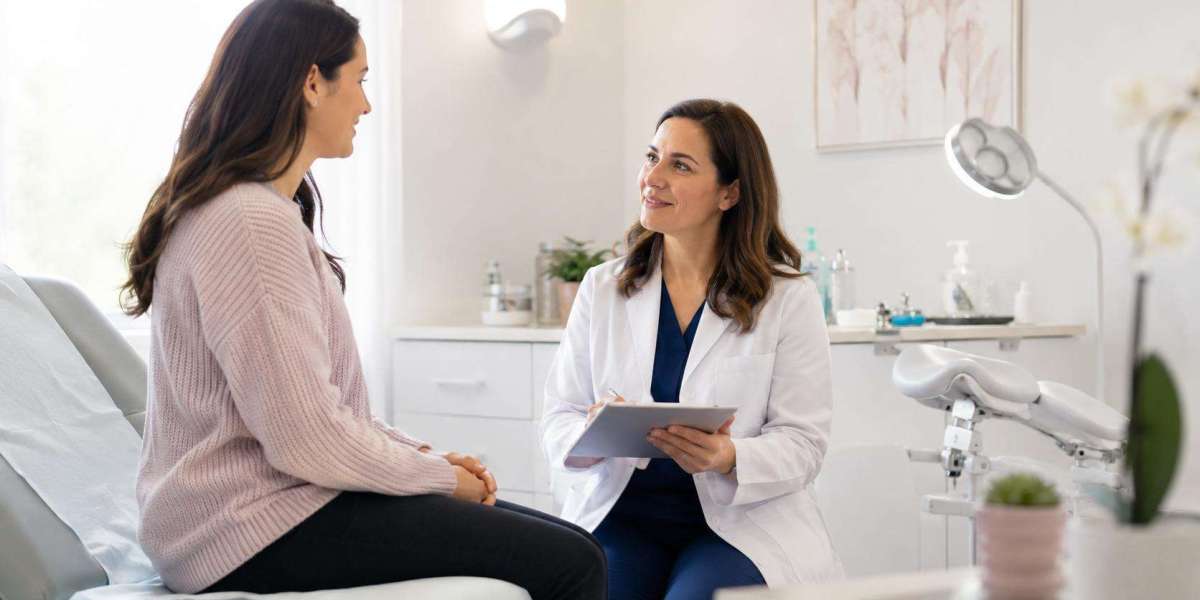

Understand What Happens During a Pelvic Exam
Before your appointment, it helps to know what to expect. During a typical pelvic exam, the gynecologist may examine the vulva, use a speculum to view the vagina and cervix, and perform an internal examination to assess reproductive organs such as the uterus and ovaries. The examination itself usually takes only a few minutes.
Your doctor should explain the examination and give you an opportunity to discuss any concerns or discomfort beforehand.
Keep Track of Your Menstrual Cycle
Make a note of the first day of your last menstrual period and any recent changes in your cycle. Your gynecologist may ask about cycle length, heavy bleeding, missed periods, spotting, or unusual symptoms.
Having your period does not automatically mean that a pelvic exam cannot be performed. However, if a Pap smear or cervical screening is planned, menstrual bleeding may sometimes affect the test. Contact the clinic beforehand if you are unsure whether to keep your appointment.
Avoid Vaginal Products Before Certain Tests
A basic pelvic exam may not require special preparation. However, if your appointment includes a Pap smear, you may be advised to avoid tampons, vaginal medicines, creams, contraceptive foams, or similar products for two days before the test.
Follow any specific instructions given by your gynecologist or clinic.
Write Down Your Symptoms and Questions
Before visiting the doctor, make a short list of anything you want to discuss, including:
Pelvic or abdominal pain
Irregular or heavy periods
Unusual vaginal discharge
Pain or discomfort during intercourse
Urinary problems
Pregnancy or fertility concerns
Previous gynecological conditions
Also bring details about medications you take, previous surgeries, pregnancies, allergies, and relevant family medical history.
Wear Comfortable Clothing
Choose clothing that is easy to remove because you will usually need to undress from the waist down and wear a gown or use a covering provided by the clinic.
Emptying your bladder before the examination may also help you feel more comfortable unless your healthcare provider has specifically asked you to arrive with a full bladder for another test.
Communicate With Your Gynecologist
Feeling nervous before a pelvic exam is common. Tell your doctor if it is your first examination, you feel anxious, or you experience discomfort. You can ask what is happening at each stage of the examination and discuss any concerns before proceeding.
If you are looking for the best gynecologist in Lahore for professional gynecological and obstetric care, you may consider:
Dr. Noreen Huma - Best Gynecologist & Obstetrician
Phone: 0311 6712017
Address: Plot No. 393-396 & 423-426, Street 2, Block D, Block D 2 Phase 1, Johar Town, Lahore, Punjab 54000
Final Thoughts
Preparing for a pelvic exam does not have to be complicated. Understanding the procedure, keeping track of your menstrual cycle and symptoms, following instructions for any planned tests, and communicating openly with your gynecologist can make the experience easier.
Regular gynecological care can also provide an opportunity to discuss reproductive health concerns and determine whether further testing or treatment is needed.