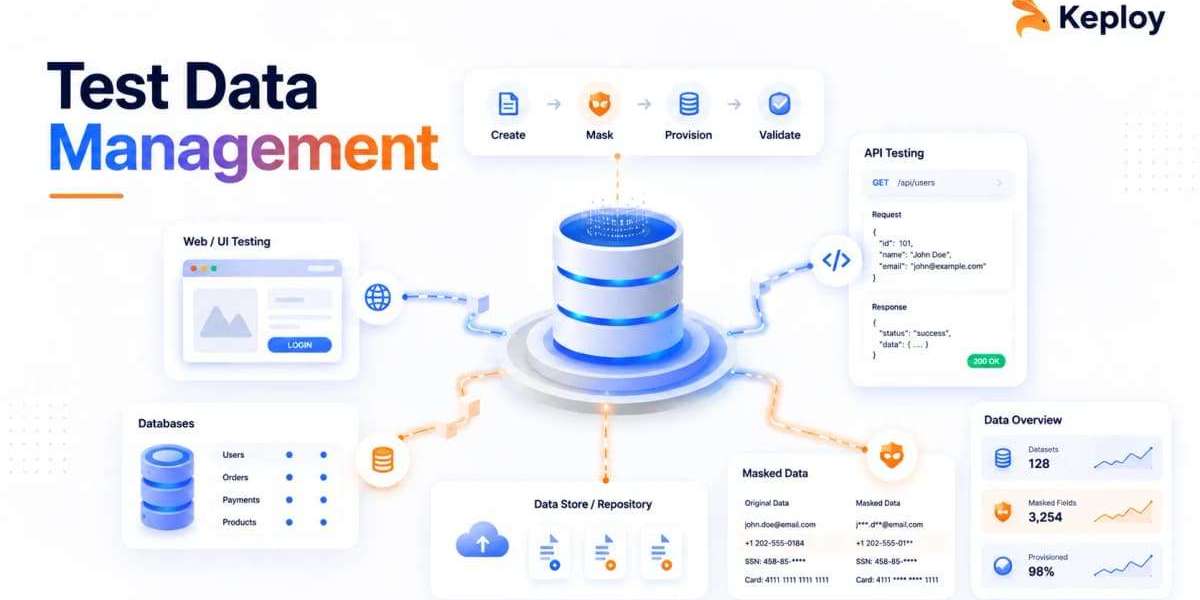

Software testing is only as effective as the data used during the testing process. Even the most comprehensive test cases can produce misleading results if they rely on incomplete, outdated, or unrealistic datasets. As applications become more complex and data-driven, organizations need a structured approach to managing test data efficiently.
This is where test data management plays a crucial role. It helps teams create, organize, maintain, and secure the data required for accurate and reliable software testing.
What Is Test Data Management?
Test data management (TDM) is the process of planning, creating, storing, and maintaining data used during software testing. The goal is to ensure testers have access to relevant, realistic, and compliant datasets that accurately reflect production environments.
Effective test data management enables teams to validate application functionality, performance, security, and user experience without exposing sensitive production information.
Why Test Data Matters
Modern applications process vast amounts of information across multiple systems, databases, and APIs. Testing with poor-quality data can lead to:
Missed defects
Inaccurate test results
Delayed releases
Compliance risks
Increased testing costs
By using high-quality test data, teams can identify issues earlier and improve overall software quality.
Common Challenges in Managing Test Data
Many organizations struggle with test data-related issues throughout the development lifecycle.
Limited Data Availability
Testers often lack access to realistic datasets that accurately represent production scenarios.
Data Privacy Concerns
Using production data for testing may expose sensitive customer information and create regulatory compliance risks.
Data Consistency Issues
Applications frequently interact with multiple systems. Maintaining consistent data across environments can be difficult.
Environment Dependencies
Shared testing environments can cause conflicts when multiple teams require the same datasets simultaneously.
High Maintenance Effort
As applications evolve, test datasets must be updated to reflect new features and business requirements.
Benefits of Effective Test Data Management
Implementing a structured TDM strategy provides significant advantages.
Improved Test Accuracy
Realistic datasets help teams uncover defects that might otherwise remain hidden.
Faster Testing Cycles
Readily available data reduces delays and accelerates test execution.
Better Compliance
Data masking and anonymization techniques help organizations meet regulatory requirements.
Reduced Costs
Efficient data management minimizes duplication and decreases environment maintenance efforts.
Enhanced Automation
Reliable datasets improve automated test execution and reduce test failures caused by data-related issues.
Key Components of a Test Data Management Strategy
Successful test data management involves several essential practices.
Test Data Creation
Teams should generate data that reflects real-world user behavior, business workflows, and application scenarios.
Data Masking
Sensitive information such as personal details, payment information, and customer records should be protected before being used in testing environments.
Data Provisioning
Testers need quick access to appropriate datasets whenever testing activities begin.
Data Refresh
Regular updates ensure test environments remain aligned with current application behavior and production conditions.
Data Governance
Organizations should establish clear policies regarding data ownership, security, and usage.
Test Data Management in Agile and DevOps
Traditional approaches to test data management often struggle to keep pace with modern development practices. Agile and DevOps teams release software frequently, requiring continuous access to reliable test data.
To support rapid delivery cycles, organizations increasingly automate:
Test data generation
Data masking
Environment provisioning
Data refresh processes
Test environment management
Automation reduces manual effort while ensuring testing remains efficient and scalable.
Best Practices for Managing Test Data
Organizations can improve testing outcomes by following several proven practices:
Use Production-Like Data
Testing should reflect realistic user scenarios whenever possible.
Protect Sensitive Information
Implement masking and anonymization techniques before using production-derived datasets.
Automate Data Provisioning
Automation ensures teams receive the right data when needed.
Maintain Data Quality
Regular validation helps ensure datasets remain accurate and relevant.
Align Data With Test Objectives
Different testing types require different datasets. Functional, performance, and security testing often have unique data requirements.
The Future of Test Data Management
As software ecosystems become increasingly distributed and cloud-native, test data management continues to evolve. AI-driven data generation, automated environment provisioning, and intelligent data masking are helping organizations reduce complexity while improving testing efficiency.
Teams that invest in modern test data strategies can accelerate software delivery while maintaining high levels of quality and compliance.
Conclusion
Reliable software testing depends on reliable data. Without an effective approach to managing test datasets, organizations risk inaccurate results, delayed releases, and compliance challenges.
By implementing strong test data management practices, development and QA teams can improve testing accuracy, accelerate release cycles, and ensure applications perform as expected in real-world environments. As software systems continue to grow in complexity, effective test data management will remain a critical component of successful quality assurance strategies.