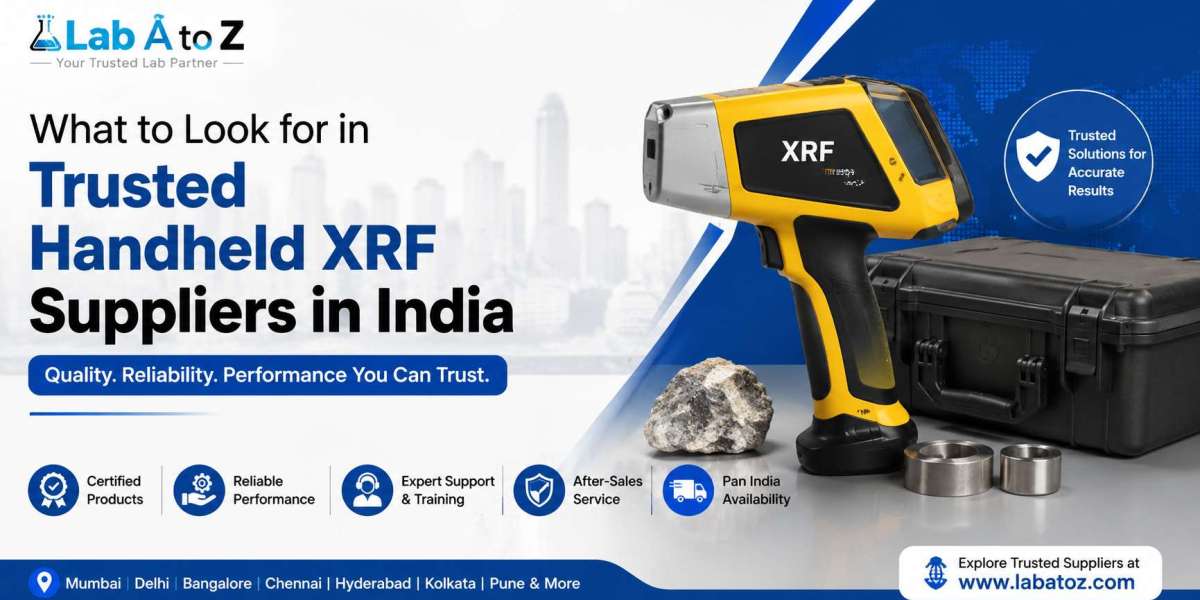

Handheld X-ray fluorescence (XRF) analyzers have become valuable tools for fast, non-destructive elemental analysis across industries such as mining, metals, manufacturing, recycling, geology, environmental testing, and quality control. Unlike conventional laboratory-based techniques, handheld XRF analyzers allow users to perform material analysis directly at the inspection site.
However, choosing the right analyzer is only part of the process. Selecting a trusted handheld XRF supplier in India is equally important. A reliable supplier can help you choose the right instrument, provide technical support, assist with calibration, and ensure that your analyzer continues to deliver dependable results.
With several options available in the Indian market, buyers should evaluate suppliers carefully before making a purchase.
What Is a Handheld XRF Analyzer?
A handheld XRF analyzer is a portable analytical instrument that uses X-ray fluorescence technology to identify and quantify elements present in a material.
When X-rays interact with a sample, the atoms in the material emit characteristic fluorescent X-rays. The analyzer detects these signals and uses them to determine the elemental composition of the sample.
Depending on the instrument and application, handheld XRF analyzers can be used to analyze materials such as:
Metals and alloys
Ores and minerals
Soil and sediments
Cement and building materials
Plastics and polymers
Coatings
Precious metals
Industrial raw materials
Recycled materials
Their portability makes them particularly useful when samples cannot easily be transported to a laboratory.
Why Choosing the Right Supplier Matters
Buying a handheld XRF analyzer is a significant investment. The cheapest instrument may not necessarily provide the best long-term value.
A trusted supplier should offer more than just the instrument. They should understand your application and help you select equipment that matches your analytical requirements.
A reliable supplier can provide:
Appropriate instrument recommendations
Application-specific guidance
Product demonstrations
Installation and training
Calibration support
Technical assistance
Maintenance and service
Genuine accessories and replacement parts
Warranty support
This makes supplier selection an important part of your overall XRF purchasing decision.
1. Check the Supplier's Industry Experience
One of the first things to evaluate is the supplier's experience in analytical instrumentation.
A supplier with experience in XRF technology is generally better positioned to understand the differences between various analyzers, detectors, software configurations, calibration methods, and applications.
Look for suppliers that have experience serving industries such as:
Mining and mineral exploration
Metallurgy
Manufacturing
Foundries
Recycling
Environmental testing
Research laboratories
Construction materials
Jewelry and precious metals
Industry experience can also indicate whether the supplier understands the practical challenges involved in field-based elemental analysis.
2. Evaluate the XRF Analyzer's Performance
The supplier should be able to clearly explain the technical capabilities of the handheld XRF analyzer they provide.
Important specifications may include:
Elemental range
Detection limits
Measurement time
Detector technology
X-ray tube specifications
Analytical modes
Measurement accuracy
Repeatability
Battery capacity
Display and user interface
Data storage
Connectivity options
Do not evaluate an analyzer based solely on a single specification. Instead, consider whether its overall performance matches your application.
For example, an analyzer designed primarily for alloy identification may have different capabilities from one optimized for mining or environmental applications.
3. Make Sure the Supplier Understands Your Application
A good supplier should ask questions before recommending a product.
They should understand:
What materials you need to analyze
Where measurements will be performed
Which elements are important
Required detection limits
Expected measurement frequency
Whether testing will be performed indoors or outdoors
Required reporting and data-management features
This application-based approach helps prevent you from purchasing an analyzer that is either underpowered for your requirements or unnecessarily expensive.
4. Ask for a Product Demonstration
Whenever possible, request a demonstration before purchasing a handheld XRF analyzer.
A demonstration can help you evaluate how the instrument performs with your actual materials.
During a demonstration, consider checking:
Measurement speed
Ease of operation
User interface
Sample positioning
Result readability
Data storage
Software functionality
Performance on different sample types
Testing the analyzer with representative samples can give you a better understanding of whether it is suitable for your workflow.
5. Consider Calibration and Accuracy Support
Calibration plays an important role in obtaining reliable XRF results.
Different applications and materials may require different calibration approaches. A trusted supplier should explain how the analyzer is calibrated and what support is available for maintaining analytical performance.
Ask potential suppliers about:
Factory calibration
Application-specific calibration
Calibration verification
Reference materials
Recalibration procedures
Calibration support after purchase
The supplier should also clearly communicate the expected analytical limitations of the instrument rather than making unrealistic accuracy claims.
6. Look for Strong Technical Support
Technical support becomes particularly important when an analyzer is being used regularly in industrial or field environments.
Before purchasing, ask whether the supplier provides:
Installation assistance
Operator training
Troubleshooting
Remote technical support
On-site service
Software updates
Preventive maintenance
Repair services
A supplier with a strong service network can help reduce equipment downtime and keep your testing operations running smoothly.
7. Check Warranty and After-Sales Service
The relationship with an XRF supplier should not end after the purchase.
Review the warranty terms carefully and understand what is covered.
Important points include:
Warranty duration
Parts coverage
Service coverage
Repair procedures
Replacement policies
Response time
Availability of spare parts
Also ask whether after-sales support is handled locally in India or requires communication with an overseas manufacturer.
8. Verify Software and Data Management Features
Modern handheld XRF analyzers are more than simple measurement devices. Their software can play an important role in data analysis and reporting.
Depending on your requirements, useful features may include:
Automatic material identification
Elemental concentration reports
Data storage
User management
Result export
USB connectivity
Wireless connectivity
GPS or location tagging
Barcode or sample identification
PC-based data-management software
If your organization performs a large number of measurements, efficient data management can significantly improve productivity.
9. Consider Portability and Ergonomics
Since handheld XRF analyzers are designed for field use, physical design is also important.
Consider factors such as:
Overall weight
Grip design
Display visibility
Battery life
Operating temperature range
Dust and moisture resistance
Protective casing
Ease of carrying
Trigger and control layout
If operators will use the analyzer for several hours each day, ergonomics can have a major impact on productivity and user comfort.
10. Review Safety Features
Handheld XRF analyzers use X-rays, so radiation safety should be taken seriously.
A responsible supplier should explain the instrument's safety features and provide appropriate user guidance and training.
Depending on the instrument, safety features may include:
Interlocks
X-ray indicators
Proximity or sample detection features
Automatic X-ray shutoff
Password-protected controls
Safety instructions and documentation
Users should always follow the manufacturer's operating procedures and applicable Indian radiation-safety requirements.
11. Compare Total Cost of Ownership
The purchase price should not be the only factor when comparing handheld XRF suppliers in India.
Consider the total cost of ownership, including:
Initial cost + accessories + training + calibration + maintenance + service + software + replacement parts
An analyzer with a slightly higher initial price may provide better long-term value if it offers stronger performance, better durability, and dependable service support.
Ask suppliers for a clear quotation that identifies what is included in the package.
12. Check References and Customer Feedback
Customer experience can provide valuable insight into a supplier's reliability.
Where possible, ask the supplier for relevant customer references or case studies.
You can evaluate:
Product reliability
Service responsiveness
Technical expertise
Training quality
Warranty handling
Availability of spare parts
Overall customer support
Try to find references from organizations using XRF analyzers for applications similar to yours.
13. Verify Genuine Products and Documentation
Always ensure that the supplier is offering genuine equipment and proper documentation.
Important documents may include:
Product specifications
User manuals
Warranty documents
Calibration certificates, where applicable
Safety documentation
Software information
Service documentation
A professional supplier should be transparent about the manufacturer, model, specifications, warranty, and support arrangements.
14. Compare Multiple Handheld XRF Suppliers in India
Avoid selecting the first supplier you find.
Shortlist several suppliers and compare them based on:
Factor | What to Evaluate |
Product quality | Instrument specifications and performance |
Application suitability | Compatibility with your materials |
Technical support | Training, troubleshooting and service |
Calibration | Calibration and verification support |
Warranty | Coverage and duration |
Software | Data analysis and reporting capabilities |
Price | Total cost of ownership |
Availability | Delivery and spare-parts availability |
Experience | Industry and application expertise |
Customer support | Responsiveness and service network |
This comparison can help you make a more informed purchasing decision.
Common Mistakes to Avoid
When searching for handheld XRF suppliers in India, buyers should avoid making decisions based only on price.
Common mistakes include:
Choosing an analyzer without defining the application
Ignoring detection-limit requirements
Not testing the instrument before purchase
Overlooking after-sales service
Failing to compare warranty terms
Ignoring software and data-management requirements
Not checking calibration support
Buying without evaluating operator training
Selecting equipment based only on specifications
Failing to consider long-term operating costs
A carefully evaluated supplier can help you avoid many of these problems.
Conclusion
Selecting the right handheld XRF suppliers in India is an important step toward achieving reliable, efficient, and cost-effective elemental analysis. The ideal supplier should offer more than a high-quality analyzer—they should provide application expertise, technical guidance, training, calibration assistance, warranty coverage, and dependable after-sales service.
Before making a purchase, evaluate the analyzer's performance, application suitability, software, safety features, portability, calibration options, and total cost of ownership. Most importantly, choose a supplier that understands your analytical requirements and can support you throughout the instrument's lifecycle.
With the right supplier and the right handheld XRF analyzer, organizations can perform faster on-site material analysis while improving quality control, inspection, and decision-making.