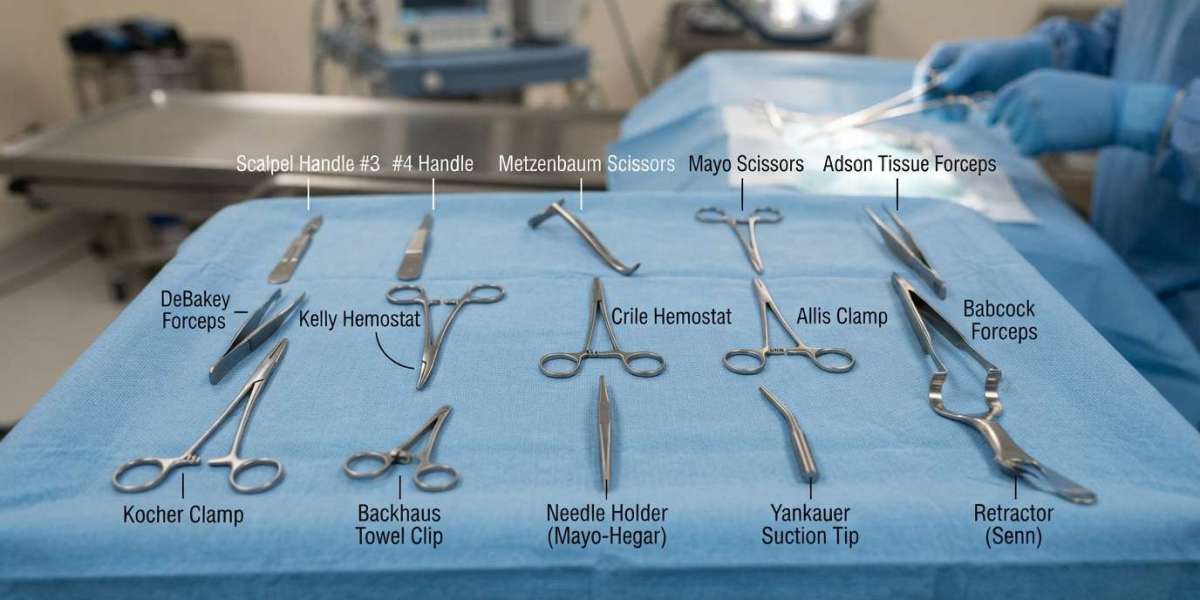

Surgery is an important part of modern healthcare, and the right tools are needed to perform every procedure with care and accuracy. Surgical instruments are specially designed medical tools that help surgeons cut, hold, clamp, separate, stitch, and examine body tissues. Each instrument has a specific purpose, and choosing the correct tool can make a surgical procedure easier and safer.
Hospitals, clinics, and surgical centers use many different types of instruments. Some are made for common operations, while others are designed for special areas of medicine. The design, size, material, and shape of each tool depend on the work it needs to perform. Understanding the different types helps medical professionals select the right tools for each procedure.
Cutting Instruments
Cutting instruments are used to cut tissue, skin, sutures, and other materials during surgery. They are among the most common tools found in an operating room. Scalpels and surgical scissors are widely used for this purpose.
A scalpel has a sharp blade that allows a surgeon to make controlled cuts. Surgical scissors come in different shapes and sizes. Some are made for cutting tissue, while others are better suited for cutting sutures or other materials.
The sharpness and condition of cutting tools are very important. A damaged or dull blade may not provide the level of control needed during a procedure. Proper cleaning, storage, and maintenance can help keep these instruments in good working condition.
Grasping and Holding Instruments
Grasping instruments help surgeons hold tissue, dressings, sutures, or other materials during an operation. Forceps are one of the most common examples. They are available in many shapes and sizes to meet different surgical needs.
Some forceps have smooth tips, while others have small teeth that provide a stronger grip. The choice depends on the type of tissue or material being handled.
These instruments give surgeons better control and help them work in small areas. Properly designed forceps should be comfortable to hold and should allow the surgeon to apply the right amount of pressure.
Clamping Instruments
Clamping instruments are used to hold tissue or control blood vessels during surgery. They are designed with jaws that can close securely and remain in place when needed.
Artery forceps are a common type of clamping tool. They are often used to control bleeding by holding blood vessels. Other clamps may be designed for specific tissues or surgical tasks.
The strength and smooth movement of a clamp are important. It should close properly without causing unnecessary damage to the tissue. Medical staff should also check the locking and working parts before use.
Retracting Instruments
Retractors are used to move tissue away from the surgical area. This can give the surgeon a clearer view and provide better access to the area being treated.
Retractors can be held by hand or designed to remain in position during a procedure. They come in different sizes and shapes because different operations require different levels of access.
A suitable retractor can help the surgical team maintain a clear working area. It should provide enough support while being used carefully to avoid unnecessary pressure on nearby tissue.
Suturing Instruments
Suturing instruments are used when a surgeon needs to close an incision or repair tissue. Needle holders are an important example. They help surgeons hold and guide a surgical needle during stitching.
These instruments are designed to provide a secure grip on the needle. This allows the surgeon to make controlled movements when placing stitches.
The condition of the needle holder is important because loose or damaged working parts can make stitching more difficult. Proper cleaning and inspection help maintain reliable performance.
Probing and Dilating Instruments
Probing instruments are used to examine openings, passages, or areas of tissue during certain procedures. They can help surgeons understand the size, direction, or condition of an area.
Dilators are used to gently enlarge an opening or passage when required for a procedure. These tools are available in different sizes and designs.
Because these instruments may come into contact with delicate tissue, careful handling is important. The tool must be suitable for the procedure and used according to proper medical practice.
Suction Instruments
Suction instruments help remove blood, fluids, or other material from the surgical area. Keeping the area clear can improve visibility and allow the surgeon to work more easily.
Different suction tools are available for different procedures. Some are designed for general use, while others are made for specific surgical areas.
A suction instrument should provide reliable fluid removal without causing unnecessary harm to tissue. Proper cleaning is also important because these tools may collect body fluids during a procedure.
General Surgical Instruments
General surgical instruments are designed for use in many common operations. They are a basic part of most operating rooms and are used by surgeons for tasks such as cutting, holding, clamping, retracting, and stitching.
Scalpels, scissors, forceps, clamps, retractors, and needle holders are common examples. These tools can often be used in different types of surgery, making them useful for hospitals and clinics.
The quality of general surgical instruments is important because they are often used regularly. Strong materials, smooth working parts, comfortable handles, and proper maintenance can help these tools remain useful for a long time.
Neurosurgical Instruments
Neurosurgical instruments are specially designed for procedures involving the brain, spine, and other sensitive areas of the nervous system. These procedures require a high level of care and control.
These instruments are often smaller and more specialized than standard surgical tools. They may include fine forceps, scissors, retractors, dissectors, and other tools designed for delicate work.
The design of each instrument is based on the needs of neurosurgical procedures. Surgeons need tools that allow controlled movements and good access to small areas. Proper instrument selection is therefore very important in brain and spine surgery.
Diagnostic and Measuring Instruments
Some surgical tools are used to examine or measure areas during a procedure. Probes, rulers, and other measuring tools can help surgeons understand the size or position of a particular area.
These tools can be useful when a surgeon needs accurate information before making a decision during an operation. Their design allows them to provide simple but useful support during different procedures.
Accuracy is important when using measuring tools. Instruments should be checked regularly to make sure they remain in proper condition and provide reliable results.
Endoscopic Instruments
Endoscopic instruments are used during procedures where doctors work through small openings in the body. These tools are often long and narrow, allowing surgeons to reach areas that may be difficult to access through a larger opening.
Some endoscopic tools are used for cutting, grasping, holding, or removing tissue. They are designed to work with special cameras or viewing systems that help doctors see the treatment area.
The use of these instruments has become more common as minimally invasive procedures have developed. Their design can help support smaller openings and may reduce the amount of tissue affected during certain procedures.
Materials Used in Surgical Instruments
The material used to make an instrument affects its strength, durability, and ability to handle cleaning. Stainless steel is commonly used because it is strong, resistant to corrosion, and suitable for many sterilization methods.
Some specialized instruments may use other materials depending on their purpose. Regardless of the material, the surface should be easy to clean and maintain.
Proper care is necessary to protect the instrument. Cleaning, drying, sterilization, inspection, and correct storage can help extend its useful life.
Choosing the Right Type
The correct instrument depends on the type of procedure and the task being performed. Surgeons may need several different tools during one operation. Each tool should be selected according to its purpose, size, design, and condition.
Healthcare facilities should also consider the quality and reliability of the manufacturer or supplier. Good-quality instruments can provide better performance and long-term value when properly maintained.
Conclusion
There are many types of surgical instruments, and each has an important role in healthcare. Cutting, grasping, clamping, retracting, suturing, probing, suction, and measuring tools all support different stages of a surgical procedure.
General surgical instruments are useful for many common operations, while neurosurgical instruments are designed for delicate procedures involving the brain and spine. Specialized endoscopic tools also support modern minimally invasive surgery.
Choosing the right instruments, maintaining them properly, and following correct cleaning and sterilization practices can help medical teams provide safe and effective care. As surgical methods continue to improve, the design of these essential tools will also continue to develop.
More Info: Amg Medical