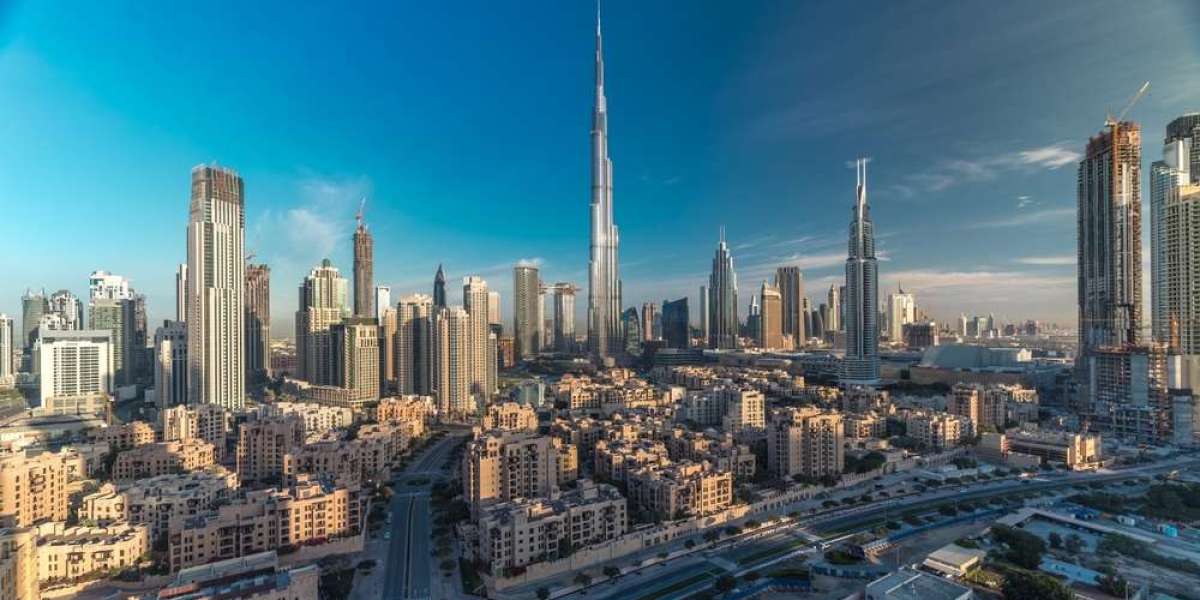

Buying a property in Dubai is a major financial decision, whether you want a home for your family, a second residence, or an investment. With hundreds of residential projects, different communities, property types, and price ranges, choosing the right option can feel overwhelming. The best approach is to look beyond attractive views, modern amenities, or promotional offers and evaluate the property from a practical and financial perspective.
When deciding how to choose a property in Dubai, start by identifying your purpose, setting a realistic budget, researching the location, comparing similar properties, and checking the developer and building quality. Investors should also examine rental demand, service charges, expected returns, future development, and resale potential. A careful evaluation can reduce unnecessary risks and help you select a property that fits your long-term objectives.
Understand Why You Want to Buy
The first step is to determine exactly why you want to purchase a property. Your objective will influence the location, property type, budget, and features you should prioritize. Someone buying a family home will usually have different requirements from an investor looking for rental income.
If you intend to live in the property, focus on your everyday experience. Think about your workplace, children's schools, commuting time, nearby supermarkets, healthcare facilities, public transport, parking, privacy, and community atmosphere. A property may offer excellent investment potential but still be unsuitable for your lifestyle if it creates a difficult daily commute.
Investment buyers need to approach the decision differently. Rental demand, net rental yield, capital appreciation, vacancy risk, service charges, and resale liquidity become much more important. Instead of asking which property looks the most impressive, ask whether the property has a strong reason to remain desirable to tenants and future buyers.
Define Your Long-Term Plan
Your expected holding period also matters. If you plan to keep the property for many years, you can give greater attention to community development and long-term demand. If you may sell within a few years, liquidity becomes particularly important because you need a property that can attract buyers when you are ready to exit.
Set Your Complete Property Budget
Your budget should include more than the property's advertised selling price. Many first-time buyers focus on the purchase price and underestimate the additional expenses associated with buying and owning real estate. Creating a complete budget before viewing properties can prevent you from choosing a home that looks affordable but becomes financially difficult later.
Consider the purchase price, applicable registration and transaction costs, agency fees, mortgage expenses if you are financing the purchase, furnishing, renovation, service charges, maintenance, and property management costs. If you plan to rent out the unit, you should also allow for possible vacancy periods and unexpected repairs.
Consider Mortgage Affordability
If you intend to finance your purchase, determine your borrowing capacity before making serious offers. Compare the required down payment, monthly repayment, financing rate, loan duration, and associated bank charges. A mortgage pre-approval can give you a clearer idea of what you can realistically afford.
Do not use your maximum borrowing capacity as your target budget. Leaving room for unexpected expenses can provide greater financial security, particularly if interest rates, maintenance expenses, or rental income change.
Choose the Right Location
Location is one of the strongest factors affecting a property's desirability, rental demand, and potential resale value. Dubai has many distinct communities, and each one serves a different type of resident. A central apartment may appeal to professionals, while a larger home in a family-oriented community may be more suitable for households with children.
When researching a location, consider accessibility to major roads, public transportation, employment centres, schools, healthcare facilities, shopping destinations, restaurants, parks, and recreational facilities. You should also consider how the area feels during different times of the day. Visiting only once can hide traffic congestion, parking problems, construction activity, or excessive noise.
Look at Future Development
Do not assess a neighbourhood only by what exists today. Research planned infrastructure, upcoming residential projects, commercial developments, transportation improvements, and new amenities. Future development can improve an area's attractiveness, but large amounts of new residential supply can also create additional competition.
For investors, this balance is particularly important. A growing community may create opportunities for capital appreciation, but an area receiving thousands of competing units may experience pressure on rental prices and resale values.
Select the Right Property Type
Dubai's residential market includes studios, apartments, penthouses, townhouses, and villas. The appropriate property type depends on your budget, lifestyle, target tenant, and investment strategy.
Apartments can be attractive for buyers who want access to established locations and shared facilities. Studios and one-bedroom units may appeal to individual professionals, while two- and three-bedroom apartments can attract couples and families. Villas and townhouses generally provide more space and privacy, which can make them attractive to families, although they often require a larger initial investment.
Match the Unit With Its Target Market
If you are purchasing an investment property, think about who is most likely to rent it. A compact apartment close to business districts and public transportation may have a different tenant profile from a large townhouse in a family community. Understanding your target tenant helps you choose the right size, location, layout, and amenities.
Compare Property Prices
Never judge a property's value simply by looking at its asking price. Instead, compare it with similar properties in the same building and nearby communities. This gives you a better understanding of whether the seller's price is reasonable.
Price per square foot can be useful when comparing properties of different sizes, but it should not be the only measurement. A unit with a better view, higher floor, efficient layout, larger balcony, better condition, or superior location may reasonably command a premium.
Examine Comparable Properties
Before making an offer, investigate comparable sales and current listings. If several similar units are available for less money, you should understand why the property you are considering commands a higher price. Likewise, an unusually cheap unit may have issues related to its condition, view, floor, building quality, or seller circumstances.
Research the Developer and Building
The developer can have a significant influence on the quality and reputation of a project. This becomes even more important when purchasing off-plan because you cannot inspect the finished property before making your investment.
Research the developer's completed projects, delivery history, construction quality, customer service, and reputation. For a completed building, visit the property personally and examine the condition of common areas, lifts, parking, facilities, and external areas.
Check Service Charges
Service charges are another factor that buyers sometimes overlook. These charges contribute to the maintenance and management of shared facilities and can vary considerably between buildings. For an investment property, high service charges can reduce your net rental income and therefore affect your actual return.
Evaluate the Property Itself
After selecting a suitable location and building, examine the individual unit carefully. Two apartments in the same development can have very different values because of their floor, orientation, view, layout, condition, and position within the building.
Pay attention to natural light, ventilation, noise, privacy, storage, balcony space, parking, and the efficiency of the floor plan. A large apartment is not necessarily better if much of its space is poorly designed. Practical layouts can be easier to rent and resell because they meet the needs of a wider range of buyers.
Inspect the Physical Condition
For a ready property, inspect the air conditioning, plumbing, electrical fixtures, windows, doors, flooring, kitchen fittings, bathrooms, and visible signs of damage. If necessary, use a qualified property inspector to identify problems that may not be obvious during a normal viewing.
Calculate the Real Rental Return
Investors should calculate rental returns using realistic figures rather than relying on promotional claims. The basic gross rental yield is calculated by dividing annual rental income by the property's purchase price and multiplying the result by 100.
For example, if you purchase a property for AED 1.5 million and receive AED 90,000 in annual rent, the gross rental yield is 6%. However, that does not mean you actually earn 6% after expenses.
Focus on Net Rental Yield
Your real operating return may be lower after service charges, maintenance, management fees, vacancy periods, and other costs. This is why net rental yield provides a more useful picture of investment performance.
You should also consider capital appreciation. A property can generate rental income while its market value changes over time. However, future price growth is never guaranteed, so your investment decision should not depend entirely on optimistic appreciation forecasts.
Choose Between Ready and Off-Plan Property
Ready and off-plan properties offer different advantages. A ready property allows you to see exactly what you are buying. You can inspect the apartment, evaluate the building, study the surrounding community, and investigate existing rental performance.
Off-plan property can provide access to newer developments and structured payment plans. However, it also requires additional research into the developer, construction progress, expected completion date, project quality, and future competition.
Evaluate the Payment Plan
An attractive payment plan does not automatically make a property a good investment. Calculate how much money you will need at every stage and whether your finances can comfortably support those payments. Also consider what the property could realistically be worth and rent for when it is completed.
Conduct Proper Due Diligence
Due diligence is essential before committing a substantial amount of money. Verify the property's ownership and relevant documentation through the appropriate official channels and qualified professionals. Do not rely solely on information provided verbally by a salesperson.
Review the title documentation, ownership details, property status, outstanding obligations, service charge position, mortgage status, sales agreement, and other relevant documents. For off-plan projects, investigate the project's registration, developer information, payment structure, and contractual terms.
Verify Before You Pay
Never allow sales pressure to replace proper verification. If a salesperson claims that a property is below market value, has guaranteed rental income, or will appreciate by a particular percentage, ask for supporting evidence and independently evaluate the claim.
Consider Resale and Liquidity
A property should not only make sense when you buy it. You should also think about how easily you could sell it in the future. This is known as liquidity.
Properties with practical layouts, desirable locations, reasonable service charges, reputable developers, and strong tenant demand may appeal to a broader group of future buyers. Before purchasing, ask yourself who your likely buyer would be if you decided to sell.
When comparing Business Bay Properties for Sale, for example, don't focus only on the advertised price. Compare the building, location, floor, view, unit size, service charges, rental income, and competing properties before deciding whether a particular unit offers good value.
The same principle applies when evaluating any Dubai property. A strong purchase is one where the price, location, quality, income potential, and future demand work together rather than one feature carrying the entire investment case.
Work With the Right Professionals
Professional advice can make the buying process easier, particularly for first-time or overseas buyers. A reputable real estate agent can help identify suitable properties, while mortgage advisers, valuers, inspectors, and legal professionals can help with different parts of the transaction.
However, professional assistance should complement your own research rather than replace it. Compare information from multiple sources and verify important financial or legal claims independently.
If you are researching Business Bay Properties for Sale, compare several buildings and units instead of relying on a single recommendation. Similarly, when selecting a Dubai property, look at actual market evidence, realistic rental estimates, total ownership costs, and the property's long-term suitability.
Common Mistakes Buyers Should Avoid
Many property buyers make decisions based on emotion or sales presentations. A modern lobby, attractive swimming pool, or impressive skyline view can influence your decision, but these features do not automatically make a property financially sound.
Avoid buying solely because a property is cheap, assuming advertised rent is guaranteed, ignoring service charges, overlooking future supply, or failing to inspect a ready unit. You should also avoid stretching your finances simply because a bank or salesperson says you qualify for a larger purchase.
A better approach is to compare several properties using the same criteria. This makes it easier to identify genuine value and avoid decisions based on excitement or urgency.
Create a Property Comparison Framework
Once you have shortlisted several properties, compare them systematically. Give each property a score for location, purchase price, rental demand, net yield, developer reputation, building quality, service charges, future supply, property condition, and resale potential.
Make the Final Decision
The best property is not necessarily the cheapest or the most luxurious. It is the property that provides the strongest combination of affordability, quality, location, demand, and long-term suitability for your specific objective.
Before making the final commitment, review your calculations one more time. Confirm the total purchase cost, expected income, financing obligations, ownership expenses, and potential exit strategy. If the numbers still make sense after using conservative assumptions, you can proceed with greater confidence.
Frequently Asked Questions
1. What should I consider first when choosing a property in Dubai?
Start by defining your objective and budget. Then evaluate the location, property type, developer, building quality, comparable prices, rental demand, service charges, and future development. Your priorities will be different if you are buying a home rather than an investment.
2. Is location more important than the property itself?
Both matter, but location strongly influences accessibility, tenant demand, lifestyle convenience, and future marketability. A well-designed property in a weak location may be harder to rent or resell, while a good property in a desirable location can have broader demand.
3. Should I choose a ready or off-plan property?
A ready property offers the advantage of being physically inspectable and may provide existing rental information. Off-plan property can offer newer developments and payment plans but requires greater attention to developer reputation, delivery risk, project quality, and future supply.
4. How do I know whether a Dubai property is a good investment?
Calculate realistic net rental yield, compare the purchase price with similar properties, investigate tenant demand, assess service charges, examine future supply, and consider resale liquidity. Avoid basing the decision solely on projected capital appreciation or advertised rental returns.
5. What is the biggest mistake when buying property in Dubai?
One of the biggest mistakes is making a decision based on marketing claims without conducting independent research. Buyers should verify prices, rental expectations, ownership documents, service charges, building quality, developer reputation, and other important information before committing their money.