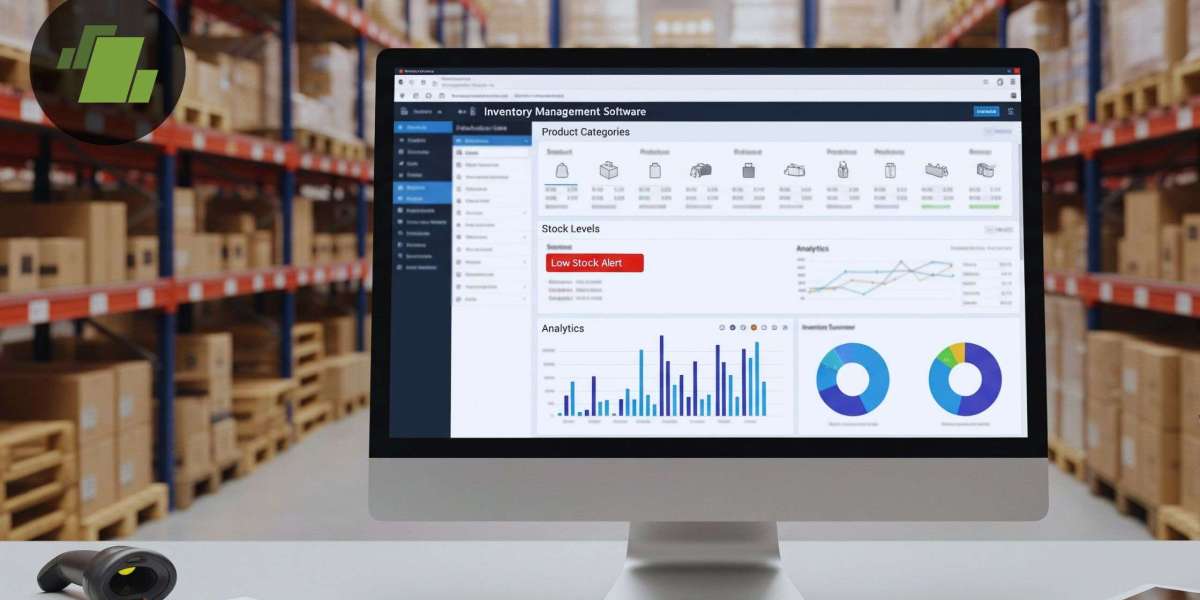

For an e-commerce business, inventory accuracy is essential. A customer should be able to see whether a product is actually available before placing an order. When stock records are inaccurate, businesses may oversell products, delay deliveries, cancel orders, or disappoint customers.
The problem becomes more difficult when a business receives orders from multiple channels. Products may be sold through an online store, marketplace, social media, physical retail outlet, or direct sales channel at the same time.
Without a structured process, employees may struggle to keep stock records updated across every order.
Using the right inventory management software for ecommerce can help businesses maintain more organised stock records by connecting inventory movements with sales, purchases, returns, and other business transactions.
However, software alone cannot guarantee inventory accuracy. Businesses also need consistent processes, accurate product data, regular stock verification, and clear responsibilities.
Create a Single Source of Inventory Information
One of the biggest causes of inventory problems is maintaining stock information in multiple places.
An e-commerce business may have one spreadsheet for warehouse stock, another system for website orders, and separate records for marketplace sales.
This creates confusion because different systems may show different quantities for the same product.
A better approach is to establish a central inventory record.
The right inventory management software for ecommerce can help businesses manage stock information through a structured system and reduce the need to update multiple spreadsheets manually.
The exact setup will depend on how the business receives orders and whether integrations are available for its sales channels.
Keep Product Information Consistent
Accurate inventory management begins with accurate product records.
Every product should have a clear name and unique identifier. Businesses selling products with different sizes, colours, models, or other variations should clearly distinguish each variation.
For example, a blue shirt in medium size should not be treated as the same stock item as the same shirt in large size if they are managed separately.
Inconsistent product names or duplicate product codes can create confusion when orders are processed.
A well-organised product database helps the business connect sales, purchases, returns, and stock movements to the correct item.
Update Stock When Orders Are Processed
Every confirmed and fulfilled sale affects inventory.
If employees wait until the end of the day to manually update stock, there is a greater risk that the business may sell the same item through another channel before the quantity is adjusted.
A structured inventory management software for ecommerce workflow can help connect sales transactions with inventory records.
Depending on the system configuration, the relevant stock movement can be recorded as part of the sales process.
The business should also establish clear rules for when stock is reduced. This may depend on whether the business considers stock committed when an order is placed, confirmed, packed, or dispatched.
The important point is to use a consistent process.
Account for Cancelled Orders
Not every e-commerce order is completed.
Customers may cancel orders, payments may fail, or the business may need to cancel a transaction because of an operational issue.
If stock is reserved or reduced for an order, the inventory process should clearly account for what happens when that order is cancelled.
Failing to reverse or correctly manage cancelled transactions can cause inventory records to become inaccurate over time.
Businesses should define a standard workflow for cancellations and ensure that employees follow it consistently.
Manage Returns Separately From Regular Sales
Product returns are another major source of inventory errors.
A returned product should not automatically be treated as available stock without inspection.
The item may be damaged, incomplete, expired, or unsuitable for resale.
A proper process should distinguish between items that can be returned to available inventory and items that need separate handling.
The right inventory management software for ecommerce can help maintain records of inventory movements, but the business still needs a clear physical process for inspecting and categorising returned products.
Record Damaged and Missing Stock
Inventory can change for reasons other than purchases and sales.
Products may be damaged during storage or shipping. Items can be lost, misplaced, or found to have been incorrectly counted.
These situations should be recorded through a controlled stock-adjustment process.
Simply changing the inventory quantity without recording the reason makes it difficult to identify recurring problems.
Businesses should investigate frequent discrepancies and determine whether the issue is caused by receiving errors, picking mistakes, poor storage practices, or weaknesses in transaction recording.
Synchronise Inventory Across Sales Channels
E-commerce businesses often sell through multiple channels.
This creates a risk of overselling when inventory information is not updated across channels quickly enough.
For example, if only one unit of a product is available and it is sold through the website, that sale should be reflected in the relevant inventory records before another sales channel accepts an order for the same item.
The exact method for synchronisation depends on the software, available integrations, and sales platforms being used.
Before choosing inventory management software for ecommerce, businesses should verify whether it supports their required order sources or whether additional integrations are necessary.
It is a mistake to assume that every inventory system automatically connects with every marketplace or e-commerce platform.
Connect Purchases With Inventory
Inventory accuracy does not depend only on sales.
Stock records must also be updated when new products are received from suppliers.
Businesses should verify the quantity and condition of goods before recording them as available inventory.
Receiving incorrect quantities into the system can create problems before the products are even sold.
An integrated system can connect purchase transactions with inventory records and reduce duplicate data entry.
BUSY can help businesses manage purchases, sales, inventory, accounting, billing, and GST-related transactions through a connected workflow.
For e-commerce businesses, this can be useful for maintaining organised business records.
However, businesses should verify whether the selected setup supports their specific online sales channels and integration requirements.
Use Clear Processes for Order Fulfilment
Inventory errors often occur during picking and packing.
An employee may select the wrong product variation, ship the wrong quantity, or forget to record an adjustment.
A clear fulfilment process can reduce these mistakes.
Products should be organised logically, and employees should follow a consistent procedure for picking, checking, packing, and dispatching orders.
The inventory record should reflect the actual business process.
Technology can support order and inventory management, but it cannot compensate for poorly organised warehouse operations.
Conduct Regular Physical Stock Verification
No inventory system should be treated as completely self-correcting.
Regular physical stock verification is essential.
Businesses should compare actual stock with the quantities shown in their records.
This can help identify damaged products, misplaced inventory, unrecorded returns, receiving errors, theft, or transaction mistakes.
High-value and fast-moving products may require more frequent checks.
Instead of waiting for a full annual stock count, many businesses benefit from checking selected product groups regularly.
The goal is to identify discrepancies early before they become larger operational problems.
Monitor Inventory Data for Unusual Patterns
Inventory reports can help businesses identify potential problems.
For example, frequent adjustments to the same product may indicate a process issue.
Repeated stock shortages may suggest that purchases are not being recorded correctly or that sales are being processed outside the standard workflow.
The right inventory management software for ecommerce should make relevant stock information easier to review.
However, reports are only useful when businesses investigate unusual patterns instead of simply correcting quantities.
Understanding why a discrepancy occurred is more valuable than repeatedly adjusting the inventory balance.
Maintain Safety Stock for Important Products
Some e-commerce businesses may benefit from maintaining a buffer quantity for fast-moving or critical products.
This can reduce the risk of running out of stock because of unexpected demand or delays in supplier deliveries.
The appropriate safety stock level depends on demand patterns, supplier lead times, product value, and storage capacity.
Businesses should avoid using the same buffer for every product.
Holding too much stock can tie up working capital, while holding too little can lead to missed sales.
Inventory data can help businesses make more informed purchasing decisions.
Integrate Inventory With Accounting and Business Records
Inventory management is closely connected with other business activities.
Purchases affect stock and financial records. Sales affect inventory, revenue, customer balances, and other accounting information.
When these activities are managed in separate systems, employees may need to enter the same information repeatedly.
This increases the possibility of errors.
BUSY provides integrated capabilities for accounting, billing, purchases, sales, inventory, and GST-related processes.
For e-commerce businesses that manage some or all of these activities within one system, this can reduce duplicate data entry and help maintain more consistent records.
Businesses should still evaluate whether additional e-commerce or marketplace integrations are required for their particular sales channels.
Give Employees Clear Responsibilities
Inventory accuracy is also a people and process issue.
Businesses should clearly define who is responsible for receiving goods, updating purchase records, processing orders, handling returns, approving stock adjustments, and conducting physical verification.
Without clear responsibilities, employees may assume that someone else has updated the inventory.
This can result in missing or duplicate entries.
Appropriate user access controls, where available, can also help limit unnecessary changes to inventory records and improve accountability.
Use Technology Without Ignoring Operational Discipline
Technology can significantly improve inventory management, but it is not a substitute for good business processes.
A company can invest in advanced inventory management software for ecommerce and still have inaccurate stock if employees fail to record returns, purchases, cancellations, or damaged products.
The most effective approach combines software with consistent operational procedures.
Businesses should train employees, maintain accurate product records, standardise order processing, conduct regular physical stock checks, and investigate recurring discrepancies.
Why BUSY Can Help E-commerce Businesses
BUSY can be a practical option for e-commerce businesses that need to manage accounting, billing, purchases, sales, inventory, and GST-related business processes through an integrated workflow.
Connecting these activities can reduce repetitive data entry and make transaction records easier to manage.
However, e-commerce businesses should carefully evaluate their specific requirements before selecting a solution.
If the business sells through multiple marketplaces, online stores, or specialised platforms, it should verify whether the required integrations are available or whether additional tools are needed.
The best solution depends on the business's sales channels, order volume, inventory complexity, and operational workflow.
Final Verdict
Keeping inventory accurate across e-commerce orders requires more than simply tracking product quantities.
Businesses need a central source of inventory information, consistent product records, timely updates for sales and purchases, clear processes for cancellations and returns, and regular physical stock verification.
The right inventory management software for ecommerce can help organise these activities and reduce dependence on manual spreadsheets.
BUSY can be a practical choice for businesses that want to connect inventory with accounting, billing, purchases, sales, and GST-related processes.
However, businesses using multiple online marketplaces or sales platforms should carefully verify integration capabilities before making a decision.
When technology is combined with accurate data, clear employee responsibilities, and disciplined operational processes, e-commerce businesses can reduce stock mismatches, minimise overselling, and maintain better control over inventory.