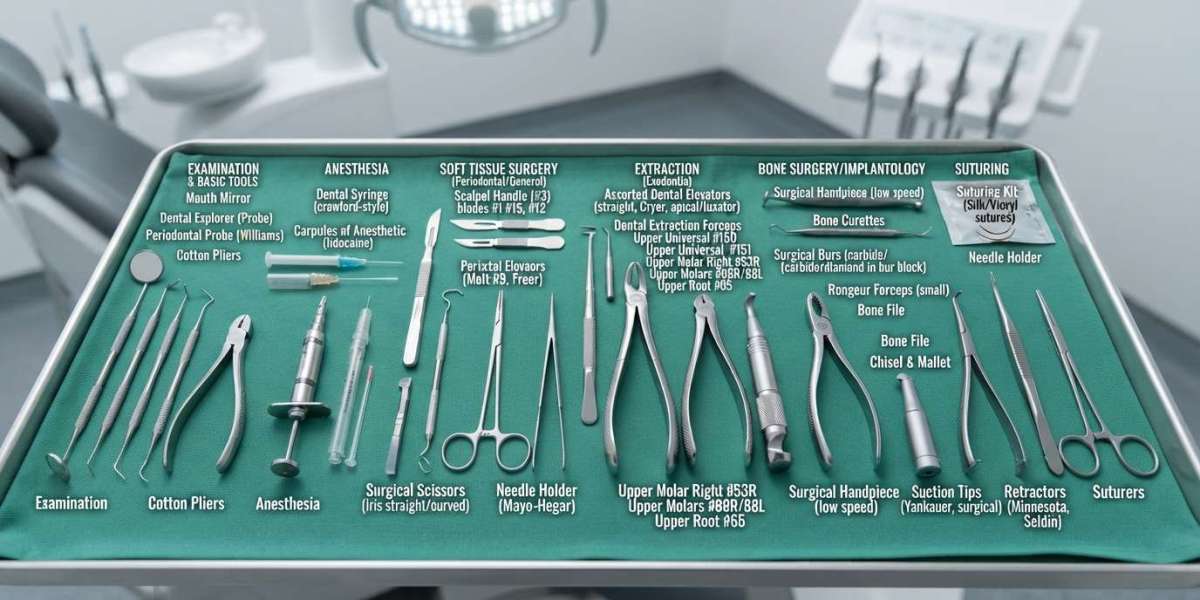

Dental surgical instruments are important tools used by dentists and oral surgeons to perform different procedures involving the teeth, gums, jaw, and other parts of the mouth. Each instrument is designed for a specific purpose, such as cutting, holding, removing, lifting, or examining oral tissues and teeth.
Modern dentistry requires a wide range of tools because dental procedures can vary greatly. A simple tooth extraction may require different instruments from a dental implant procedure or gum surgery. Using the correct instrument helps dental professionals work with better control and accuracy.
Quality tools are also important for patient safety and efficient dental care. Instruments should be strong, easy to handle, and suitable for proper cleaning and sterilization. Understanding the main types of dental tools can help dental professionals choose the right products for their daily work.
Dental Examination Instruments
Dental examination instruments are used to inspect the teeth, gums, and other areas of the mouth. These tools help dentists identify possible problems and examine the patient's oral condition.
Dental mirrors are commonly used to provide a clear view of areas that may be difficult to see directly. They can also help dentists move soft tissues gently and improve visibility during an examination.
Dental probes are another important type of examination tool. They are used to examine the condition of teeth and gums. Different designs are available depending on the type of examination being performed.
These basic instruments are often used before treatment begins because a proper examination helps dentists understand the patient's needs.
Dental Forceps
Dental forceps are one of the most common types of dental surgical instruments. They are mainly used to hold and remove teeth during extraction procedures.
Different types of forceps are designed for different teeth. Upper and lower teeth have different shapes and positions, so dentists need forceps that can provide a suitable grip for each situation.
The working ends of the forceps are designed to fit around the tooth, while the handles allow the dentist to maintain control. A well-designed instrument can make tooth removal easier when used with proper professional technique.
Forceps should be inspected regularly to make sure they remain in good condition and provide a secure grip.
Dental Elevators
Dental elevators are commonly used during tooth extraction. Their main purpose is to help loosen a tooth before it is removed with forceps.
The instrument is carefully placed around the tooth to help separate it from the surrounding tissues. This can make the removal process more controlled.
Different types of elevators are available in various shapes and sizes. Straight, curved, and angled designs can be used depending on the position of the tooth and the procedure.
Strong construction is important because elevators are designed to handle controlled pressure during dental procedures.
Dental Surgical Scissors
Dental surgical scissors are used for cutting soft tissues, sutures, and other materials during dental treatment. They are available in different sizes and blade shapes.
Straight scissors can be useful for direct cutting, while curved designs may provide better access to certain areas of the mouth. Some scissors are also made specifically for cutting sutures after a procedure.
Sharp and properly maintained blades can support clean and controlled cutting. Dull or damaged scissors should be inspected and repaired or replaced when necessary.
Proper cleaning and sterilization are also important because these tools may come into contact with oral tissues during treatment.
Dental Retractors
Dental retractors are used to gently move soft tissues away from the treatment area. They may hold the cheeks, lips, tongue, or other tissues to give the dentist better access and visibility.
A clear working area is important during many dental procedures. Retractors can help the dental professional see the treatment site and perform the procedure with better control.
Different designs are available for different areas of the mouth. The choice of retractor depends on the procedure and the amount of access required.
These instruments should be designed to provide effective support without causing unnecessary pressure on the patient's tissues.
Periodontal Instruments
Periodontal instruments are used for procedures involving the gums and supporting structures around the teeth. They can help dentists examine and treat areas that require careful attention.
Some periodontal tools are used to clean areas around the teeth, while others are used during surgical treatment of the gums. Their small working ends allow dental professionals to reach narrow spaces.
The shape and design of each instrument depend on its purpose. Using the right periodontal tool can help dentists work carefully around sensitive gum tissue.
Proper maintenance is important because these instruments need to remain effective and safe for repeated use.
Dental Curettes
Dental curettes are specialized instruments commonly used during periodontal treatment. They can be used to clean and treat areas around the teeth and gums.
Different curettes are designed for different surfaces of the teeth. Some are made for general use, while others are shaped to reach specific areas.
The curved working end allows the dental professional to work carefully around the tooth structure. Proper handling is important to achieve effective treatment while protecting surrounding tissues.
Regular sharpening and inspection may be needed to maintain the performance of reusable curettes.
Dental Scalers
Dental scalers are used to remove deposits from the surfaces of teeth. They are commonly used during professional dental cleaning and periodontal care.
These instruments have specially designed working ends that allow dental professionals to reach different areas of the teeth. Different scaler designs may be selected depending on the treatment requirement.
Scalers need to be kept in good condition. Proper maintenance helps ensure that they continue to perform effectively during dental procedures.
Like other reusable dental tools, they should be cleaned and sterilized according to suitable procedures before being used again.
Dental Surgical Instruments for Implant Procedures
Dental implant procedures require specialized tools because implant placement involves careful preparation and accurate positioning. Different instruments may be used during the various stages of the procedure.
Some tools are used to prepare the treatment area, while others assist with placing and handling implant components. Accurate instruments can help dental professionals maintain better control during treatment.
The specific tools required may depend on the implant system and the type of procedure being performed. Dental professionals should select instruments that are suitable for their planned treatment.
Proper cleaning, sterilization, and maintenance are especially important because implant procedures require a controlled and clean working environment.
Bone Instruments Used in Dental Surgery
Some dental procedures require instruments designed to work with bone. These tools may be used during oral surgery, implant treatment, or other procedures involving the jaw.
Bone files can be used to smooth bone surfaces when required. Other specialized instruments may be used to hold, shape, or manage bone during a procedure.
The design of these tools allows dental professionals to work carefully in a small surgical area. Quality and proper maintenance are important for reliable performance.
The exact instrument used depends on the procedure and the professional requirements of the dental practice.
Needle Holders
Needle holders are used to hold surgical needles during suturing. They allow dentists and oral surgeons to control the needle while closing an area after a procedure.
A secure grip is important because suturing requires careful and controlled movements. Needle holders are available in different sizes and designs to meet different surgical needs.
These instruments should have reliable working parts and be inspected regularly. A damaged or poorly functioning needle holder may affect the ease of a procedure.
Proper cleaning and sterilization help keep reusable instruments safe for continued use.
Tissue Forceps
Tissue forceps are used to hold and manage soft tissues during dental surgery. They allow the dental professional to handle tissues with care during different procedures.
Some tissue forceps have fine tips for delicate work, while others are designed to provide a firmer grip. The choice depends on the procedure and the type of tissue being handled.
Good instrument design can improve control and reduce unnecessary movement. This is especially important when working in the limited space of the mouth.
Tissue forceps are part of the wider range of surgical instruments used to support careful tissue handling during medical and dental procedures.
Surgical Suction Instruments
Suction instruments are used to remove fluids and other materials from the treatment area. Keeping the working area clear can improve visibility during dental surgery.
Different suction designs are available depending on the type of procedure. Some are suitable for general fluid removal, while others are designed for more controlled surgical use.
A clear treatment area can help dental professionals work more efficiently. Proper cleaning and maintenance of reusable suction components are important for hygiene and performance.
Dental Instrument Trays and Organizing Systems
Instrument trays and organizing systems are also useful in dental practices. They help dental teams arrange tools in a clear and organized manner before a procedure.
A properly prepared instrument tray can improve workflow because the required tools are easier to access. It can also help staff check whether the necessary instruments are available before treatment begins.
Good organization is especially useful during surgical procedures that require several instruments. Dental teams can arrange tools according to the expected steps of the procedure.
These systems can be part of effective dental surgical instrument solutions that support better organization and daily workflow.
The Role of Surgical Instruments in Dental Care
Surgical instruments are used in many areas of healthcare, but dental tools are designed to meet the special needs of oral procedures. The mouth is a small and sensitive working area, so dental instruments often have specific shapes and sizes.
From forceps and elevators to scissors and tissue-handling tools, every instrument has a particular role. Selecting the correct tool can help dental professionals work with better control and efficiency.
A well-maintained collection of instruments can also support smooth preparation for different dental procedures.
Importance of Quality and Proper Care
The performance of dental tools depends on their quality and maintenance. Instruments are often cleaned and sterilized repeatedly, so they should be made from suitable and durable materials.
Dental practices should inspect instruments for signs of rust, damage, dull edges, loose joints, or other problems. Damaged tools should be repaired or replaced when necessary.
Proper storage is also important. Clean instruments should be stored in a suitable environment to protect them from moisture, contamination, and physical damage.
Following proper care procedures can help extend the useful life of instruments and support reliable performance.
Choosing Suitable Dental Surgical Instrument Solutions
Dental surgical instrument solutions can help dental practices select and organize the tools needed for different procedures. A practice that performs tooth extractions, implant procedures, and gum surgery may require a wider range of instruments than a general dental clinic.
When selecting instruments, dental professionals should consider the intended use, material quality, design, handling, durability, and maintenance requirements.
Working with a reliable supplier can also help dental practices maintain access to suitable products and replacement options. Choosing quality instruments can provide better long-term value and support consistent patient care.
Conclusion
There are many types of dental surgical instruments, and each one has an important role in modern dentistry. Examination tools help dentists assess oral health, while forceps and elevators support tooth extraction. Scissors, retractors, periodontal tools, curettes, scalers, needle holders, and tissue forceps are used for other important tasks.
Surgical instruments designed for dental use help professionals perform procedures with greater control in the small and sensitive areas of the mouth. Proper selection, cleaning, sterilization, maintenance, and storage are necessary to keep these tools safe and reliable.
By choosing high-quality dental surgical instrument solutions, dental practices can build an effective collection of tools for different procedures. Reliable and well-maintained instruments can support efficient workflow, professional care, and better treatment experiences for patients.
More Info: Amg Medical