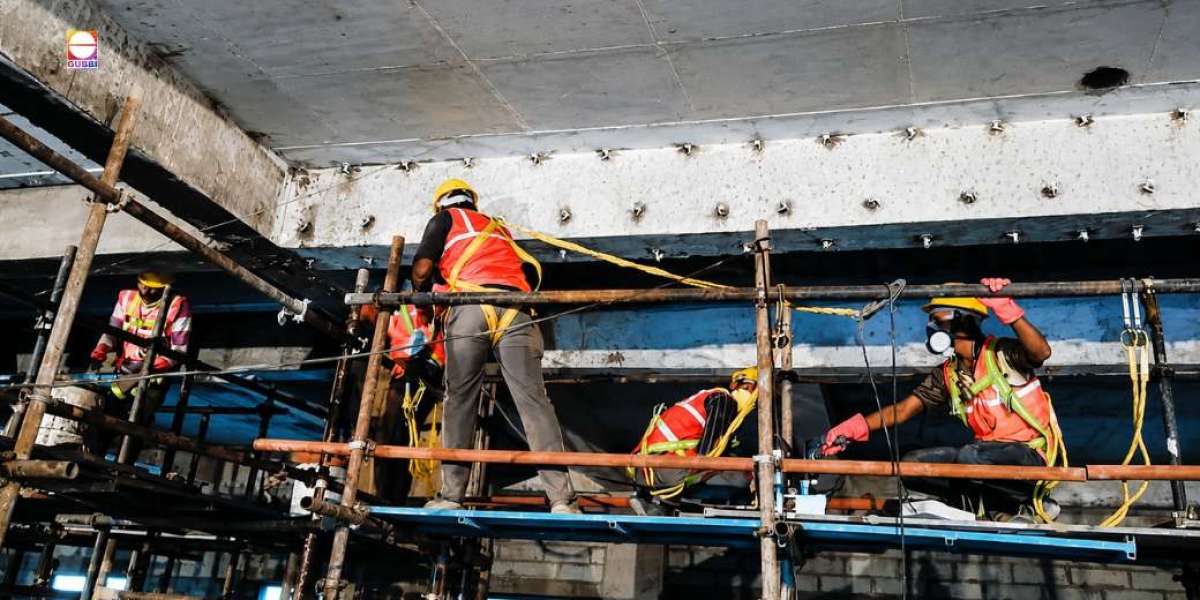

Buildings and concrete structures are designed to withstand years of loading, environmental exposure, moisture, temperature changes, and daily use. Over time, however, cracks, corrosion, concrete spalling, leakage, settlement, and other forms of deterioration can affect their performance. Professional structural repair services help identify these problems, address their underlying causes, and restore damaged structural elements before deterioration becomes more extensive or disruptive. Structural damage should not be judged only by appearance. A small crack may be superficial, while another crack can indicate movement, corrosion, overloading, or deterioration within a structural member. This is why property owners, facility managers, and project teams often require experienced structural repair contractors to investigate the condition before deciding on a repair method. Proper assessment helps ensure that repairs address the actual problem rather than simply covering visible symptoms.
What Are Structural Repair Services?
Structural repair services involve engineering-based interventions used to restore damaged or deteriorated structural components. Depending on the condition, repairs may involve concrete restoration, crack treatment, reinforcement corrosion control, section replacement, grouting, jacketing, or strengthening. The objective is to bring the affected component back to an appropriate level of structural performance, durability, and serviceability while considering its existing condition and future requirements.
Unlike ordinary maintenance, structural repair requires understanding how a structure behaves and why deterioration has occurred. A repair that looks acceptable immediately after completion may fail again if water ingress, reinforcement corrosion, poor detailing, overloading, or another underlying cause remains untreated. Structural Integrity Restoration therefore begins with investigation and continues through suitable material selection, controlled execution, and appropriate protection of the repaired area.
Why Do Structures Need Professional Repair?
Concrete structures can deteriorate for several reasons, including prolonged moisture exposure, reinforcement corrosion, carbonation, chloride penetration, chemical exposure, poor workmanship, construction defects, ageing, and changing operational conditions. These factors can progressively affect concrete quality and reinforcement. Professional structural repair services are particularly important when deterioration reaches beams, columns, slabs, foundations, or other components that contribute directly to the stability and load-carrying behaviour of a structure.
In industrial and commercial environments, structural deterioration can also create operational concerns. Damaged concrete, exposed reinforcement, leaking areas, or deteriorated structural members may interfere with equipment, access, production, occupancy, or safety requirements. Addressing defects early can help property owners plan repairs more effectively instead of waiting for emergency intervention after deterioration has become widespread.
Common Signs That a Structure Requires Repair
Visible cracking is one of the most common reasons owners seek structural repair contractors. However, cracks should be evaluated according to their location, pattern, width, depth, movement, and possible cause. Other warning signs include concrete spalling, delamination, rust staining, exposed reinforcement, damaged beam edges, deteriorated columns, slab distress, unusual deflection, water seepage, and repeated cracking after previous repairs.
A professional inspection becomes especially important when damage appears to be increasing or when several symptoms occur together. For example, cracks accompanied by rust staining and concrete spalling may indicate reinforcement corrosion rather than a simple surface defect. Similarly, recurring leakage around structural elements may contribute to deterioration over time. Understanding the relationship between visible symptoms and underlying mechanisms helps determine whether repair, strengthening, waterproofing, or a combination of solutions is appropriate.
Structural Cracks Should Not Be Ignored
Not every concrete crack requires the same treatment. Some cracks may result from shrinkage or other non-structural causes, while others can be associated with structural movement, corrosion, settlement, overloading, or changing stresses. Before selecting a crack repair method, engineers may need to establish whether the crack is stable or continuing to develop. The repair approach should reflect the cause, condition, location, and expected behaviour of the affected member.
Crack repair may involve sealing, injection, routing, stitching, or other techniques depending on the nature of the defect. Simply filling a crack without understanding why it formed can result in recurring damage. Where cracking is associated with reinforcement corrosion or structural distress, the surrounding concrete and reinforcement may require more comprehensive treatment. This is why professional structural repair contractors focus on diagnosis rather than treating every crack with the same method.
Reinforcement Corrosion and Concrete Spalling
Reinforcement corrosion is another major reason for concrete repair. When embedded steel reinforcement corrodes, corrosion products can create pressure within the surrounding concrete. This may lead to cracking, delamination, spalling, exposed reinforcement, and progressive deterioration. Moisture, carbonation, chloride exposure, inadequate concrete cover, and aggressive environmental conditions can contribute to the corrosion process, making appropriate diagnosis essential for durable repairs.
Repairing corrosion-damaged concrete generally involves removing unsound material, exposing affected reinforcement, cleaning or treating the steel as required, and restoring the damaged concrete section with a compatible repair system. Depending on the severity of deterioration, additional strengthening or protective measures may also be necessary. Treating only the visible spalled area without addressing active corrosion can allow deterioration to continue beneath the repaired surface.
How Structural Repair Contractors Assess Damage
A reliable structural repair project usually begins with a detailed site inspection. Engineers examine the structural layout, visible distress, construction details, previous repairs, environmental exposure, usage conditions, and accessibility. Depending on the project, additional diagnostic investigations may be considered to understand concrete quality, reinforcement condition, internal defects, or other factors influencing the repair strategy.
Assessment methods can include visual inspection and appropriate non-destructive or semi-destructive investigations. Techniques such as rebound hammer testing, ultrasonic pulse velocity testing, cover measurement, half-cell potential testing, core testing, and other investigations may help develop a clearer understanding of existing conditions. The exact testing program should be selected according to the structure, observed deterioration, engineering requirements, and information needed for decision-making.
Choosing the Right Structural Repair Method
There is no single repair method suitable for every damaged structure. The correct solution depends on the type of deterioration, structural element, damage severity, environmental exposure, accessibility, existing materials, operational requirements, and expected service life. Experienced structural repair contractors consider these factors before recommending a repair system, rather than selecting materials simply because they are commonly used for similar-looking defects.
For example, surface deterioration may require concrete restoration, while a structural crack may require injection or another engineered treatment. A severely deteriorated column may need section restoration or jacketing, while a member with insufficient capacity may require strengthening. Where water ingress is contributing to deterioration, waterproofing or injection grouting may also become part of the overall rehabilitation strategy.
Concrete Repair and Section Restoration
Concrete repair is commonly required when concrete becomes cracked, delaminated, honeycombed, spalled, or otherwise deteriorated. The damaged material is generally removed until a suitable sound substrate is reached. The repair area is then prepared, reinforcement is treated where necessary, and an appropriate repair material is selected according to the required performance and application conditions.
Repair materials can include polymer-modified mortars, epoxy-based systems, micro-concrete, or other engineered materials depending on the application. Compatibility with the existing substrate is important because differences in properties can influence bond, durability, shrinkage, and long-term performance. Proper surface preparation, placement, compaction, finishing, and curing are equally important because even a high-quality material cannot compensate for poor execution.
Micro Concrete and Jacketing Solutions
Where substantial deterioration has affected a structural member, conventional patch repair may not provide an adequate solution. Micro-concrete can be used for suitable section restoration and jacketing applications because it can flow around reinforcement and fill appropriately prepared forms or confined repair zones. The selection and detailing of such systems should be based on the structural requirement and the existing condition of the member.
Jacketing can be considered when a column, beam, or other structural component requires additional section capacity, confinement, or restoration. Depending on engineering requirements, solutions may include reinforced concrete jacketing, steel jacketing, or other strengthening systems. These approaches are different from cosmetic repairs because they can modify the structural behaviour or capacity of the affected member and therefore require proper engineering design and execution.
Crack Injection and Grouting
Certain cracks and internal voids may require specialized injection techniques. Epoxy injection can be considered for suitable structural cracks where restoring continuity or sealing a crack is required. Polyurethane injection grouting is commonly associated with controlling water ingress through cracks or joints where flexible behaviour and water management are important. Cementitious grouting and micro-fine cement systems may also be considered for specific void-filling or stabilization applications.
The choice between injection and other repair methods depends on the crack characteristics and the reason for deterioration. Active cracks, leaking cracks, structural cracks, and non-structural cracks can behave differently and therefore should not automatically receive identical treatment. Professional structural repair contractors evaluate the condition first and then select an injection or grouting system that matches the expected behaviour and project requirements.
When Does Repair Become Structural Strengthening?
Structural repair and structural strengthening are related but different requirements. Repair primarily addresses deterioration or damage and aims to restore an appropriate condition. Strengthening is generally required when a structure needs improved load-carrying capacity, stiffness, confinement, or performance because of increased loads, changes in use, design deficiencies, deterioration, or updated requirements.
Strengthening techniques can include carbon fibre reinforced polymer systems, steel plates, concrete or steel jacketing, additional reinforcement, and other engineered solutions. In some projects, repair and strengthening are required together. For example, deteriorated concrete may first need restoration and corrosion treatment before a strengthening system can be installed. The sequence should be established through engineering assessment rather than chosen only from the visible appearance of damage.
Structural Repair for Ageing Buildings
Ageing buildings often require more than isolated patchwork repairs. Years of exposure, repeated loading, modifications, water ingress, changing occupancy, and deferred maintenance can result in multiple forms of deterioration appearing at the same time. A structured assessment helps identify which defects are cosmetic, which require immediate attention, and which may indicate broader structural or durability concerns.
For building owners, repair planning should also consider future use. A structure that originally supported one type of occupancy may later experience different loading or operational demands. In such situations, repairing existing damage alone may not be enough. The project may require rehabilitation or strengthening so the structure can safely support its intended future use while minimizing unnecessary demolition and disruption.
Structural Repair for Industrial Structures
Industrial structures face demanding conditions that can accelerate deterioration. Manufacturing facilities, warehouses, power-sector structures, processing plants, and other industrial assets may experience vibration, chemical exposure, moisture, heavy operational loads, temperature variations, and difficult access conditions. Structural repair services for these facilities therefore require careful planning around both engineering requirements and ongoing operations.
Repair work in an active industrial facility should consider safety, access, shutdown requirements, equipment protection, work sequencing, and site coordination. Experienced structural repair contractors can develop phased execution strategies where appropriate, allowing critical repair activities to be planned around operational requirements. The objective is not simply to repair damaged concrete but to complete the work safely while supporting the continued performance of the facility.
Structural Repair for Bridges and Infrastructure
Bridges and infrastructure assets are exposed to environmental and operational conditions that can accelerate deterioration. Concrete cracking, reinforcement corrosion, spalling, water exposure, impact damage, and other defects can affect different components of an infrastructure asset. Repair planning therefore requires attention to both the individual damaged component and the broader condition of the structure.
Infrastructure rehabilitation may involve concrete restoration, reinforcement treatment, strengthening, protective coatings, grouting, waterproofing, or other specialized techniques. The selected approach should reflect the structure's exposure, accessibility, operational requirements, and expected service life. A well-planned rehabilitation program can help infrastructure owners prioritize deterioration and implement repairs before localized defects develop into more complex structural problems.
How to Choose Structural Repair Contractors
Selecting structural repair contractors should involve more than comparing quotations. Owners should consider the contractor's engineering capability, relevant project experience, repair methodology, workforce expertise, safety practices, quality-control procedures, equipment, and ability to work within the site's operational constraints. The contractor should also be capable of explaining why a particular repair method is appropriate for the observed deterioration.
It is useful to ask whether the contractor provides inspection, technical assessment, repair design support, material selection, execution, and post-repair protection as part of an integrated approach. A contractor capable of coordinating these stages can help reduce gaps between diagnosis and execution. Most importantly, the proposed repair should be based on the actual condition of the structure rather than a generic treatment applied to every project.
Why Professional Expertise Matters
Structural repairs directly influence the safety, durability, and future performance of a structure, so workmanship and engineering decisions matter. Incorrect surface preparation, inadequate removal of deteriorated concrete, unsuitable materials, poor reinforcement treatment, improper application, or insufficient curing can reduce the effectiveness of a repair. Professional execution is therefore an important part of achieving the intended result.
For property owners comparing structural repair companies, it is worth looking for a contractor that approaches the project from an engineering perspective. Gubbi Civil Engineers Limited can be considered when owners need an experienced partner for structural repair, rehabilitation, concrete restoration, and strengthening requirements, particularly where the project requires inspection-based planning and specialized repair techniques rather than basic surface maintenance.
Repair Versus Rebuilding: What Should Owners Consider?
When a structure shows significant deterioration, owners may wonder whether repair is worthwhile or whether reconstruction would be better. The answer depends on the extent of damage, remaining structural capacity, building functionality, future requirements, repair feasibility, project cost, disruption, and expected service life. A detailed engineering assessment can help compare realistic alternatives before a major decision is made.
In many situations, targeted structural repair and rehabilitation can address deterioration without replacing an entire structure. However, repair should not be selected automatically simply because it appears cheaper. The selected strategy should provide an appropriate balance between structural performance, durability, construction feasibility, operational disruption, and long-term maintenance. A properly assessed repair strategy can help owners make decisions based on engineering evidence rather than assumptions.
Importance of Preventive Structural Maintenance
Structural repair should ideally not begin only when damage becomes severe. Regular inspections and preventive maintenance can help identify early signs of deterioration, allowing owners to plan corrective action. Monitoring cracks, corrosion, water ingress, concrete condition, joints, and other vulnerable areas can provide useful information about how a structure is changing over time.
Preventive maintenance is particularly valuable for large buildings, industrial facilities, bridges, and infrastructure assets where deterioration can become expensive or disruptive once it reaches an advanced stage. A planned maintenance approach allows owners to prioritize repairs, schedule work around operations, and reduce the likelihood of unexpected structural interventions. Early attention does not eliminate deterioration, but it can improve repair planning and asset management.
What Makes a Structural Repair Project Successful?
Successful structural repair is not determined only by how the finished surface looks. The underlying cause of deterioration must be understood, the appropriate repair system must be selected, and execution must follow the technical requirements of the project. Surface preparation, reinforcement treatment, material compatibility, placement, curing, protection, and quality control all contribute to the long-term performance of repaired areas.
A strong repair strategy also considers what happens after the work is completed. Protective coatings, waterproofing, drainage improvements, corrosion-control measures, or regular inspections may be required to reduce the likelihood of recurring deterioration. This broader approach helps transform structural repair from a short-term patching exercise into a planned rehabilitation solution focused on durability and continued structural performance.
Choosing experienced structural repair contractors is equally important because successful rehabilitation depends on more than selecting a repair material. Proper inspection, engineering assessment, surface preparation, reinforcement treatment, material application, quality control, and protective measures all contribute to the final outcome. When repair decisions are based on the actual condition of a structure, owners can plan more effectively and avoid unsuitable or temporary solutions. For ageing buildings, industrial facilities, commercial properties, bridges, and infrastructure assets, timely structural assessment and planned rehabilitation can support safer and more reliable long-term performance. If your structure shows signs of deterioration, seeking professional structural repair expertise early can help determine the right course of action before minor defects develop into more extensive and disruptive problems.