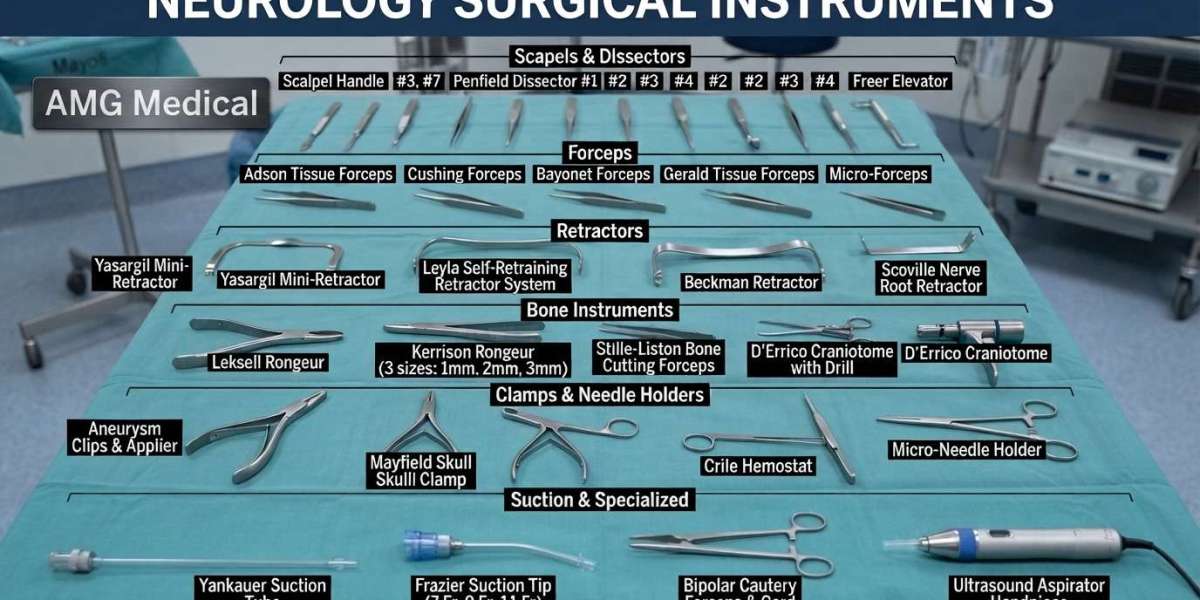

Neurology surgical instruments are specialized tools used during procedures involving the brain, spine, nerves, and other parts of the nervous system. These procedures require careful handling because neurological tissues are very delicate. Surgeons need instruments that provide good control, clear access, and suitable support during different stages of an operation.
There are many types of instruments used in neurological surgery. Each tool is designed for a specific task, such as cutting tissue, holding structures, removing material, controlling bleeding, or keeping the surgical area clear. The correct selection depends on the type of procedure and the area being treated.
Modern surgical care combines skilled professionals with reliable tools and medical technology. Understanding the different types of neurology surgical instruments can help hospitals and surgical teams prepare suitable instrument sets for brain and spine procedures.
Neurosurgical Forceps
Forceps are among the most common tools used during neurological procedures. They help surgeons hold, grasp, move, or handle tissues and other materials. Because neurological tissues can be very delicate, forceps are available in many shapes and sizes.
Some forceps have fine tips for delicate work, while others have stronger tips for tasks that require a firmer grip. The handle design can also affect how easily the surgeon controls the instrument.
A suitable neurosurgical instrument should match the task being performed. Fine forceps may be useful in microsurgical procedures, while larger designs may be selected for areas that require more reach or grip.
Neurosurgical Scissors
Scissors are used for controlled cutting during brain and spine procedures. They are available with different blade shapes, lengths, and tips to meet various surgical needs.
Fine scissors can support delicate cutting, while other designs may be used for stronger tissues or surgical materials. Curved scissors can also provide access to areas where straight scissors may be difficult to use.
Sharp and properly aligned blades are important for reliable performance. Surgical staff should inspect scissors regularly and remove damaged or dull tools from service.
Neurosurgical Retractors
Retractors are used to move tissues away from the surgical area. They help create space and improve visibility during procedures involving the brain and spine.
Different retractor designs are available for different surgical needs. Some are small and suitable for delicate areas, while others are designed to provide wider access.
Retractors must be selected carefully because unnecessary pressure on sensitive tissues should be avoided. The correct size and design can help provide suitable access while supporting controlled surgical work.
Cranial Instruments
Cranial instruments are designed for procedures involving the skull and brain. They can be used during operations where surgeons need to access the brain through the skull.
Some cranial tools are designed to work with bone, while others are used for handling soft tissue. Their design needs to provide suitable strength and control for the intended task.
Cranial instruments should be prepared carefully before surgery. They need to be cleaned, sterilized, inspected, and arranged according to the needs of the procedure.
Spinal Instruments
Spinal instruments are used during procedures involving the spine, spinal cord, nerves, and surrounding structures. These tools come in different lengths, shapes, and angles.
Some spinal instruments are designed to provide access to deep areas. Others help hold tissues or manage structures during the procedure.
The choice of a spinal instrument depends on the type and location of the surgery. A well-prepared set can help surgeons and operating room staff work more efficiently.
Microsurgical Instruments
Microsurgical instruments are designed for procedures that involve very small structures. These tools are often used with surgical microscopes or other forms of magnification.
They usually have fine tips and carefully designed handles. Their small size allows surgeons to make controlled movements when working around delicate tissues.
Microsurgical tools require careful handling and storage. Their fine working ends can be damaged if they are dropped, handled roughly, or stored incorrectly.
Bipolar Forceps
Bipolar forceps are specialized tools used in certain neurological procedures. They can help surgeons manage tissue and control bleeding during surgery.
These instruments are designed to work with an electrical surgical system. Their use requires proper training and suitable equipment.
The type of bipolar forceps selected depends on the surgical task. Different tip shapes and sizes are available for different needs.
Suction Instruments
Suction instruments help remove blood, fluids, and other material from the surgical area. Keeping the working area clear can improve visibility for the surgical team.
Clear visibility is especially important during brain and spine procedures because surgeons may need to work around small and sensitive structures.
Suction tools come in different sizes and designs. Reusable suction instruments must be cleaned and sterilized correctly after each procedure.
Needle Holders
Needle holders are used to hold surgical needles during suturing. They provide control when surgeons need to close tissues after completing a procedure.
Different needle holders are available in various sizes and designs. The appropriate tool depends on the type of tissue and the surgical method being used.
A good needle holder should provide a secure grip and smooth movement. Proper cleaning and sterilization are necessary when reusable needle holders are used.
Tissue Forceps
Tissue forceps are used to hold and manage soft tissue during surgery. They allow surgeons to work with tissues carefully and with better control.
Some tissue forceps have fine tips for delicate areas, while others are designed to provide a stronger grip. The correct design depends on the procedure.
Careful handling is important because unnecessary pressure can affect delicate tissue. Surgical teams should select the forceps that best match the task.
Bone Instruments
Some neurological procedures require instruments for working with bone. These tools can be used during procedures involving the skull or spine.
Bone instruments are designed to provide the strength needed for their specific task. They may include tools for cutting, holding, shaping, or managing bone.
The selection of these tools depends on the surgical procedure. They should be checked before use to ensure they are in proper working condition.
General Surgical Instruments
General surgical instruments are used across many medical specialties. Common examples include scissors, forceps, clamps, retractors, and needle holders.
Some of these instruments can also be used during neurological procedures for basic surgical tasks. They can work alongside specialized tools designed specifically for brain and spine surgery.
The difference is that general instruments are made for wider surgical use, while specialized neurological tools are designed around the needs of nervous system procedures.
Hemostatic Instruments
Controlling bleeding is an important part of surgery. Hemostatic instruments are used to help control blood flow during procedures.
Clamps and other specialized tools may be selected according to the type of tissue and surgical task. The correct instrument can provide the surgeon with suitable control.
These tools should be handled carefully and inspected regularly. Proper maintenance helps keep their working parts reliable.
Endoscopic Instruments
Endoscopic instruments are used during procedures where surgeons work through small openings or with the help of an endoscope. These tools can provide access to areas that may be difficult to reach through traditional methods.
Endoscopic tools are usually long and narrow. Their design allows them to work through small spaces while giving the surgeon control over the required task.
The use of endoscopic technology depends on the type of neurological procedure. Proper training and suitable equipment are important for safe use.
Surgical Dissectors
Dissectors are used to separate tissues during surgery. They can help surgeons create a suitable working path while managing tissues carefully.
Different dissectors have different shapes and sizes. Some may have blunt ends, while others have more defined working tips.
The correct dissector depends on the tissue and the surgical technique. Careful use can help surgeons work through tissue layers with better control.
Instrument Sets for Brain Surgery
Brain surgery often requires several types of instruments. A surgical set may contain forceps, scissors, retractors, suction tools, needle holders, and other specialized devices.
The exact set depends on the procedure. A smaller operation may require fewer tools, while a more complex procedure may need a larger selection.
Organizing instruments before surgery can help the operating team work efficiently. Each tool should be checked for cleanliness, function, and damage before it is used.
Instrument Sets for Spine Surgery
Spine procedures also require different instrument sets. The tools may include retractors, forceps, scissors, bone instruments, suction tools, and other specialized devices.
Spinal procedures can involve different areas of the spine, so the required instruments may vary. Having different lengths and designs available can help the surgeon select a suitable tool.
Proper organization can reduce delays during surgery. The operating team should prepare the instruments according to the planned procedure.
Importance of Instrument Quality
Quality is important when selecting a neurosurgical instrument. Surgeons need tools that are reliable, properly balanced, and suitable for repeated use.
High-quality materials can help instruments withstand cleaning and sterilization. Good construction can also help maintain the shape and function of the tool.
Hospitals should inspect instruments regularly. Damaged tips, loose joints, rust, and dull cutting edges can affect performance and should be addressed before the instrument is used.
Sterilization and Maintenance
Proper cleaning and sterilization are essential for surgical instruments. After use, tools must be processed according to suitable medical procedures.
Cleaning removes visible material, while sterilization helps reduce harmful microorganisms. Healthcare staff should follow facility procedures and manufacturer instructions.
Regular maintenance can also extend the useful life of instruments. Moving parts should work smoothly, and cutting tools should remain suitable for their intended purpose.
Choosing the Right Instruments
Healthcare facilities should choose instruments based on the procedures performed by their surgical teams. The needs of a brain surgery unit may differ from those of a spine surgery unit.
Size, shape, material, durability, handle design, and working tip are important factors. Surgeons should also consider their preferred techniques and the needs of each procedure.
A reliable supplier can help hospitals select suitable instruments and provide information about care, maintenance, repair, and replacement.
Conclusion
There are many types of neurology surgical instruments, and each has a specific role in brain, spine, and nerve procedures. Forceps, scissors, retractors, suction tools, needle holders, cranial instruments, spinal instruments, and microsurgical tools all support different surgical tasks.
A neurosurgical instrument is designed to meet the special needs of neurological procedures, while general surgical instruments can support common surgical tasks. Choosing the right combination of tools can help surgical teams work with better control and organization.
Quality, sterilization, maintenance, proper storage, and staff training are essential for keeping instruments reliable. As neurological surgery continues to develop, specialized surgical instruments will remain an important part of safe and effective patient care.
More Info: Amg Medical