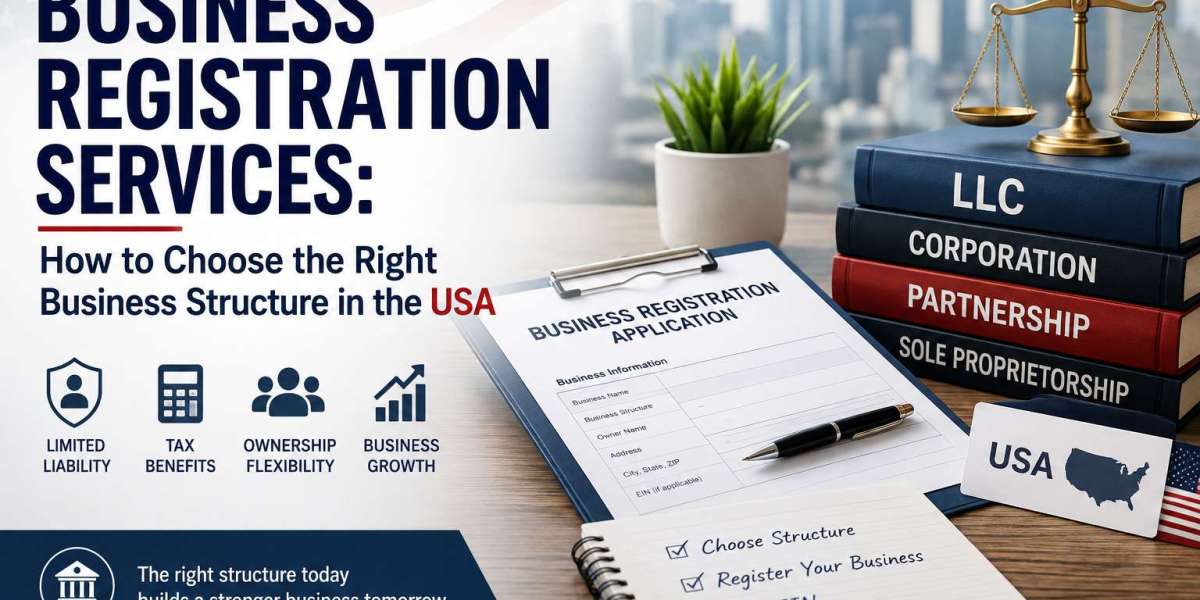

Starting a business in the United States involves more than choosing a name and filing paperwork. One of the most important early decisions is selecting the right legal structure. Your choice can affect personal liability, taxation, ownership, administration, fundraising, and the paperwork your business must maintain.
For entrepreneurs comparing business registration services, understanding these differences is essential. Whether you are launching a solo consulting business, opening a retail company, building a technology startup, or forming a company with multiple owners, the right structure should support both your current situation and your long-term plans.
This guide explains the major business structures available in the USA, how the business registration USA process generally works, what factors should influence your decision, and how to avoid common registration mistakes.
Why Your Business Structure Matters
Your business structure is not simply a registration formality. It establishes how your business is organized legally and influences its tax treatment, liability exposure, ownership arrangements, and administrative responsibilities.
The U.S. Small Business Administration notes that business structure can affect taxes, personal liability, fundraising, paperwork, and other operational considerations.
The main structures entrepreneurs commonly consider are:
Sole proprietorship
Partnership
Limited Liability Company (LLC)
C corporation
S corporation
An LLC, in particular, is created under state law, while its federal tax classification can vary depending on the number of members and elections made with the IRS.
That means there is no universal "best" structure. The appropriate option depends on your business model, ownership, risk level, tax circumstances, and future objectives.
The Main Business Structures in the USA
1. Sole Proprietorship
A sole proprietorship is generally the simplest structure for an individual operating an unincorporated business.
The business and owner are not separate legal entities. From a federal tax perspective, a sole proprietor generally reports business income and expenses on their individual tax return, including Schedule C.
Potential advantages include:
Simple setup
Fewer organizational formalities
Direct control by the owner
Straightforward federal tax reporting
Potential disadvantages include:
No separate legal entity between the owner and business
Personal exposure to business debts and obligations
Less flexibility for bringing in investors
May be less suitable as the business becomes larger or more complex
A sole proprietorship may make sense for someone testing a low-risk business idea, but owners should carefully consider liability exposure before choosing it.
2. Partnership
A partnership generally involves two or more owners conducting business together. Several partnership structures exist, including general partnerships, limited partnerships (LPs), and limited liability partnerships (LLPs).
Partnerships can work well when multiple people want to operate a business together, but the specific type of partnership matters because liability, control, and tax treatment can differ.
A written partnership agreement is particularly important. It can establish:
Ownership percentages
Profit and loss allocation
Decision-making authority
Partner responsibilities
Procedures for adding or removing owners
What happens if a partner leaves
Dispute-resolution procedures
Without clearly documented arrangements, disagreements can become expensive and disruptive.
3. Limited Liability Company (LLC)
The LLC is one of the most flexible structures available to many small and growing businesses.
An LLC generally provides liability protection for its owners, known as members, while offering flexibility in management and federal tax classification. The IRS explains that a domestic LLC with one owner is generally treated as a disregarded entity for federal income tax purposes unless it elects corporate treatment, while a domestic LLC with two or more members generally defaults to partnership treatment unless it elects otherwise.
Potential benefits include:
Personal liability protection in many circumstances
Flexible ownership
Relatively flexible management
Multiple federal tax classification options
Suitable for many small and medium-sized businesses
However, forming an LLC does not mean the owner can ignore business formalities. Proper records, separate finances, required filings, licenses, and state compliance still matter.
4. C Corporation
A C corporation is a separate legal entity owned by shareholders.
Corporations can be attractive when a business expects to raise substantial outside capital, issue shares, build a larger ownership structure, or potentially pursue an eventual public offering or acquisition.
A corporation can also continue independently when shareholders change, providing continuity that can be useful for long-term businesses.
The trade-off is greater administrative complexity. Corporations generally involve more formal recordkeeping, governance requirements, reporting, and tax considerations than simpler structures.