
You hit the button, and nothing happens. Or worse, the window drops an inch and stalls, leaving a gap just wide enough for rain to sneak in. Your first thought is probably "great, now what," followed by a mental math problem about how much this is going to cost, especially if you're already dealing with a cracked windshield and weighing whether mobile windshield replacement should happen at the same time. Before you assume the worst, it helps to actually understand what's going on back there, because a dead power window doesn't always mean the same thing twice.
Quick answer: a power window that won't respond at all is usually a motor or fuse issue, while a window that drops, tilts, or grinds is more likely a regulator or track problem that can lead to door glass replacement if the glass gets damaged in the process. Here's how to tell which one you're dealing with.
Quick Answer: What a Dead Power Window Usually Means
Not every silent window points to the same culprit. A completely unresponsive window often traces back to something electrical, a blown fuse, a bad switch, or a burned-out motor. A window that moves partway, sticks, or grinds usually points to a mechanical failure in the regulator or track, and mechanical failures are exactly the kind of thing that eventually cracks or drops the glass entirely.
Diagnosing the Problem
1. Listen for the Motor
Press the button and listen closely. A faint humming sound with no glass movement usually means the motor is running but the regulator has disconnected from the track, often because a cable snapped. Complete silence points more toward an electrical issue like a fuse or switch.
2. Check for a Crooked or Tilted Window
If the glass looks off angle, even slightly, that's a strong sign the regulator has partially failed. A tilted window is at real risk of cracking soon, since it's no longer sitting evenly in its guide channel, which means uneven pressure builds up every time you try to move it.
3. Look for Visible Cracks or Chips
Sometimes the glass itself gives you the answer directly. A hairline crack near the bottom edge, where the glass meets the regulator clamp, often means the mechanism already put stress on the pane before it failed completely. This is a clear sign door glass replacement is coming whether the window still moves or not.
4. Test the Other Windows
If every window on the vehicle stopped working at once, that points to a bigger electrical issue, like a blown master fuse, rather than one failed regulator. If it's isolated to a single window, the problem is almost certainly local to that door's hardware.
When It's the Regulator vs. When It's the Glass
Here's the distinction that matters most. A regulator problem alone doesn't necessarily mean you need new glass, sometimes the window can be reattached to the track and everything works fine again. But once the glass has cracked, chipped, or shattered because of a failed regulator, you're now looking at door glass replacement in addition to fixing whatever caused the failure in the first place. Replacing the glass without addressing the regulator just means you'll be back here again in a few weeks.
Why Ignoring It Makes Things Worse
A window stuck partway down isn't just annoying, it's an open invitation for trouble. Rain gets into the door panel and can damage the motor, the wiring harness, and the interior door card over time. Dust and debris work their way into the track, making an already struggling regulator grind even harder until it fails completely. What starts as a small mechanical issue can snowball into needing new glass plus a full regulator swap plus interior trim repair, all because the window sat open for a few extra weeks.
Think of it like a small roof leak. Ignore it and it's just a minor annoyance. Leave it long enough and you're dealing with water damage, mold, and a much bigger repair bill than if you'd caught it early.
What to Expect From the Repair
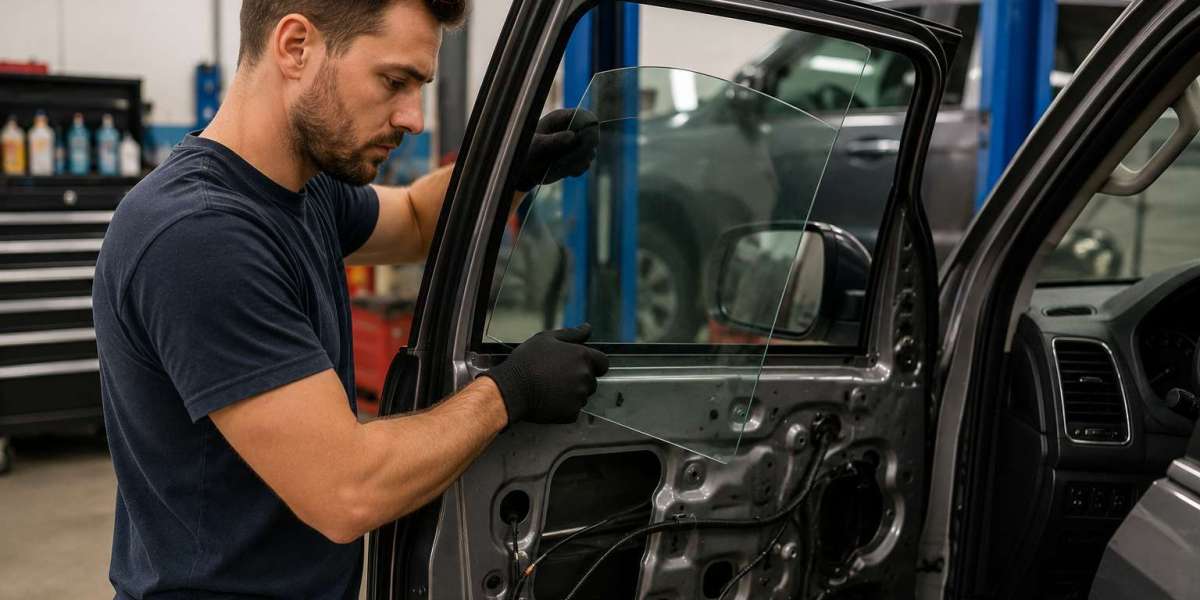
A technician will typically remove the door panel, inspect the regulator, motor, and track, and determine whether the glass itself needs replacing or if it can be reattached and salvaged. If door glass replacement is needed, the new pane gets set into the track, the regulator gets tested through a full range of motion, and everything gets checked for a clean, flush seal before you're sent on your way. Most straightforward jobs take under an hour, longer if hardware needs replacing alongside the glass. This kind of repair moves faster than mobile windshield replacement in most cases, since there's no adhesive curing time involved.
If you're already dealing with a cracked windshield on top of a broken window, a lot of mobile providers, ours included, can handle mobile windshield replacement and a door repair during the same visit, saving you a second appointment and a second service call. The Insurance Information Institute has a helpful breakdown of how comprehensive coverage applies to different types of glass damage if you're wondering whether your policy might help cover the cost.
If your window's been acting up and you want it looked at properly, you can book an appointment online and get a real diagnosis instead of guessing at the problem yourself.
Conclusion
A power window that stops working isn't always a glass problem, but it's worth taking seriously either way, since regulator and track failures have a way of turning into cracked or shattered glass if left alone. Listen for the motor, check whether the glass sits crooked, and look for visible cracks before assuming the worst. Sometimes it's a simple fix. Other times it's genuinely time for door glass replacement alongside a regulator repair, and if you're also overdue for mobile windshield replacement, it's worth asking whether both can happen in one visit. Either way, catching it early keeps a small annoyance from turning into a much bigger, more expensive job down the road.
FAQs
1. Why does my window make a humming noise but not move? This usually means the motor is still running, but the regulator has disconnected from the track, often due to a snapped cable, which can eventually lead to door glass replacement if the glass shifts or cracks as a result.
2. Can a regulator be fixed without replacing the glass? Yes, in many cases. If the glass hasn't cracked or shattered, a technician can often reattach it to a repaired or replaced regulator without needing new glass at all.
3. Is it safe to drive with a window stuck halfway down? It's not ideal. Rain, dust, and debris can get into the door and damage the motor and interior trim, so it's better to get it looked at quickly or cover the gap temporarily.
4. How do I know if it's an electrical issue instead of a mechanical one? If every window in the car stopped working at once, suspect a fuse or electrical issue. If only one window is affected, it's more likely a local mechanical problem with that door's regulator.
5. Can a mobile technician handle both a cracked windshield and a broken power window in one visit? Often yes. Many providers that offer mobile windshield replacement can also handle door glass and regulator repairs during the same appointment, saving you from scheduling two separate visits, which is worth asking about when you book mobile windshield replacement for a cracked windshield anyway.