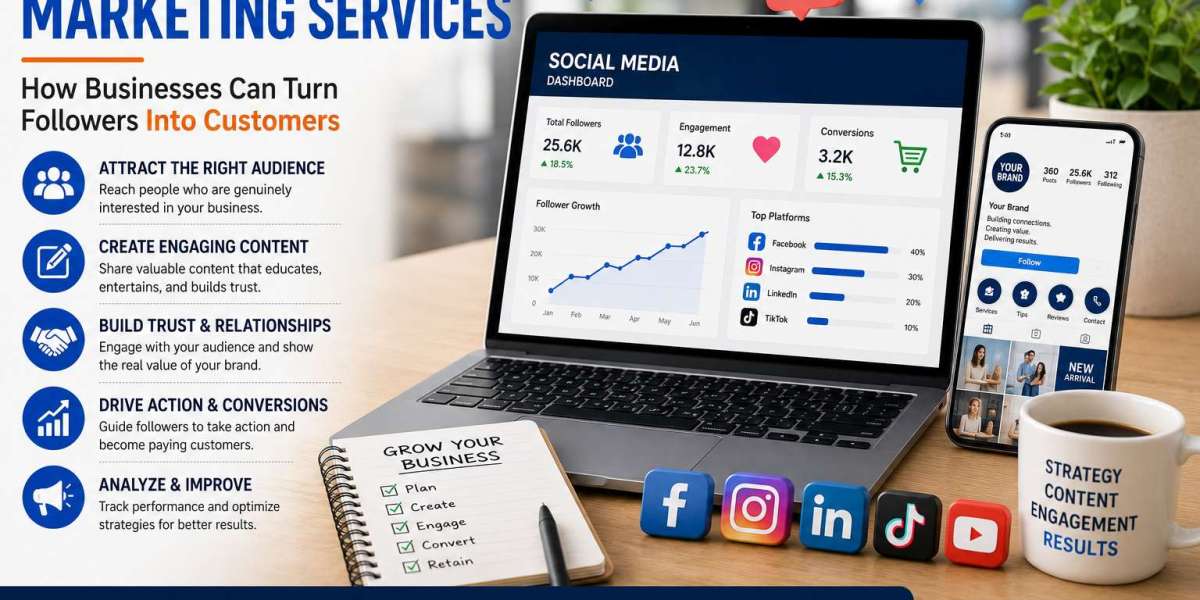

Having thousands of followers does not automatically mean a business is generating revenue. A social media account can receive likes, comments, shares, and views while producing very few leads or sales. The real challenge is building a system that moves people from discovering a brand to trusting it and ultimately taking action.
That is where social media marketing services can make a measurable difference. Instead of treating social platforms as places to publish promotional posts, businesses can use them to attract the right audience, build relationships, answer customer questions, generate demand, and guide prospects toward a purchase.
What Are Social Media Marketing Services?
Social media marketing services are professional services designed to help businesses use platforms such as Facebook, Instagram, LinkedIn, TikTok, YouTube, and other relevant channels to achieve marketing and business objectives.
Depending on the provider and business requirements, these services may include:
Social media strategy and planning
Audience and competitor research
Profile optimization
Content strategy
Copywriting and visual content creation
Short-form video production
Community management
Social media management
Paid campaign management
Influencer and creator collaborations
Lead generation campaigns
Social commerce support
Performance tracking and reporting
Conversion optimization
Effective social media marketing is not simply about keeping accounts active. It should connect content and campaigns with specific outcomes such as website visits, inquiries, bookings, leads, product purchases, or repeat customers.
Why Followers Alone Do Not Create Customers
A follower is not necessarily a buyer. Someone may follow a business because they enjoyed a video, found an educational post useful, participated in a giveaway, or simply wants to see future content.
A successful social strategy therefore needs to move people through several stages:
Awareness → Interest → Trust → Consideration → Action → Retention
The combined customer journey, rather than one individual post, often creates the sale. This is why businesses should evaluate social media based on business outcomes rather than follower counts alone.
How Social Media Marketing Turns Followers Into Customers
1. Attract the Right Audience
The first step is reaching people who have a genuine reason to buy. Audience research should consider demographics, location, interests, professional characteristics, purchasing behavior, pain points, common objections, preferred content formats, buying triggers, and customer questions.
2. Create Content That Solves Problems
People rarely follow a business because they want to see advertisements every day. They follow brands that consistently provide something useful, interesting, entertaining, educational, or relevant.
A strong content mix can include educational guides, how-to videos, product demonstrations, customer stories, FAQs, behind-the-scenes content, industry insights, comparisons, mistake-avoidance tips, case examples, and promotional offers.
3. Build Trust Before Asking for the Sale
Trust is one of the biggest factors separating social attention from actual conversion.
Businesses can strengthen trust through customer testimonials, reviews, demonstrations, expert explanations, employee or founder content, transparent pricing where suitable, FAQs, real customer experiences, and consistent brand communication.
4. Use Calls to Action Strategically
Every conversion-focused piece of content should have an appropriate next step. Examples include visiting a website, requesting a quote, booking a consultation, sending a direct message, downloading a guide, viewing a product, starting a free trial, or making a purchase.
The call to action should match the customer's stage in the buying journey.
5. Move Prospects to Owned Channels
Social platforms are powerful, but businesses do not control their algorithms, reach, or platform policies.
A strong strategy can gradually move high-intent prospects toward assets the business controls, such as a website, email list, CRM, booking system, product catalog, or customer portal.
Social Media Management Services vs. Social Media Marketing
Social media management services generally focus on the ongoing operation of social accounts. This can include publishing content, responding to comments and messages, maintaining profiles, scheduling posts, monitoring conversations, and managing the day-to-day social presence.
Social media marketing is broader and can include strategy, paid campaigns, audience targeting, conversion funnels, content marketing, lead generation, analytics, and other activities designed to produce business results.
The Role of Social Media Advertising
Organic content can build trust and awareness, while paid campaigns can help businesses reach specific audiences more efficiently.
Depending on the platform and campaign objective, businesses may optimize campaigns for reach, video views, website traffic, engagement, lead generation, app installs, product sales, conversions, and retargeting.
The strongest campaigns are designed around what happens after the click, not simply around generating inexpensive traffic.
Retargeting Can Help Recover Interested Prospects
Not everyone purchases during their first interaction with a brand.
A prospect may watch a product video, visit the website, browse several pages, leave without purchasing, and later see a relevant reminder or offer. Retargeting can help businesses reconnect with people who have already demonstrated interest, subject to platform rules and privacy requirements.
A Practical Social Media Conversion Funnel
Stage 1: Discovery
The objective is to introduce the brand to relevant people through short videos, educational posts, industry tips, entertaining content, and creator collaborations.
Stage 2: Engagement
The prospect begins interacting with the business through polls, questions, tutorials, detailed explanations, comment discussions, and live sessions.
Stage 3: Consideration
The prospect wants stronger reasons to choose the business. Useful content includes testimonials, reviews, product demonstrations, comparisons, FAQs, case examples, and expert content.
Stage 4: Conversion
The prospect receives a clear and relevant opportunity to act, such as booking a consultation, requesting a quote, buying a product, registering for an event, starting a trial, or contacting the sales team.
Stage 5: Retention
The relationship should not end after the purchase. Businesses can use social channels to answer customer questions, provide support, share product education, encourage reviews, highlight customer communities, introduce complementary products, and encourage repeat purchases.
2026 Social Media Marketing Trends Businesses Should Watch
Social media continues to change rapidly, and strategies that worked several years ago may not produce the same results today.
Social Search Is Becoming More Important
Users increasingly use social platforms to discover information, products, businesses, creators, and recommendations. Businesses should therefore think about social content as searchable content.
Use clear topics, natural language, useful captions, descriptive video text, and content that directly answers customer questions.
Short-Form Video Remains a Major Content Format
Short-form video continues to play an important role in discovery and engagement.
A strong short video can answer a customer question, demonstrate a product, explain a problem, show a process, address an objection, present a customer story, or introduce an expert.
AI Is Changing Content Workflows
AI tools are increasingly being integrated into social marketing workflows for ideation, content assistance, analysis, personalization, and campaign optimization.
However, automation should not replace human judgment. Businesses still need brand expertise, original perspectives, fact checking, human editing, customer understanding, creative direction, and a consistent brand voice.
Creator and Community-Led Marketing Is Growing
Consumers can respond differently to content from creators and real communities than to traditional brand advertisements.
The best partnership is not necessarily the person with the most followers. It is the creator whose audience actually overlaps with the company's target customer.
Social Commerce Is Bringing Discovery Closer to Purchase
The gap between seeing a product and buying it is becoming smaller. For suitable businesses, social platforms can play a role not only in awareness but also in product discovery, consideration, and purchase.
How to Choose the Right Social Platforms
Businesses do not need to be active everywhere.
The right platform depends on:
Target audience
Industry
Business model
Content capabilities
Customer behavior
Geographic market
Marketing objectives
Available resources
The key is to choose platforms based on customer behavior rather than trying to maintain every possible account.