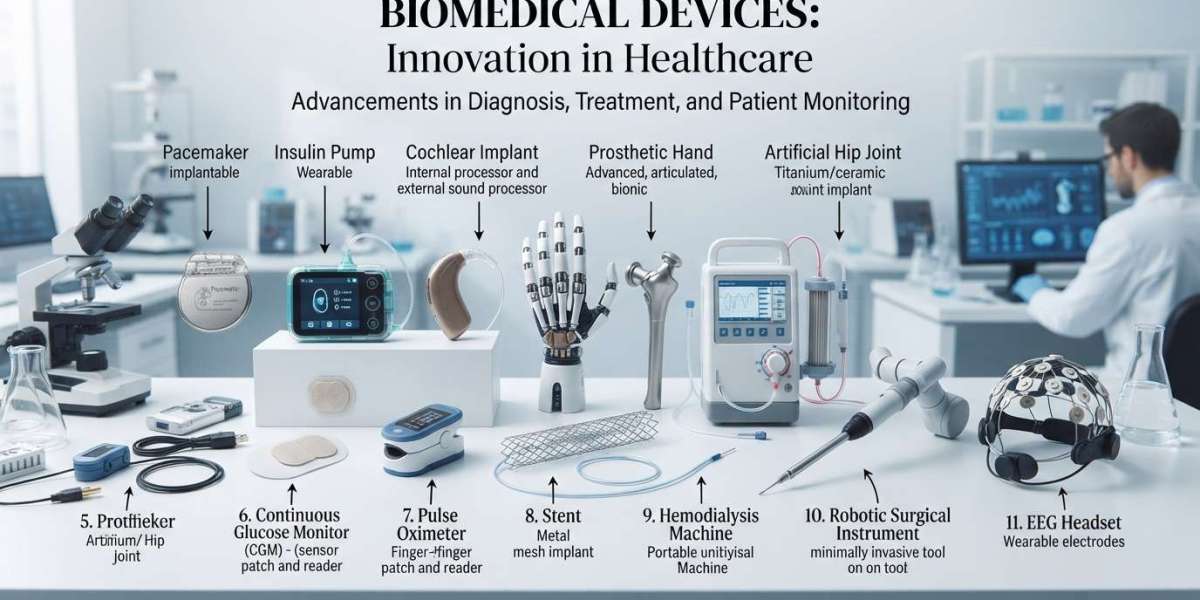

Modern healthcare uses many tools to help doctors, nurses, and other medical workers care for patients. Biomedical devices are an important part of this system. They help with diagnosis, patient monitoring, treatment, surgery, emergency care, and recovery. Different devices are made for different medical needs, and each one has a specific role.
As healthcare continues to develop, the use of a Biomedical Device has become common in hospitals, clinics, laboratories, rehabilitation centers, and homes. These tools provide useful health information and help medical professionals deliver better care. Understanding the main types of these devices can help people understand their role in modern healthcare.
What Are Biomedical Devices?
Biomedical devices are medical tools, machines, or systems designed to support healthcare. They may be used to check a patient's condition, find a disease, monitor body functions, or provide treatment.
Some devices are simple, such as thermometers and blood pressure monitors. Others are more advanced and use digital systems, sensors, or computer technology. The type of equipment needed depends on the patient's condition and the medical service being provided.
The main purpose of these devices is to support safe and effective patient care.
Diagnostic Biomedical Devices
Diagnostic devices are used to help doctors find and understand health problems. They provide information about the body that may not be possible to obtain through a basic physical examination.
ECG machines, ultrasound systems, X-ray machines, and blood testing equipment are common examples. An ECG can record the electrical activity of the heart, while ultrasound can create images of organs and tissues inside the body.
These devices can help doctors identify health problems and understand their severity. Early and accurate diagnosis can also help patients receive the right care at the right time.
Patient Monitoring Devices
Patient monitoring devices are used to check important body functions. They are especially useful for patients who need close medical attention.
A patient monitor may show heart rate, blood pressure, oxygen level, breathing rate, and other readings. Medical staff can use this information to watch changes in a patient's condition.
Monitoring is very important in intensive care units, emergency rooms, operating rooms, and other areas where patients need regular attention. A reliable Biomedical Device can help staff notice important changes and respond quickly.
Therapeutic Devices
Therapeutic devices are used to support medical treatment. They can help deliver medicines, support body functions, or assist patients during recovery.
Infusion pumps are one example. They can help deliver fluids or medicines at a controlled rate. Ventilators are another important type of equipment because they can support patients who have trouble breathing.
Other treatment devices may be used for physical therapy, rehabilitation, pain management, and long-term care. These tools allow healthcare workers to provide treatment in a controlled and suitable way.
Surgical Devices
Surgical devices are used during operations and other medical procedures. Surgeons and their teams depend on many types of equipment to perform procedures safely.
Some devices are used to monitor the patient during surgery, while others support specific parts of the procedure. Equipment for breathing support, fluid delivery, and vital sign monitoring can all play an important role.
Modern surgical care has improved with the growth of general Biomedical Technology. Better devices can help medical teams perform procedures with greater control and provide proper care before and after surgery.
Life Support Devices
Life support devices are designed to help patients whose body functions need extra support. These devices are often used in critical care and emergency situations.
Ventilators are an important example. They help patients breathe when they cannot breathe well on their own. Other systems may support heart function, oxygen supply, or other vital body needs.
These devices can be very important for seriously ill patients. They must be used by trained healthcare professionals and checked regularly to make sure they work properly.
Laboratory Biomedical Devices
Laboratories use many devices to test blood, urine, tissue, and other samples. These tools help healthcare workers learn more about a patient's health.
Laboratory equipment can help measure different substances in a sample and identify signs of certain diseases. Automated testing systems can also process many samples in a shorter time.
The information from laboratory devices is often used together with physical examinations and other tests. This helps doctors build a clearer picture of a patient's condition.
Imaging Devices
Imaging devices allow doctors to see parts of the body without making a surgical cut. They are useful for finding problems in bones, organs, tissues, and other areas.
X-ray machines, ultrasound systems, CT scanners, and MRI machines are common examples of medical imaging equipment. Each type uses a different method to create images.
These devices can help doctors understand what is happening inside the body. Imaging can also support treatment planning and help doctors check how a condition changes over time.
Rehabilitation Devices
Rehabilitation devices help patients regain movement, strength, or daily function after illness, injury, or surgery. They are commonly used in rehabilitation centers, hospitals, and homes.
Some devices support exercise and movement, while others help patients perform daily activities. The type of equipment used depends on the patient's needs and recovery goals.
Rehabilitation technology can make recovery more organized and can support patients as they work toward better physical function.
Home Healthcare Devices
Healthcare devices are no longer limited to hospitals and clinics. Many devices are now designed for use at home. They allow patients to check certain health measurements and manage parts of their care.
Blood pressure monitors, blood glucose meters, digital thermometers, and home oxygen equipment are examples of devices that may be used outside medical facilities.
Home healthcare devices can make care more convenient. They can also reduce the need for some routine visits when a healthcare professional can safely monitor a patient from a distance.
Wearable Biomedical Devices
Wearable devices are becoming more common in healthcare. These devices can be worn on the body and may collect information about different health activities.
Some wearable devices can track heart rate, movement, sleep, or other measurements. The information can help users understand their health and may also support medical care when used under professional guidance.
Wearable technology is an area where general Biomedical Technology continues to grow. Smaller sensors and better digital systems are making these devices easier to use.
Electronic and Digital Devices
Many modern medical devices use electronic and digital systems. These systems can collect, store, and display health information.
Digital equipment can make it easier for healthcare workers to review patient readings. Some systems can also connect with hospital information systems, helping staff access important information when needed.
Digital technology has improved the way many medical devices operate. It has also created new ways to monitor patients and manage healthcare information.
Importance of Device Quality
No matter what type of medical equipment is used, quality is very important. A device must provide reliable results and work properly to support safe patient care.
Healthcare facilities should choose equipment from trusted manufacturers and suppliers. Devices should also be cleaned, tested, and maintained according to proper guidelines.
Regular maintenance can help reduce equipment problems and keep devices ready for use. Staff should also receive proper training before operating medical equipment.
Future of Biomedical Devices
Biomedical devices will continue to develop as healthcare technology improves. Future equipment may become smaller, smarter, faster, and easier to use.
Remote monitoring, wearable sensors, digital health systems, and connected devices are expected to play a growing role in patient care. These developments can help healthcare workers collect useful information and provide care in more flexible ways.
The growth of general Biomedical Technology will also support the development of new tools for diagnosis, treatment, monitoring, and recovery.
Conclusion
There are many types of biomedical devices, and each type has an important role in healthcare. Diagnostic equipment helps find health problems, monitoring devices track patient conditions, therapeutic equipment supports treatment, and surgical devices assist medical procedures.
Laboratory, imaging, rehabilitation, wearable, and home healthcare devices also support different parts of patient care. A Biomedical Device can provide valuable support when it is selected, maintained, and used correctly.
As general Biomedical Technology continues to advance, these devices will become an even more important part of modern healthcare. Their continued development can help medical professionals provide safer, faster, and more effective care to patients.
More Info: Amg Medical