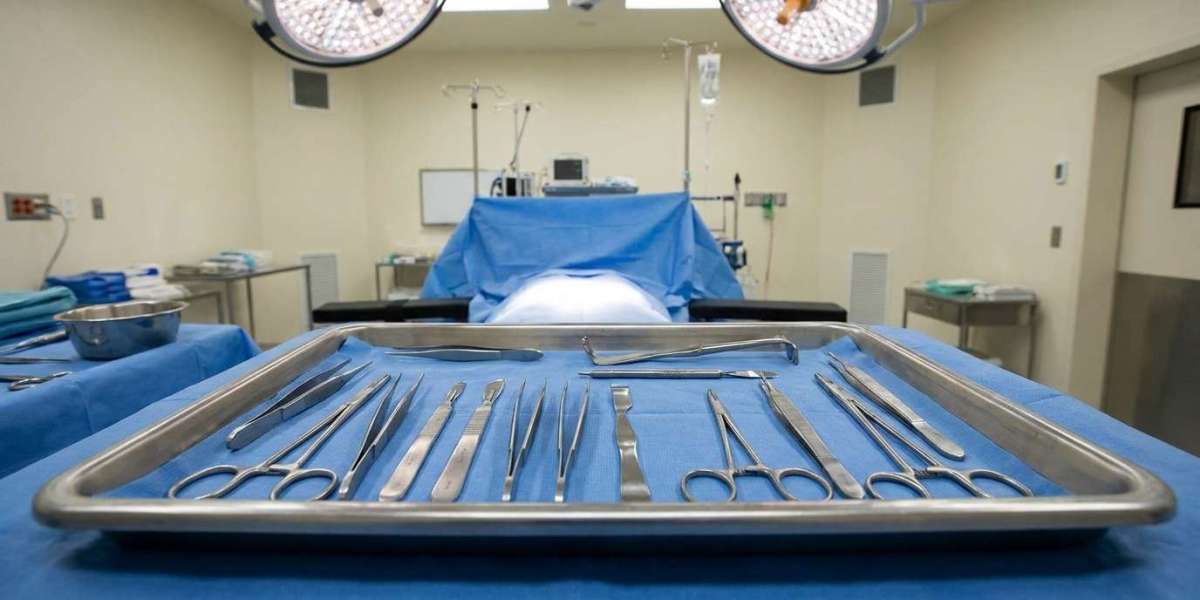

Surgical scissors are essential tools used in hospitals, clinics, and operating rooms. They are designed to cut tissue, sutures, dressings, and other materials during medical procedures. While all scissors have the basic purpose of cutting, their shape, size, blade, and tip can be different depending on the task.
Choosing the correct type is important because each design is made for a specific purpose. Some scissors are made for delicate work, while others are better for cutting stronger materials. Understanding the different types can help healthcare professionals select the right tool and use it correctly during medical procedures.
Straight Surgical Scissors
Straight scissors are one of the most common types used in healthcare. Their blades follow a straight line, making them useful when a direct cutting path is needed. They can be used for cutting sutures, dressings, and other medical materials.
These scissors are available in different sizes. Smaller versions can be useful for detailed work, while larger models may be better for general cutting tasks. Their simple design makes them easy to handle and clean when they are designed for repeated use.
Curved Surgical Scissors
Curved scissors have blades that follow a gentle curve. This design can make it easier to reach certain areas during a procedure. The curved shape may also help the user work around tissue or other structures.
These scissors are often selected when a straight blade does not provide the access or control needed. Their curved design gives healthcare professionals another option when working in areas where space may be limited.
Tissue Scissors
Tissue scissors are designed for cutting or working with soft tissue during surgical procedures. They are usually made with sharp and carefully aligned blades to support smooth cutting.
The blade design can vary depending on the type of tissue and procedure. Some models have fine tips for detailed work, while others have stronger blades for more general use.
Because tissue work requires careful handling, selecting a suitable pair is important. Healthcare professionals should use these scissors according to their intended purpose and follow proper handling practices.
Dissection Scissors
Dissection scissors are used for separating and cutting tissue during medical procedures. They can be straight or curved and may have different tip designs based on the task.
Some models are made with fine blades that allow careful work in small areas. Others have stronger blades for tasks that require more cutting power.
The design of dissection scissors helps healthcare professionals work with greater control. Their use depends on the procedure and the type of tissue being handled.
Suture Scissors
Suture scissors are made mainly for cutting sutures. They usually have sharp blades that can cut thread cleanly and quickly. Some designs have special features that help the user reach the suture without unnecessary movement.
These scissors are useful during and after procedures when sutures need to be placed, adjusted, or removed. Their specific design makes them different from scissors intended for tissue or other materials.
Using a tool designed for sutures can help protect the blades and improve cutting performance. It also allows the healthcare professional to select a tool that matches the task.
Bandage Scissors
Bandage scissors are commonly used for cutting dressings, bandages, tape, and similar materials. They often have a special blade shape that makes it easier to slide the scissors under a dressing.
Many bandage scissors have a rounded or blunt tip. This can help reduce the chance of accidental contact with the skin when removing or cutting around a dressing.
They are widely used in hospitals, clinics, emergency rooms, and other healthcare settings. Their simple but useful design makes them an important type of medical scissors.
Metzenbaum Scissors
Metzenbaum scissors are designed for cutting and handling soft tissue. They usually have longer handles and relatively fine blades, making them useful for delicate surgical work.
They are available in straight and curved versions. Curved models can provide better access in certain areas, while straight versions can be useful when a direct path is preferred.
Their design allows healthcare professionals to perform controlled movements during procedures. They are commonly included in sets of surgical instruments for different types of operations.
Mayo Scissors
Mayo scissors are strong scissors used for cutting tissue, sutures, and other materials depending on their design. They are generally heavier than scissors made for very delicate work.
Mayo scissors may have straight or curved blades. Straight versions are often useful for cutting materials outside the body, while curved versions can be used for certain tissue-related tasks.
Their strong construction makes them suitable for tasks that require more cutting strength. Proper selection is still important because different procedures may require different blade designs.
Iris Scissors
Iris scissors are small scissors designed for fine and detailed work. They have small blades and are often used when precise control is needed.
Because of their small size, they can be useful in areas where larger scissors may be difficult to control. They are available with straight or curved blades.
Iris scissors are a good example of how different sizes are created to meet specific medical needs. Their small design allows professionals to perform careful cutting tasks with greater control.
Operating Scissors
Operating scissors are general-purpose cutting tools used during surgical procedures. They can be available in different lengths, blade shapes, and tip designs.
Some have sharp tips, while others have a combination of sharp and blunt tips. The choice depends on the type of work being performed.
These scissors are often included with other surgical instruments in operating room sets. Having different sizes and designs available allows medical teams to select the right tool for each part of a procedure.
Sharp and Blunt Scissors
The tips of scissors can also be used to classify different designs. Sharp-tip scissors have pointed ends that can support detailed cutting. They may be useful when accuracy is important.
Blunt-tip scissors have rounded ends and may be selected when a safer tip is preferred. They can be useful for certain general tasks and when working near areas where a pointed tip is not needed.
Some scissors combine one sharp tip with one blunt tip. This design provides a balance between cutting ability and controlled handling.
Importance of Choosing the Right Type
Selecting the correct scissors is important because every design has a specific purpose. A pair made for cutting sutures may not be suitable for delicate tissue, while fine scissors may not be strong enough for thicker materials.
Healthcare professionals should consider the procedure, material, size, blade shape, and tip design before choosing a tool. Using the correct type can improve control and make cutting tasks easier.
Quality is also important. Well-made medical scissors should have properly aligned blades, a comfortable grip, and strong construction. Reusable models should also be suitable for the cleaning and sterilization process used by the healthcare facility.
Care and Maintenance
Proper care can help extend the working life of surgical scissors. Reusable scissors should be cleaned and sterilized according to the manufacturer's instructions after use.
Regular inspection is also important. The blades should be checked for damage, dullness, rust, or poor alignment. Handles and joints should also be inspected to make sure the scissors open and close smoothly.
Proper storage can help protect the blades from damage. Healthcare facilities should keep clean instruments in suitable conditions and avoid using scissors for tasks they were not designed to perform.
Conclusion
There are many types of surgical scissors, and each type has a specific role in healthcare. Straight, curved, tissue, dissection, suture, bandage, Metzenbaum, Mayo, Iris, and operating scissors are designed to meet different medical needs.
The right choice depends on the procedure, material, level of precision, and working area. Medical scissors with suitable blade and tip designs can provide better control and make cutting tasks easier.
As part of a complete set of surgical instruments, these scissors help healthcare professionals perform procedures in an organized and efficient way. With proper selection, cleaning, sterilization, and maintenance, quality scissors can provide reliable service and support effective medical care.
More Info: Amg Medical