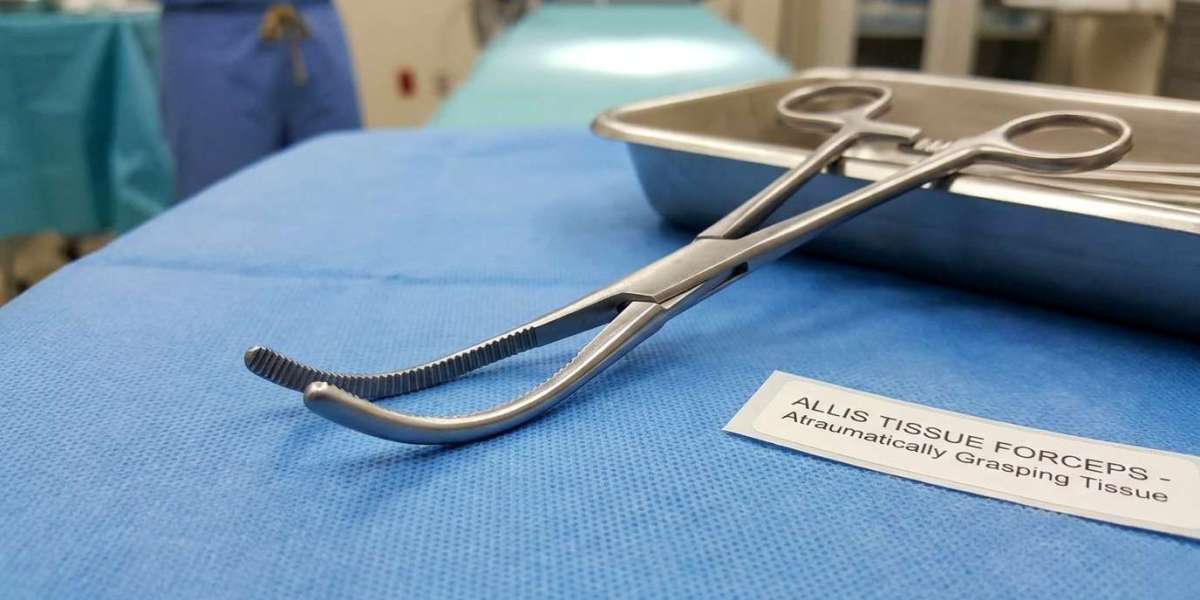

Surgical instruments are an important part of every operating room. Doctors and surgeons use different tools for cutting, holding, clamping, stitching, and moving tissue during medical procedures. Each instrument is made for a specific purpose, and using the right one can help improve control and make surgical work more organized. The Allis surgical instrument is a well-known grasping tool used when firm tissue handling is needed.
This instrument is valued for its toothed jaws and locking handle. These features allow it to hold tissue securely during certain procedures. The instrument is available in different sizes and designs to meet the needs of different surgical tasks. Understanding the different types can help healthcare professionals select a suitable option.
Allis tissue forceps are mainly used when a firm grip is needed. However, the exact design may vary depending on the size, number of teeth, jaw shape, and intended use. This makes it useful to understand the common forms available in medical practice.
Standard Allis Forceps
The standard type is one of the most commonly recognized forms. It usually has ring handles, a locking mechanism, and toothed jaws. The teeth come together when the instrument is closed, helping prevent tissue from slipping.
This type is useful for holding tissue securely during procedures where a firm grip is required. It may be included in general surgical sets and can be found in different sizes.
The standard design is simple and easy for trained medical staff to identify. Its main purpose is to provide stable tissue control when a toothed grasp is suitable.
Small Allis Forceps
Small versions are designed for procedures that require a more compact instrument. Their smaller size can make them easier to use in areas where space is limited.
Small Allis tissue forceps can provide a firm grip while giving the surgeon better control over smaller areas. They may be used when a large instrument would be difficult to position.
The choice of a small instrument should still depend on the tissue and procedure. A smaller size does not automatically make the instrument suitable for delicate tissue.
Large Allis Forceps
Large versions provide a bigger gripping area and may be used when stronger tissue control is needed. Their larger jaws can hold a greater amount of tissue compared with smaller versions.
Large Allis forceps may be included in surgical sets for procedures where a strong and stable hold is required. The locking handle allows the instrument to remain closed once it has been correctly applied.
As with all toothed grasping instruments, the user must apply suitable pressure. The instrument should only be used when its strong grip is appropriate for the tissue.
Straight Allis Forceps
Straight designs have jaws that follow a straight line from the handle. This shape provides direct access to the tissue being held.
Straight Allis tissue forceps can be useful when the surgical area allows the instrument to be positioned directly. Their simple shape also makes them easy to handle and place in a surgical tray.
The choice between a straight and another jaw design depends on the position of the surgical area and the task being performed.
Curved Allis Forceps
Curved designs have jaws that follow a slight curve. This shape can help the surgeon reach tissue from a different angle during some procedures.
Curved Allis forceps can provide better access when a straight instrument does not offer the desired position. The curved shape may also help the surgeon work around nearby structures.
The exact curve and size can vary between instruments. Medical professionals should select the design according to the procedure and the working area.
Multiple-Tooth Allis Forceps
Some types are designed with several small teeth along the jaws. These teeth provide a strong grip and help prevent the tissue from moving once it has been grasped.
Multiple-tooth designs are useful when a secure hold is needed. They are generally chosen for tissue that can safely tolerate this type of grip.
The number and arrangement of teeth may vary between manufacturers and instrument models. Healthcare professionals should understand the design before using the instrument.
Different Jaw Designs
Jaw design is an important factor when comparing different types of this surgical instrument. The jaws may differ in length, width, curve, and tooth pattern.
A wider jaw can provide a larger gripping surface, while a narrower jaw may offer better access in smaller areas. The surgeon can select the design that best matches the procedure.
Allis tissue forceps should always be chosen based on their intended function rather than appearance alone. Understanding the jaw design helps medical staff select a suitable instrument.
Different Sizes for Different Procedures
Size is another major difference between types of Allis instruments. Surgical procedures may involve different body areas and different amounts of tissue, so one size cannot meet every need.
Smaller instruments may be useful for more limited surgical areas, while larger versions can provide greater tissue control when required. The surgeon's experience and the type of procedure also influence the choice.
Having several sizes available can help hospitals prepare surgical sets for different procedures. Proper selection can improve handling and reduce the need to change instruments during surgery.
Allis Forceps with Different Handle Designs
Most versions use ring handles and a ratchet locking system, but handle size and shape can differ. Some designs may offer a more comfortable grip for the user.
A comfortable handle can make instrument control easier during longer procedures. The locking system should also open and close smoothly without excessive force.
Before a procedure, operating room staff should check the handles and lock to make sure the instrument is working properly.
Disposable and Reusable Types
Allis forceps may be available in reusable or single-use forms, depending on the manufacturer and healthcare setting. Reusable versions are commonly made from surgical-grade stainless steel and are designed for cleaning and sterilization.
Single-use versions are intended for one procedure and are discarded after use according to the facility's rules. The choice between reusable and disposable instruments depends on hospital policy, procedure needs, cost, and infection control practices.
For reusable instruments, proper cleaning and sterilization are essential. The manufacturer's instructions should always be followed.
Stainless Steel Allis Instruments
Stainless steel is a common material used for reusable surgical instruments. It provides strength and can resist corrosion when the instrument is properly cleaned, dried, and maintained.
Stainless steel Allis tissue forceps are suitable for repeated use when they remain in good condition. Their smooth surface can also support proper cleaning.
Regular inspection is still important. Instruments should be checked for rust, damage, worn teeth, or problems with the locking mechanism before being used.
Choosing the Right Type
Selecting the right type of Allis surgical instrument depends on the procedure, tissue, surgical area, and required level of grip. Size and jaw design should be considered before use.
The strong teeth make these instruments useful for firm tissue handling, but they are not suitable for every tissue. Delicate structures may need a different type of grasping instrument.
Medical professionals should rely on proper training and established surgical practices when selecting an instrument. The goal is to use a tool that provides the required control without causing unnecessary tissue pressure.
Care of Different Types
Regardless of the design, proper care is important for reusable instruments. After use, the instrument should be cleaned according to the healthcare facility's approved process.
The teeth and jaw area require careful cleaning because tissue or other material can remain between the small parts. The joint and locking mechanism should also be checked during cleaning.
After cleaning, the instrument should be sterilized using an approved method suitable for the specific product. Proper storage helps protect the instrument until it is needed again.
Role in Modern Surgical Practice
Although modern healthcare includes advanced devices and technology, basic surgical instruments remain important. Allis forceps continue to be useful because they provide a simple way to hold tissue securely when a firm grip is required.
Different types allow surgeons to choose an instrument that fits the procedure. Size, jaw shape, tooth pattern, and handle design can all affect how the instrument performs.
The continued use of these instruments shows the value of simple tools that perform a specific surgical task effectively.
Conclusion
There are several types of Allis surgical instruments, with differences mainly found in size, jaw shape, tooth design, handle style, and intended use. Standard, small, large, straight, curved, and multiple-tooth designs can provide different options for tissue handling.
Allis tissue forceps are especially useful when a secure grip is required, while Allis forceps are available in designs that can suit different surgical needs. However, their toothed jaws mean they should be used only when firm tissue grasping is appropriate.
Choosing the correct size and design, along with proper cleaning, sterilization, inspection, and storage, helps maintain instrument quality. With proper training and careful selection, these instruments can remain a useful part of surgical practice.
More Info: Amg Medical