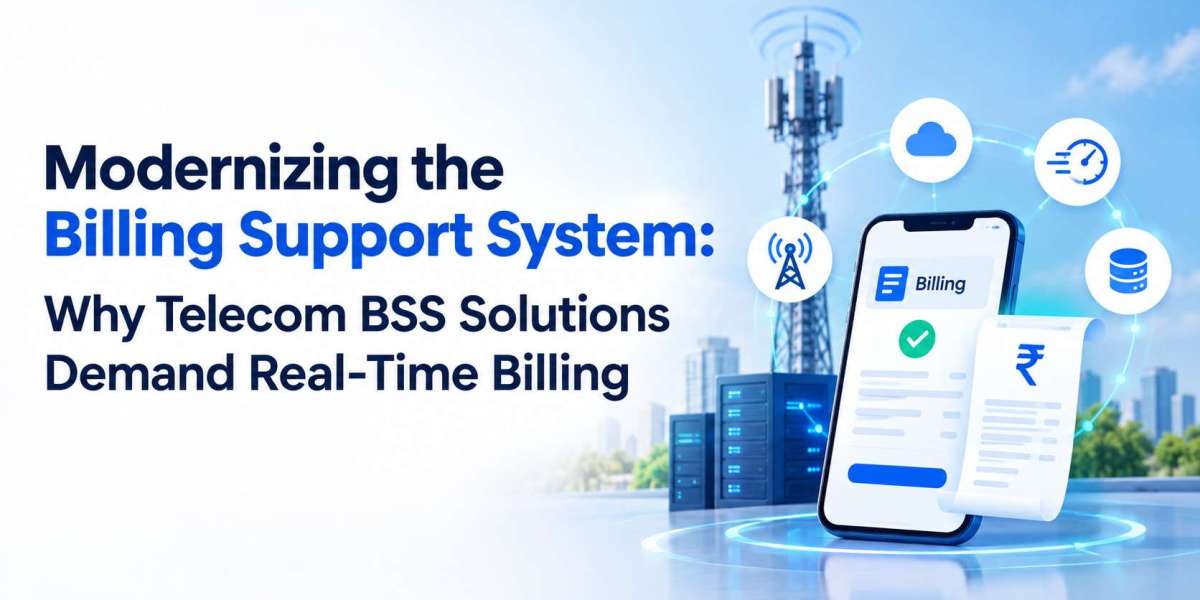

Telecommunications operates at wire speed, yet many operators still struggle with the lag of yesterday’s revenue machinery. The Billing Support System (BSS) has long been the financial heartbeat of telecom enterprises, translating raw network activity into invoiced revenue. However, in an era dominated by ultra-low-latency 5G, IoT device density, and complex partner ecosystems, traditional billing frameworks are hitting an architectural wall.
Modern operators cannot afford hours of offline batch processing or delayed account reconciliations. Today’s competitive landscape requires an agile telecom bss solution built on cloud-native infrastructure, hyper-personalized customer engagement, and, above all, mission-critical real time billing.
The Core Mandate of a Modern Billing Support System
At its foundation, a Billing Support System handles customer-facing commercial operations. While Operations Support Systems (OSS) run the network infrastructure, BSS governs revenue generation, product catalogs, customer service management, partner settlements, and rating operations.
A standard BSS stack oversees four critical pillars:
- Product and Catalog Management: Structuring and deploying new commercial offerings, discounts, bundles, and tariff policies across all sales channels.
- Customer Management (CRM): Capturing subscriber lifecycles, account hierarchies, support tickets, and service touchpoints.
- Order Management: Orchestrating order capture, provisioning requests to the network layer via OSS integration, and tracking fulfillment.
- Revenue and Billing Management: Rating call detail records (CDRs), managing balances, generating tax-compliant invoices, processing payments, and recovering debt.
Historically, this architecture operated in fragmented silos. Disparate billing platforms handled prepaid and postpaid users separately, leading to duplicate maintenance, inconsistent user experiences, and substantial administrative overhead. Today, that divide is disappearing under Convergent Charging Systems (CCS).
Why Real-Time Billing Is No Longer Optional
Traditional billing engines relied on batch processing. A subscriber consumed voice or data, the network generated records, and hours—or even days—later, a mediation engine ingested and rated those events. In today’s on-demand economy, this delay introduces massive operational and financial risks:
- Revenue Leakage and Credit Risk: Without instant balance checks, a roaming subscriber or an enterprise IoT fleet can exhaust their credit limit while the network remains unaware, creating unrecoverable bad debt.
- Bill Shock: Delayed usage notifications frustrate customers. When consumers receive surprise mid-cycle caps or unexpected charges, churn rates climb and contact centers face higher support volumes.
- Complex Monetization Failures: Dynamic quality-of-service (QoS) tiering, network slicing, and edge-computing micro-transactions cannot be billed retroactively. If an autonomous logistics hub requests high-bandwidth 5G slicing for three hours, the rating engine must grant access, track usage, and deduct payment dynamically as bytes transfer.
Real time billing eliminates these gaps. By evaluating subscriber allowances, running credit checks, and calculating tariffs at sub-second speeds, operators keep balances synchronized across every touchpoint. This immediate feedback loop allows carriers to send in-session balance alerts, deliver instant upsell prompts (e.g., "Add 5GB for $5 to finish your stream"), and terminate compromised sessions before leakage occurs.
Unlocking B2B and B2B2X Business Models
The primary growth vector for telecom operators lies in enterprise business: edge-compute partnerships, private cellular deployments, smart utilities, and industrial IoT. These models break traditional subscriber-based billing paradigms.
A forward-looking telecom BSS solution empowers operators to manage multi-sided business models:
- Hierarchy and Split Billing: Enterprise clients require flexible billing splits—for instance, billing an employee’s business video conferencing data to corporate accounts while routing personal social media data to a private credit balance.
- Dynamic Wholesale and Partner Settlement: When telcos partner with cloud providers, OTT streamers, and gaming platforms, the BSS automatically calculates revenue shares, commissions, and wholesale interconnect costs in real time.
- Zero-Touch Partner Onboarding: Using standardized TM Forum Open APIs, external digital service partners can plug directly into the operator's product catalog and billing engine to launch joint services in days rather than months.








