
In the world of municipal planning and school administration, the playground is more than just a place to burn off energy—it is a classroom without walls. As we move away from the rigid, linear structures of the past, a new paradigm in recreational design is taking root across Southern California: Climbing Boulders and Rope Play.
For landscape architects and community developers in San Diego, Orange County, and beyond, the shift toward these dynamic, non-prescriptive play structures represents a significant opportunity. It allows for the creation of spaces that are not only visually striking but developmentally superior. This article explores why integrating climbing boulders and rope play is the gold standard for modern, inclusive recreational spaces.
The Science of Ascent: Developmental Benefits of Rope and Rock
Unlike traditional post-and-platform playgrounds, which often dictate how a child should play (e.g., "climb these stairs, go down this slide"), climbing boulders and rope structures offer "open-ended play." This distinction is critical for child development.
Physical Mastery and Motor Skills
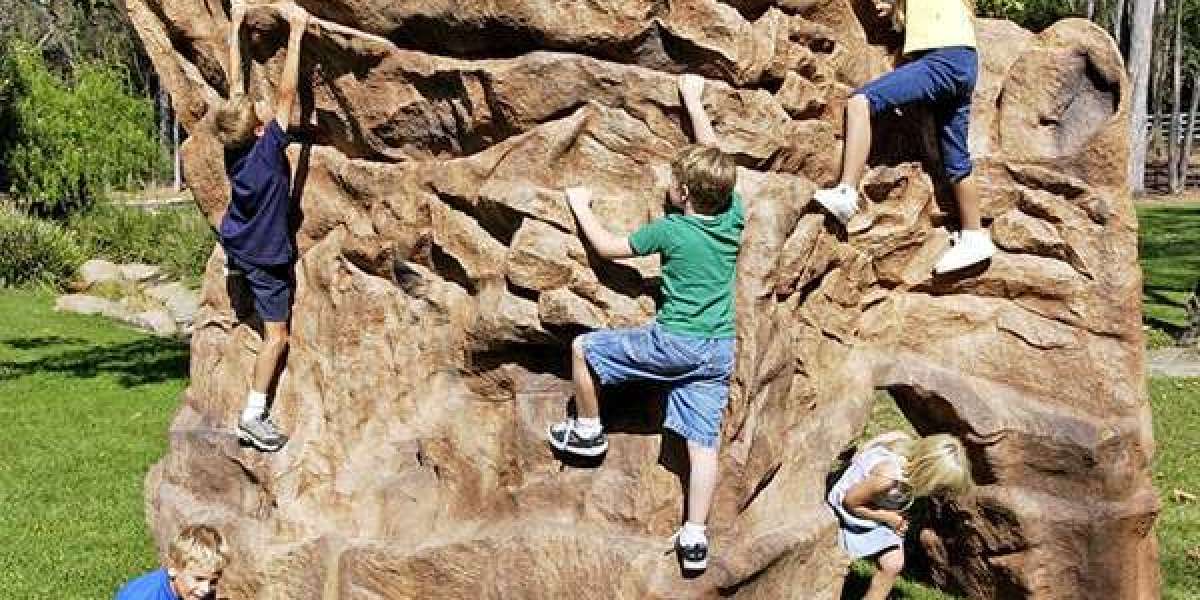
When a child approaches a complex rope web or a realistic climbing boulder, they are engaging in a full-body workout that requires distinct physical inputs. Gripping a rope builds fine motor skills and hand strength, which are directly correlated to handwriting ability in the classroom. Scaling a boulder requires gross motor coordination, balance, and core strength.
Cognitive Engagement: The Playground as a Puzzle
Perhaps the most overlooked benefit of commercial playground equipment like rope climbers is the cognitive demand. Navigating a 3D net structure requires strategic planning, spatial awareness, and problem-solving. A child must constantly assess: “Where does my foot go next? How do I shift my weight?” This rapid-fire decision-making stimulates neural pathways in a way that repetitive motion (like swinging) does not.
Inclusive Playground Equipment Design: Accessibility Beyond the Ramp
A common misconception among planners is that "climbing" excludes children with disabilities. However, modern inclusive playground equipment design challenges this notion. True inclusion isn't just about ramps; it's about providing varying levels of challenge and sensory engagement for all abilities.
The Theory of Universal Design in Climbing
Effective design employs the principles of Universal Design. For rope play, this looks like:
Transfer Platforms: Low-to-the-ground rope beds that allow children to transfer from a wheelchair to a sensory-rich, vibrating rope surface.
Sensory Integration: The tactile experience of different textures—rough rock vs. smooth cable—benefits children with sensory processing disorders.
Graduated Challenge: A well-designed climbing boulder cluster features "ground-level" play for those with limited mobility, while offering verticality for those seeking higher risk.
By integrating these elements, a playground equipment contractor can create a space where a child with physical limitations can interact socially and physically with their peers, rather than observing from the sidelines.
Safety and Durability: The Southern California Context
Safety is the paramount concern for school administrators and municipal planners. It is a sobering statistic that according to the Centers for Disease Control and Prevention (CDC), emergency departments treat more than 200,000 children annually for playground-related injuries. However, this statistic often stems from falls on improper surfacing or outdated equipment.
The "Perceived Risk" Factor
Climbing boulders and ropes offer high "perceived risk" with managed "actual risk." Children feel the thrill of height and instability, which teaches them to self-regulate and assess danger. Paradoxically, equipment that feels "too safe" or boring can lead to misuse and injury as children invent unsafe ways to use it.
Climate-Specific Considerations
For projects in San Diego, Orange County, Riverside County, and Imperial County, the environment dictates the material choice.
Heat Retention: Traditional plastic slides and metal decks can become scorching hazards in the California sun. High-quality climbing boulders are often constructed from glass fiber reinforced concrete (GFRC) which tends to remain cooler than steel.
UV Resistance: California commercial playground equipment must withstand intense UV indices. High-quality rope structures use steel-core cables wrapped in UV-stabilized nylon or polyester, preventing the fraying and fading common in cheaper alternatives.
Seismic Stability: As a commercial playground equipment contractor in California will attest, heavy structures like boulders must be engineered and anchored to meet seismic codes, ensuring stability even during ground movement.
Selecting the Right Partner for Your Project
The success of a playground project relies heavily on the installation. Whether you are sourcing playground equipment in Riverside County or looking for themed playground design in the Imperial Valley, the contractor’s qualifications are non-negotiable.
In California, proper installation often requires specific licensing (such as the C-61/D-34 classification for prefabricated equipment). A reputable playground equipment contractor will handle not just the installation, but the site preparation, drainage (crucial for protecting expensive safety surfacing), and compliance with ASTM F1487 and CPSC guidelines.
When vetting partners, look for those who understand the nuance of "play value." A vendor pushing a generic catalog item is very different from a partner who asks about your community's demographics, the site's topography, and your inclusivity goals.
Conclusion: Investing in the Future of Play
The days of cookie-cutter metal playgrounds are fading. Today’s communities demand spaces that are visually stunning, developmentally rich, and inclusive of all citizens. Climbing boulders and rope play structures meet these demands head-on. They act as functional art—sculptural elements that beautify a park while providing a critical arena for physical and social growth.
For municipal planners and school administrators, the choice is clear. By investing in high-quality, challenging, and inclusive climbing structures, you are building more than a playground; you are building a legacy of health, resilience, and community for the next generation.
Summary of Key Takeaways
Developmental Value: Ropes and boulders build core strength, fine motor skills, and cognitive problem-solving abilities unlike static equipment.
Inclusivity: Modern designs allow children of all abilities to engage with climbing structures through sensory-rich, ground-level, and graduated challenge options.
Regional Suitability: Concrete boulders and steel-core ropes offer superior durability and temperature management for the Southern California climate compared to plastics.
Safety First: While "perceived risk" is high (and beneficial), modern surfacing and professional installation by a licensed commercial playground equipment contractor mitigate actual hazards.