
Industrial surface preparation has become an important part of manufacturing, maintenance, restoration, and fabrication. As companies look for more controlled ways to prepare metal and other durable surfaces, laser technology has become increasingly relevant. A laser cleaner uses concentrated laser energy to interact with unwanted material on a surface, helping remove contaminants such as rust, oxidation, paint, grease, oil, and residue.
Unlike traditional cleaning methods that often involve chemicals, abrasives, or extensive manual work, laser-based cleaning provides a technology-driven approach for applications where precision and surface control are important. From workshops and factories to automotive facilities and restoration projects, laser cleaning equipment can be adapted to different industrial requirements.
What Is a Laser Cleaner?
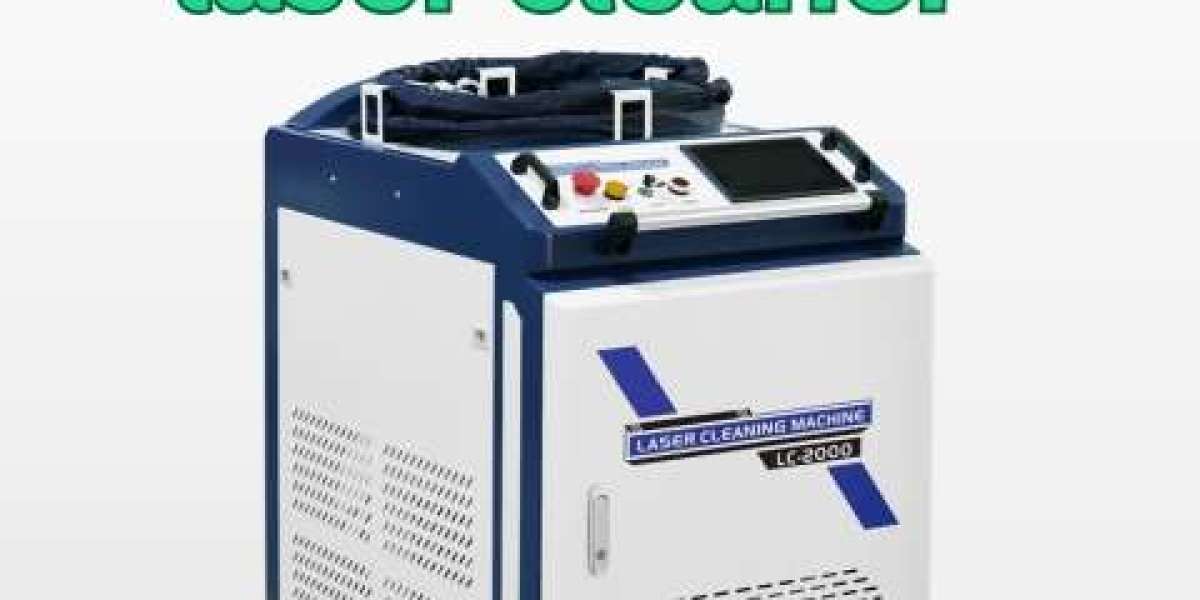
A laser cleaner is an industrial machine designed to remove unwanted substances from a surface through controlled laser energy. The laser beam is directed toward the contaminated area, where the energy interacts primarily with the unwanted layer. Depending on the material, laser settings, and application, contaminants can be detached, vaporized, or otherwise removed from the surface.
The process can be used on materials such as steel, stainless steel, aluminum, iron, copper, and other suitable surfaces. Different applications require different laser parameters, so equipment selection and proper configuration are important for achieving consistent results.
Modern laser cleaning systems are available in several configurations. Compact equipment can be used for workshops and maintenance tasks, while larger industrial systems can be integrated into production environments.
How Does Laser Cleaning Work?
Laser cleaning is based on the interaction between concentrated light energy and material deposited on a surface. When the laser beam reaches contamination, the energy can cause the unwanted layer to break away from the underlying material.
The operator can adjust settings such as laser power, scanning speed, frequency, and beam movement according to the application. These adjustments allow the cleaning process to be adapted to different levels of contamination and different substrate materials.
For example, removing light oxidation from a metal component may require different settings from removing several layers of industrial paint. Correct parameter selection helps maintain controlled treatment and reduces the possibility of unwanted surface effects.
Removing Rust With Laser Technology
Rust removal is one of the most recognized applications for laser cleaning equipment. Rust develops when iron or steel reacts with oxygen and moisture, creating an oxidized layer that can interfere with further processing, coating, welding, or restoration.
A laser cleaner can be directed over rusty sections to remove oxidation and expose a cleaner metal surface. This makes laser technology useful for industrial components, machinery parts, metal structures, automotive components, tools, and restoration work.
The operator can adjust the cleaning process according to rust thickness and the condition of the underlying material. This level of control is particularly relevant when working with valuable or detailed components.
Paint and Coating Removal
Old paint and protective coatings sometimes need to be removed before repainting, welding, inspection, or restoration. Conventional methods may require scraping, blasting, or chemical stripping.
Laser cleaning provides another approach by directing energy at the coating layer. The process can be applied selectively to areas where paint or coating needs to be removed.
This is especially useful for metal components with detailed shapes, edges, joints, and areas where controlled preparation is required. Before processing a complete component, testing a small section can help determine suitable laser parameters.
Preparing Surfaces for Welding
Surface preparation is important before welding because contaminants can interfere with the quality and consistency of the welding process. Oil, oxidation, paint, and other residues may need to be removed from the welding area.
A laser cleaner can be used to prepare selected sections of metal before welding. By cleaning the required area, manufacturers and fabricators can establish a more suitable surface for subsequent operations.
Handheld laser systems can be particularly useful in workshops where operators need to move around large components or clean specific areas before fabrication work.
Industrial Maintenance Applications
Factories and workshops regularly deal with machinery, molds, tools, and metal components that accumulate contamination during operation. Keeping these surfaces clean can be an important part of maintenance procedures.
Laser cleaning technology can be applied to equipment maintenance tasks where controlled removal is required. Depending on the machine and material, operators may use laser cleaning for removing deposits, oxidation, coatings, and other unwanted layers.
Its application can range from individual components to larger industrial maintenance projects. The appropriate machine should be selected according to the material, contamination type, cleaning area, and required production workflow.
Handheld Laser Cleaners for Workshops
Handheld systems are designed for situations where flexibility and operator movement are important. Instead of moving a small component through a fixed cleaning station, the operator can guide the cleaning head across the required surface.
This format can be practical for machinery maintenance, metal fabrication, automotive work, repair shops, and restoration projects. The operator still needs proper training because laser equipment requires controlled operation and appropriate safety procedures.
A handheld laser cleaner should be selected according to factors such as laser power, operating requirements, cleaning area, material compatibility, and available workspace.
Choosing the Right Laser Cleaning Equipment
Selecting suitable equipment starts with understanding the actual cleaning application. Different contaminants and substrates require different laser parameters.
Consider the type of material that will be cleaned, the thickness of contamination, the size of the working area, the frequency of cleaning tasks, and the desired workflow. A workshop cleaning small metal components may have different requirements from a factory processing large industrial structures.
Laser power is another important consideration. Higher power may be appropriate for certain heavy-duty applications, while lower-power equipment can be suitable for more controlled cleaning tasks. The correct choice depends on the specific application rather than power alone.
Safety During Laser Cleaning
Laser cleaning equipment must always be operated according to the manufacturer's instructions and applicable safety requirements. Industrial lasers can present serious eye and skin hazards when used incorrectly.
Operators should use appropriate protective equipment, establish controlled working areas, follow laser safety procedures, and ensure that nearby personnel are protected from hazardous exposure. Ventilation and appropriate extraction may also be necessary because removing paint, coatings, oils, or other contaminants can generate fumes or particles.
Proper training is an essential part of using laser cleaning technology safely and effectively.
Where Is Laser Cleaning Used?
Laser cleaning can be applied across many industries. Metal fabrication companies may use it for surface preparation, while automotive workshops can use it for component restoration and maintenance.
Other potential applications include mold cleaning, machinery maintenance, industrial restoration, ship and infrastructure maintenance, paint removal, oxidation removal, and preparation before welding or coating.
The technology is also attracting attention in restoration work because controlled cleaning can be useful when dealing with valuable metal components and detailed surfaces.
The Growing Role of Laser Surface Preparation
As manufacturing processes become more precise, surface preparation continues to receive greater attention. Companies need cleaning methods that can be incorporated into different production and maintenance workflows.
Laser cleaning technology offers a modern method for addressing contamination and surface preparation requirements. Equipment manufacturers continue to develop systems for different power levels, operating formats, and industrial applications.
For businesses considering laser cleaning equipment, evaluating real-world requirements before purchasing is important. Demonstration testing, material compatibility checks, and discussions with experienced equipment suppliers can help identify the appropriate configuration.
Final Thoughts
A laser cleaner provides a modern approach to removing rust, paint, oxidation, grease, coatings, and other unwanted materials from suitable surfaces. Its controlled laser-based process makes it relevant to manufacturing, fabrication, maintenance, automotive work, restoration, and industrial surface preparation.