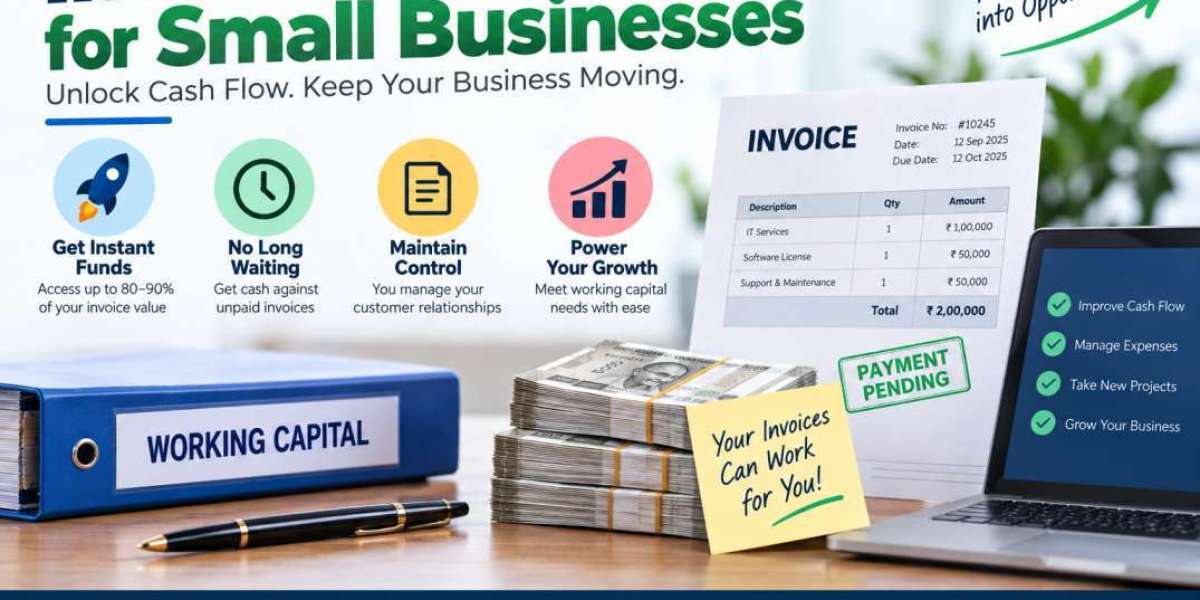

Cash flow is essential for the success and stability of every small business. A company may have strong sales and a healthy order pipeline, but delayed customer payments can create financial pressure. When invoices remain unpaid for 30, 60, or 90 days, businesses may struggle to manage supplier payments, salaries, inventory purchases, and daily operating expenses.
Invoice discounting for small businesses provides a way to access working capital against eligible unpaid invoices. Instead of waiting for customers to complete their payment cycles, businesses can potentially receive funds earlier and use the available working capital to support ongoing operations.
What Is Invoice Discounting?
Invoice discounting is a form of short-term working capital finance based on a business's outstanding invoices. When a company provides goods or services to a customer on credit, it raises an invoice. Rather than waiting until the invoice's due date, the business may use the eligible invoice to obtain an advance from a financing provider.
After the customer pays the invoice, the transaction is settled according to the agreed terms and applicable charges.
This approach can be particularly useful for businesses that regularly sell to established B2B customers on credit.
How Invoice Discounting for Small Businesses Works
The process is generally simple and can help businesses access funds sooner.
Step 1: Provide Goods or Services
The business completes an order or service for its customer according to the agreed terms.
Step 2: Raise an Invoice
An invoice is issued to the customer with the agreed payment period.
Step 3: Submit Eligible Invoice
The business submits the eligible invoice to the financing provider for evaluation.
Step 4: Receive an Advance
If approved, the financing provider may advance an agreed percentage of the invoice value to the business.
Step 5: Customer Pays the Invoice
The customer pays the invoice according to the agreed payment terms.
Step 6: Settlement
The transaction is settled after applicable fees and charges according to the financing agreement.
The exact process, advance percentage, eligibility criteria, and settlement structure can vary between providers.
Why Small Businesses Need Faster Business Funding
Small businesses often have limited working capital reserves. A delay in customer payments can affect their ability to take advantage of new opportunities.
For example, a business may receive a large order but need to purchase inventory before receiving payment from its customer. Access to working capital can help bridge this timing gap.
Invoice discounting for small businesses can potentially provide faster access to funds tied up in receivables, helping businesses maintain smoother financial operations.
Benefits of Invoice Discounting for Small Businesses
Improved Cash Flow
Invoice discounting can help businesses access working capital before customers settle their outstanding invoices. This can make it easier to manage regular expenses and financial commitments.
Faster Access to Working Capital
Businesses can potentially convert eligible receivables into usable working capital sooner instead of waiting for the full invoice payment cycle.
Support for Business Growth
Additional liquidity can help businesses purchase stock, accept larger orders, increase production, invest in marketing, or expand their operations.
Better Supplier Management
Access to working capital can help businesses make supplier payments on time and maintain stronger commercial relationships.
Reduced Cash Flow Gaps
Businesses can use invoice-based financing to manage the gap between completing a sale and receiving payment from the customer.
Greater Financial Flexibility
Invoice discounting can provide an additional source of working capital that is linked to business sales and receivables.
Uses of Faster Business Funding
Small businesses can potentially use funds obtained through eligible invoice discounting for several business requirements, including:
Purchasing inventory
Buying raw materials
Paying suppliers
Managing payroll
Covering operating expenses
Fulfilling new customer orders
Expanding production
Investing in marketing
Managing seasonal cash flow requirements
Supporting business expansion
Businesses should use financing responsibly and ensure that the facility matches their actual working capital requirements.
Who Can Benefit From Invoice Discounting?
Invoice discounting for small businesses may be suitable for companies that regularly issue invoices to business customers and experience extended payment cycles.
It may be relevant to businesses such as:
Manufacturers
Wholesalers
Distributors
IT companies
Professional service providers
Engineering firms
Logistics companies
Trading businesses
B2B suppliers
Service companies
Eligibility depends on the financing provider, customer profile, invoice quality, business history, and other applicable criteria.
Invoice Discounting vs Traditional Business Loans
Invoice discounting and traditional business loans are different forms of business finance.
A traditional business loan generally provides a predetermined amount that is repaid according to an agreed schedule. Invoice discounting is connected to eligible invoices generated from business sales.
For companies with regular B2B invoices and longer payment periods, invoice discounting may provide a useful working capital option.
However, businesses should compare financing costs, repayment structures, eligibility requirements, and long-term financial needs before selecting a funding solution.
Factors to Consider Before Choosing Invoice Discounting
Before using invoice discounting, small businesses should carefully review the financing arrangement.
Financing Costs
Understand the applicable discount charges, processing fees, service fees, and other costs.
Advance Percentage
Check what percentage of the eligible invoice value can be accessed in advance.
Customer Eligibility
Some providers may evaluate the creditworthiness and payment history of the customers associated with the invoices.
Contract Terms
Review minimum commitments, contract duration, termination provisions, and other conditions.
Settlement Process
Understand how customer payments are handled and how the remaining invoice amount is settled.
Confidentiality
Determine whether the invoice discounting arrangement is confidential or disclosed to customers.
Tips for Using Invoice Discounting Effectively
Businesses should maintain accurate financial and invoice records to make the financing process smoother.
Some useful practices include:
Issue invoices promptly
Maintain accurate customer records
Monitor outstanding receivables
Track customer payment behaviour
Review financing costs regularly
Compare different providers
Borrow according to actual working capital requirements
Use funds for productive business purposes
Good receivables management can help businesses get greater value from invoice-based financing.
Conclusion
Delayed customer payments can create significant cash flow challenges for small businesses, even when sales are growing. Invoice discounting for small businesses can provide a practical way to access working capital against eligible unpaid invoices and potentially receive funds faster.
By improving liquidity, businesses can manage operating expenses, pay suppliers, fulfil new orders, and pursue growth opportunities with greater financial flexibility. Before selecting an invoice discounting facility, businesses should carefully evaluate costs, eligibility, advance rates, contract terms, and settlement procedures.
When used responsibly, invoice discounting can be an effective working capital tool for small businesses looking for faster access to business funding.