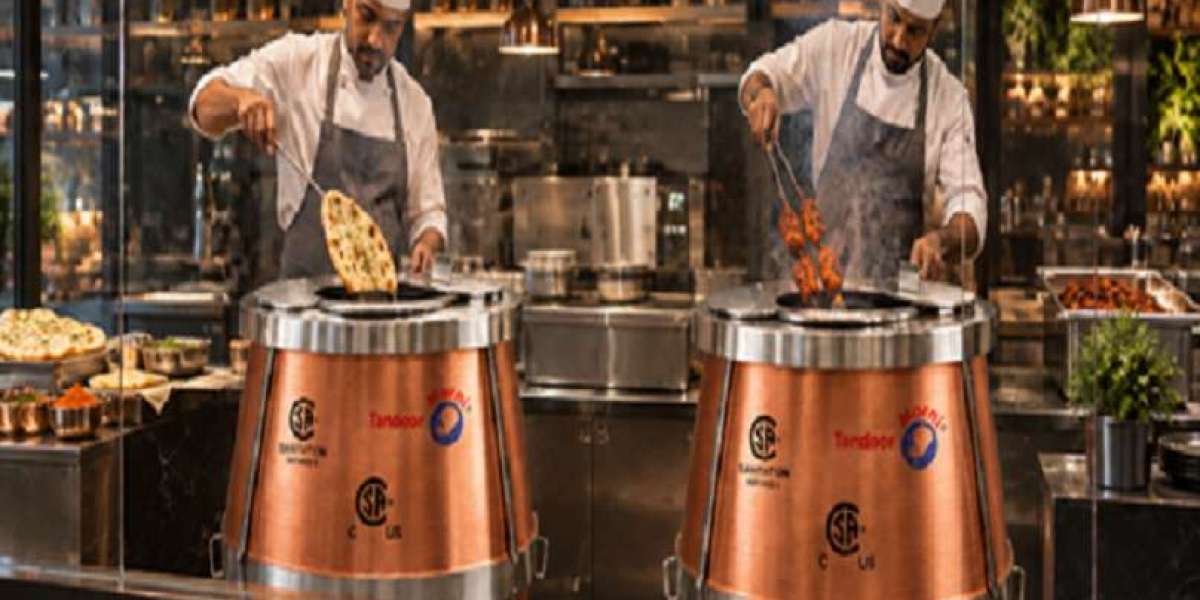

Ask any restaurant owner who has opened an Indian, Pakistani, Afghan, or Middle Eastern cuisine in the United States or Canada what surprised them most about the process, and the answer is rarely the cooking. It is the paperwork. The tandoor — the clay oven at the heart of the menu — has to satisfy a health inspector, a gas inspector, a fire marshal, an insurance underwriter, and sometimes a landlord before it satisfies a single customer. And nothing moves that paperwork along faster, or stalls it harder than the question of certification.
This guide explains what certification actually means for a clay tandoor, why two very different standards both matter, what uncertified equipment can quietly cost an operator, and how the same logic applies to families shopping for a backyard oven. It draws on the standards that govern commercial cooking equipment across North America and on the experience of Tandoor Morni, the Edison, New Jersey manufacturer that has been building clay tandoors by hand since 1992 and states that it remains the only tandoor oven manufacturer in North America to hold both CSA Sanitation NSF/ANSI 4 certification and CSA Z83.11 certification for gas-fired commercial equipment.
An Ancient Oven Meets Modern Codes
The tandoor itself has barely changed in centuries: a thick-walled clay cylinder, open at the top, holding working temperatures of 800 to 900 degrees Fahrenheit. Breads like naan are slapped directly onto the hot interior wall, where they blister and rise in under a minute. Marinated meats — tandoori chicken, seekh kebab, chicken tikka — cook vertically on long skewers, searing on the outside while their own juices baste them from within. No convection oven or flat grill reproduces the result, which is precisely why the tandoor has followed South Asian cuisine into commercial kitchens across the continent.
But a piece of equipment that runs at 900 degrees, burns gas or charcoal, and touches food all day sits squarely in the sights of North American commercial kitchen regulation. Health departments want to know the food-contact surfaces can be sanitized. Gas inspectors want proof the burner, venting, and controls have been independently tested. Insurers want a recognized standard to underwrite against. An oven imported informally, or built without certification, answers none of those questions — and in kitchen after kitchen, that gap surfaces at the worst possible moment: opening week.

The First Standard: CSA Sanitation NSF/ANSI 4
The first of the two certifications answers the health department’s question. CSA Sanitation NSF/ANSI 4 is certification to the recognized food-equipment sanitation standard for commercial cooking appliances. In plain terms, it confirms that the oven’s materials, seams, joints, and surfaces have been evaluated for how food equipment actually lives: splashed, scrubbed, degreased, and sanitized on a schedule that would destroy ordinary fabrication.
For a tandoor, that evaluation covers the details a buyer never thinks to ask about. Are the food-zone surfaces non-toxic, non-absorbent, and corrosion-resistant? Are seams smooth and sealed so grease and bacteria have nowhere to collect? Can every cleanable surface actually be reached with the tools a kitchen crew uses? Do the materials hold up to commercial cleaning chemicals without pitting or leaching? A certified oven has answered all of it before it ships.
The practical payoff arrives on inspection day. A health inspector confronted with an unfamiliar clay oven and no certification mark has broad discretion — and that discretion can mean conditional approval, demands for modification, or a failed inspection that delays opening. The same inspector confronted with a recognized sanitation certification checks the mark against the standard and moves on. Restaurants that have lived through both scenarios describe the difference as weeks of revenue.
The Second Standard: CSA Z83.11 for Gas-Fired Equipment
The second certification answers a different and, frankly, more dangerous question. CSA Z83.11 is the safety standard for gas-fired commercial food service equipment across North America. Certification to it means the oven’s combustion system, gas train, venting behavior, and temperature controls have been independently tested — not described by the manufacturer, tested by an accredited body — for safe operation in an enclosed commercial kitchen.
With a tandoor, the stakes of that testing are concrete. The oven runs a live gas flame inside a ceramic-lined vessel for ten or more hours a day. Improper combustion produces carbon monoxide; an unproven gas train risks leaks; poor venting design pushes exhaust where it does not belong; unreliable controls turn a hot oven into an unpredictable one. CSA Z83.11 certification is the evidence that each of those failure modes has been examined and engineered out.
It is also the document the rest of the compliance chain runs on. Mechanical inspectors sign off on installations faster when the appliance itself carries a recognized gas certification. Fire marshals have a standard to verify rather than a judgment call to make. Insurance underwriters can price a policy against tested equipment instead of loading premiums for unknowns — or declining the risk outright. Certified gas equipment does not just make a kitchen safer; it makes the entire approval process legible.
What Uncertified Equipment Actually Costs
The price gap between a certified tandoor and an uncertified import looks straightforward on an invoice. It stops looking straightforward the first time the cheaper oven meets an inspector. Operators who have gone down that road report a familiar sequence: a failed or conditional inspection, a scramble for documentation the manufacturer cannot produce, retrofit attempts that satisfy nobody, and finally the purchase of the certified oven that should have been bought first — now with a delayed opening, a spoiled launch, and sometimes a lease burning money on an unopened kitchen.
There are quieter costs, too. Some insurers surcharge or exclude uncertified cooking equipment, a line item that compounds every year. Some municipalities will not issue permits for uncertified gas appliances at all. And when equipment is implicated in an incident, the absence of certification becomes the first fact every adjuster and attorney reaches for. Measured over the life of the oven, the uncertified discount has a way of becoming the most expensive money a restaurant ever saved.
How a Certification Is Earned — and Why It Has to Be Kept
One misconception worth clearing up: certification is not a sticker a manufacturer buys once. Earning it means submitting production ovens — not polished prototypes — to an accredited testing body, opening up material specifications and fabrication methods to scrutiny, and redesigning anything that falls short of the standard. Keeping it means living with follow-up factory audits and the obligation to build every subsequent oven the same way the tested one was built. The mark on the oven is a claim about the factory, not just the unit.
That is why “built to the standard” and “certified to the standard” are different sentences. Any seller can type the first; only ongoing third-party verification supports the second. It is also why dual certification remains rare in the tandoor industry: holding sanitation and gas-safety certification simultaneously means running a workshop disciplined enough to satisfy two unrelated testing regimes at once, year after year. When a buyer checks for the marks on the oven body, they are really checking for that discipline.
Certification You Can Taste
Certification reads like a compliance topic, but the same engineering discipline shows up on the plate. An oven built to certified tolerances is an oven built consistently: uniform wall thickness, controlled insulation, a burner that delivers the same flame at the same setting every service. In cooking terms, that means heat the chef can trust — even browning on tandoori chicken instead of scorched patches, kebabs that stay moist because the temperature curve is predictable, naan that rises reliably because the wall temperature is where it should be.
Chefs describe the difference as repeatability. A tandoor with hot spots and drift demands constant compensation and still produces uneven trays; a consistent oven lets the kitchen standardize marination times, skewer loads, and bake times and get the same result on a Tuesday in January as on a packed Saturday night. For a restaurant whose reputation rides on its tandoori section — which is to say, most restaurants that own a tandoor — that repeatability is worth as much as the compliance file.
The Same Logic at Home
The certification story does not end at the restaurant door. The past several years have brought a wave of serious home cooks to the tandoor — the same audience that put pizza ovens and ceramic kamado grills in North American backyards — and the questions that matter in a commercial kitchen matter on a patio, too. A family gathered around a 900-degree oven deserves the same tested gas train, the same food-safe surfaces, and the same predictable heat as a restaurant crew.
Purpose-built Home tandoor ovens bring certified construction down to residential scale: compact footprints for patios and outdoor kitchens, the same hand-finished clay liners as the commercial line, and stainless bodies engineered for backyard life. The result is restaurant naan and tandoori chicken at family scale — without importing an unknown appliance into the middle of a family gathering.

A Buyer’s Checklist
For any operator or serious home cook comparing tandoors, the diligence is mercifully short. First, ask for the sanitation certification by name — CSA Sanitation NSF/ANSI 4 — and confirm the mark appears on the oven itself, not just the brochure. Second, for any gas-fired model, ask for CSA Z83.11 certification and do the same. Third, confirm the fuel configuration matches the installation: natural gas and propane are not interchangeable without the correct setup, and charcoal models belong outdoors. Fourth, ask who actually built the oven and who will support it — replacement clay liners, skewers, burners, and repair parts are what keep a tandoor working for decades, and a manufacturer with no parts shelf is a manufacturer planning your oven’s obsolescence.
Restaurants and hotels evaluating a commercial tandoor Oven should also plan the installation like any high-heat appliance: ventilation sized for the oven’s output, clearances confirmed against the specification sheet, and the certification documents filed where the inspector, the insurer, and the landlord can all find them.
Built by Hand, Backed by a Factory
Tandoor Morni’s answer to the certification question has been the same since 1992: build everything in-house, by hand, and put the ovens through the standards rather than around them. The company grew from a small family workshop into one of North America’s established clay oven manufacturers, and it still fires and finishes every clay liner itself, pairing traditional clay interiors with stainless steel bodies engineered for North American codes.
The factory-direct model is the other half of the promise. Because every unit ships from the company’s own facility at 95 Mayfield Ave in Edison, New Jersey, buyers browsing the full tandoor oven for sale range deal directly with the people who built it — tighter quality control, faster turnaround for restaurant openings that cannot wait on a container ship, and a parts and support shelf on this side of the ocean when a liner finally needs replacing after years of nightly service. There are no import markups and no third-party distributors between the workshop and the kitchen.
The lineup runs the full width of the market: heavy-duty commercial units for restaurants and hotels, catering and food-truck models sized for mobility, decorative copper ovens for open kitchens, compact residential models, and the accessories — skewers, covers, cushion pads, repair clay — that keep all of them working.
The Bottom Line
Demand for authentic Indian and South Asian cuisine keeps growing across the United States and Canada, and the tandoor is moving with it - from specialty purchase to standard commercial equipment, and from restaurant kitchens to backyard patios. As that happens, the standards that govern commercial equipment are coming along. For buyers, the takeaway is simple: the clay and the flame are ancient, but the paperwork is modern, and the right oven satisfies both. Confirm CSA Sanitation NSF/ANSI 4. Confirm CSA Z83.11 on gas-fired models. Buy from a manufacturer who will still answer the phone when the oven needs its first new liner. At present, buyers who want both certifications from a single North American manufacturer have, by the company's account, exactly one place to find them — and more than three decades of hand-built ovens behind it.
About Tandoor Morni: Founded in 1992 and based at 95 Mayfield Ave, Edison, New Jersey, Tandoor Morni is a factory-direct manufacturer of clay tandoor ovens for commercial and residential use across North America. More information is available at tandoormorni.com.
Blog Source URL :- https://tandoormorni1.wordpress.com/2026/09/22/what-dual-certification-really-means-when-you-buy-a-tandoor-oven-in-north-america/
Contact Us :-