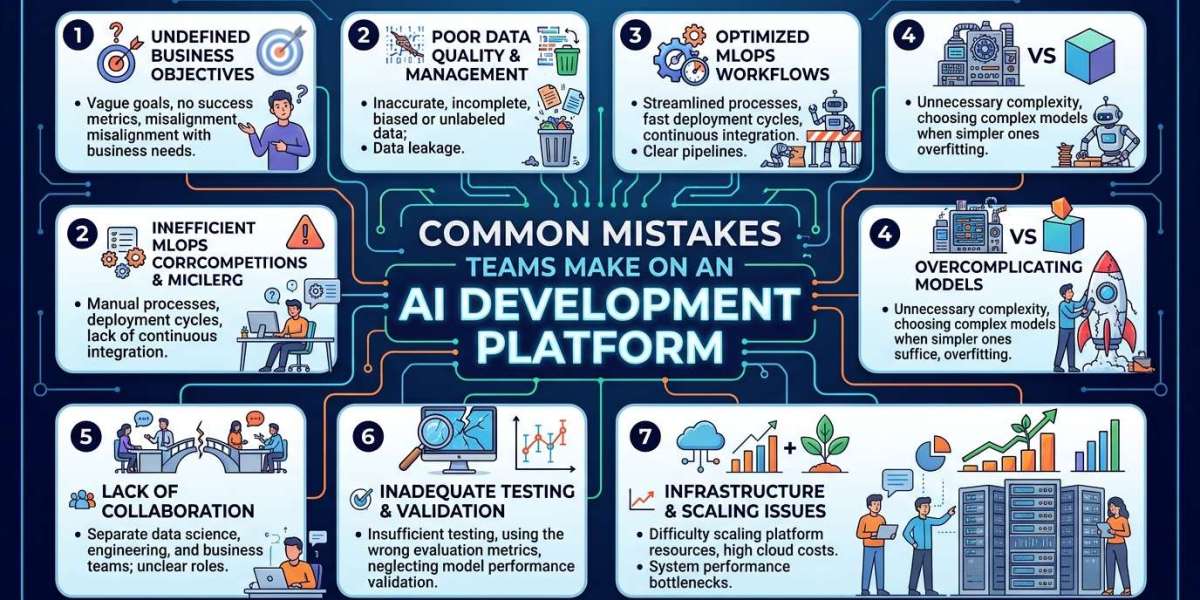

As more teams adopt an AI development platform to build and deploy AI systems, certain mistakes appear repeatedly across projects, regardless of which specific platform a team happens to be using. Recognizing these patterns in advance helps teams avoid the frustration and wasted effort of a struggling first project, and the organizational skepticism toward AI initiatives that often follows a poorly executed early attempt.
Mistake One: Rushing Past Data Preparation
The single most common mistake teams make on an AI development platform is treating data preparation as a quick formality to complete before reaching the more interesting model training stage. In reality, data quality issues left unaddressed at this stage directly and predictably degrade model quality, often in ways that are difficult to diagnose after the fact once training has already occurred on flawed data. Teams that invest genuine time in thorough data cleaning and preparation consistently produce better models than teams that rush through this stage to reach training faster.
Mistake Two: Defining Success Criteria Too Vaguely
Many teams begin model development without clearly defining specific, measurable success criteria, instead relying on a vague sense that the model should perform well without articulating precisely what that means in concrete, testable terms. This vagueness makes it genuinely difficult to know whether a model has actually succeeded or to compare different approaches objectively during development. An AI development platform provides the tools to measure defined criteria rigorously, but teams must do the upfront work of defining what actually matters before this measurement becomes meaningful.
Mistake Three: Evaluating Only Against Ideal, Curated Data
Testing a model exclusively against a clean, curated evaluation set that does not reflect the genuine messiness of real world production data creates a dangerously misleading sense of readiness. Real world data frequently includes edge cases, inconsistent formatting, and scenarios that curated test sets simply do not capture. Teams that skip testing against realistic, representative data frequently discover their model's genuine limitations only after deployment, when the cost and visibility of failure is considerably higher than it would have been during a more thorough evaluation stage.
Mistake Four: Deploying Everything at Once
Rather than rolling out a newly trained model gradually, some teams deploy directly to full production traffic immediately after training completes, reasoning that strong evaluation results justify full confidence. This approach removes the safety net that gradual, phased deployment provides, where problems affecting only a small percentage of initial traffic can be caught and addressed before impacting a project's full intended scope. An AI development platform deployed without this gradual rollout discipline loses one of the most effective, low cost risk management practices available.
Mistake Five: Treating Deployment as the Finish Line
Some teams treat successful initial deployment as the completed end of a project, shifting full attention to other priorities without establishing genuine ongoing monitoring. Model performance in production frequently reveals patterns and degradation that evaluation on historical data did not fully anticipate, and without continued attention, this gradual performance decay can go unnoticed for extended periods, quietly undermining a project's original value. Teams that get the most lasting value from an AI development platform treat deployment as the beginning of an ongoing monitoring and improvement cycle, not a completed, permanent task.
Mistake Six: Underestimating Integration Complexity
Teams sometimes focus heavily on model quality while underestimating how much effort genuinely reliable integration with existing systems requires. A technically excellent model connected through a fragile, poorly tested integration can still fail consistently in practice, and this integration work is frequently underestimated during initial project planning. Building adequate time and attention into a project's plan specifically for integration work, rather than treating it as a minor afterthought following the more prominent modeling work, prevents this common and avoidable source of project delay and frustration.
Mistake Seven: Ignoring Governance Until It Becomes Urgent
Some teams defer thinking seriously about access controls, audit logging and broader governance practices until a specific incident or compliance requirement forces the issue, rather than building these considerations into a project from the start. Retrofitting proper governance onto an AI development platform project already in production is considerably more disruptive and costly than establishing appropriate practices from the outset, making early attention to governance a genuinely valuable investment rather than unnecessary overhead.
Mistake Eight: Choosing a Platform Mismatched to Actual Needs
Selecting an AI development platform based on impressive marketing or a competitor's choice, without honestly evaluating whether that specific platform's strengths genuinely align with a team's actual goals and skill level, creates ongoing friction regardless of how capable the platform might theoretically be for a different use case. Matching platform selection honestly to actual project needs, rather than defaulting to whichever option seems most prominent or popular, prevents this avoidable and often costly mismatch.
Final Thought
Most struggles teams experience with an AI development platform trace back to a consistent, recognizable set of avoidable mistakes: rushed data preparation, vague success criteria, unrealistic evaluation, overly aggressive deployment, inadequate ongoing monitoring, underestimated integration work, deferred governance, and platform selection mismatched to actual needs. Teams that deliberately address these specific risk areas from the start, rather than discovering them the hard way through a struggling first project, consistently achieve more reliable, genuinely valuable results from their AI development efforts.