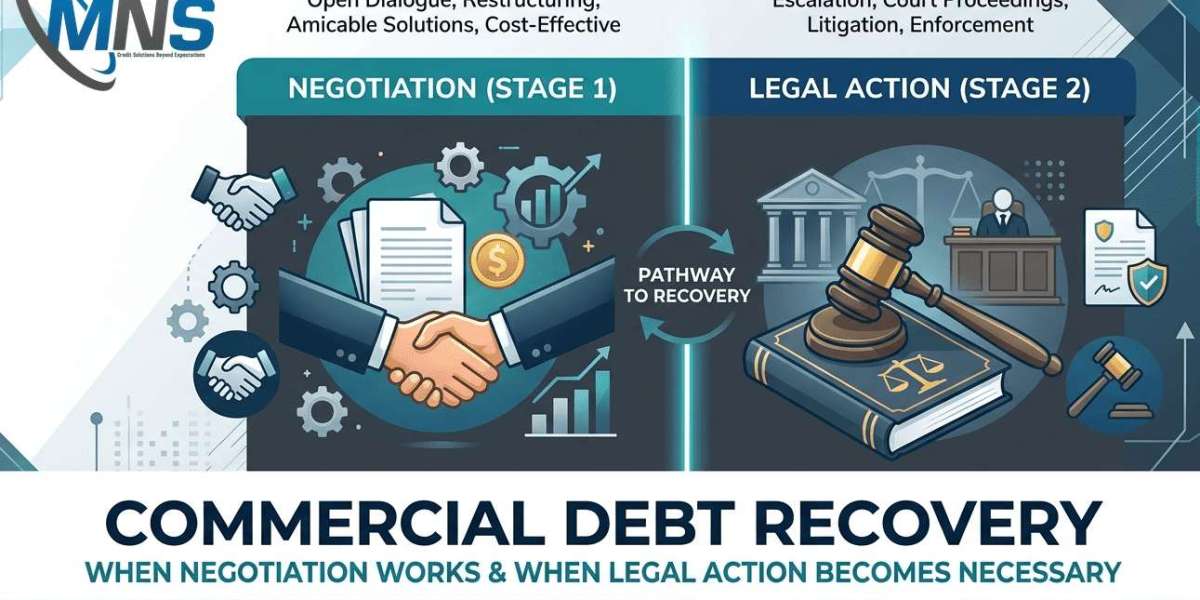

Unpaid invoices are one of the biggest threats to a business's cash flow. When a customer stops paying, the first question is how to recover the money without damaging the relationship or spending more than the debt is worth. Effective debt collection is rarely a choice between "soft" and "hard" tactics. It is about knowing which approach fits the situation, and when to move from one to the other.
Why Your Debt Collection Approach Matters
Every overdue account carries a cost: delayed working capital, higher borrowing needs and management time spent chasing payments. The longer a debt stays unpaid, the harder it usually becomes to recover, especially if the debtor's finances are deteriorating.
A structured debt collection strategy protects your margins and keeps your credit decisions consistent. It also avoids two common mistakes: escalating to court too early, which can destroy a viable customer relationship, and negotiating for too long, which lets the debtor's position weaken while other creditors move ahead of you.
When Negotiation Works
Negotiation is usually the fastest and cheapest route to recovery. It tends to succeed when:
- The debtor is solvent but facing a temporary problem. A delayed receivable, a seasonal slowdown or a one-off disruption can create a short-term cash crunch in an otherwise healthy business.
- The dispute is limited. Disagreements over delivery quality, pricing or documentation can often be settled through discussion and a credit note or partial adjustment.
- The debtor is communicating. A customer who responds, acknowledges the debt and proposes a timeline is signalling intent to pay.
- The relationship has long-term value. For a strategic customer, a structured settlement may be worth more than a court judgment.
Successful negotiation depends on preparation. Keep contracts, invoices, delivery proofs and correspondence ready. Offer realistic options such as instalment plans, revised due dates or early-settlement discounts, and put every agreement in writing with clear dates, amounts and consequences of default. A signed repayment schedule or written acknowledgment of the debt also strengthens your legal position if the arrangement later fails.
Warning Signs That Negotiation Is Failing
Negotiation has limits. Consider changing course if you see:
- Repeated promises of payment that are never kept
- Missed instalments under an agreed repayment plan
- Unreachable contacts, ignored emails or evasive responses
- Disputes raised only after you demand payment, with no earlier complaint
- Signs of financial distress, such as bounced cheques, supplier complaints, asset sales, or lawsuits and insolvency filings by other creditors
Delay carries a legal risk too. Recovery claims are subject to limitation periods, and in India a money recovery claim generally must be filed within three years of the cause of action, subject to acknowledgments and applicable law. Prolonged talks that are not documented properly can leave you with a time-barred claim.
When Legal Action Becomes Necessary
Legal action becomes the practical choice when:
- The debtor denies a valid debt or refuses to engage
- Negotiations have repeatedly failed or been used to stall
- The amount is significant enough to justify legal costs
- There is a risk of asset dissipation, or other creditors are racing to recover
- The debtor is dishonest, for example by issuing cheques that bounce
The decision should be commercial as well as legal. Weigh the amount owed, the strength of your documents, the debtor's ability to pay and the likely time and cost of proceedings. A strong claim against a debtor with no assets may not be worth pursuing, while a smaller claim against a solvent debtor with clear paperwork often is.
Legal Options Available to Creditors
In India, commercial creditors have several routes, depending on the facts:
- Legal demand notice. This formally records the claim and often prompts settlement. It is a required first step for several remedies.
- Pre-institution mediation. Under the Commercial Courts Act, 2015, parties to commercial disputes must generally attempt mediation before filing a suit, unless urgent interim relief is needed.
- Summary suit or civil recovery suit. For well-documented debts, a summary suit under Order XXXVII of the Code of Civil Procedure offers a faster route to judgment.
- Cheque dishonour proceedings. If a cheque issued for a legally enforceable debt bounces, Section 138 of the Negotiable Instruments Act, 1881 allows criminal proceedings after a statutory notice period.
- Insolvency proceedings. Operational creditors can file under the Insolvency and Bankruptcy Code, 2016 after serving a demand notice, once the default meets the prescribed threshold. This is a powerful lever, but it is meant for genuine insolvency situations and not as a pressure tactic.
- Arbitration. Where the contract contains an arbitration clause, recovery must follow that process.
Cross-border claims add further complexity, including jurisdiction, enforcement of foreign judgments and local procedures. In the Middle East, for example, recovery may involve free zone courts, onshore courts or arbitration, depending on contract terms. Local legal advice is essential.
Combining Both Approaches
The strongest debt collection programmes do not treat negotiation and legal action as opposites. They run in parallel. A firm legal notice can bring a reluctant debtor to the table, and a documented settlement offer shows a court that you acted reasonably. Many recoveries happen after proceedings begin, because the debtor now faces cost and reputational pressure.
Best Practices to Improve Recovery
- Act early. Follow up the day an invoice becomes overdue, not weeks later.
- Document everything. Contracts, purchase orders, delivery records and written communications are your evidence.
- Assess the debtor continuously. Credit reports, company filings and market intelligence reveal financial stress before it becomes default.
- Set clear escalation triggers. Define in advance when an account moves from reminders to formal notices to legal action.
- Use professional support. Specialist debt recovery and credit intelligence providers can verify a debtor's assets and standing, helping you choose the right strategy.
- Prevent the problem. Credit checks and due diligence before extending terms remain the cheapest form of recovery.
Conclusion
Negotiation works best when the debtor is willing and able to pay. Legal action becomes necessary when goodwill runs out, the claim is denied or the debtor's financial position puts your recovery at risk. The skill lies in recognising that turning point early, backed by solid documentation and reliable debtor intelligence. Businesses that combine disciplined follow-up with a clear escalation path recover more, faster and at lower cost.