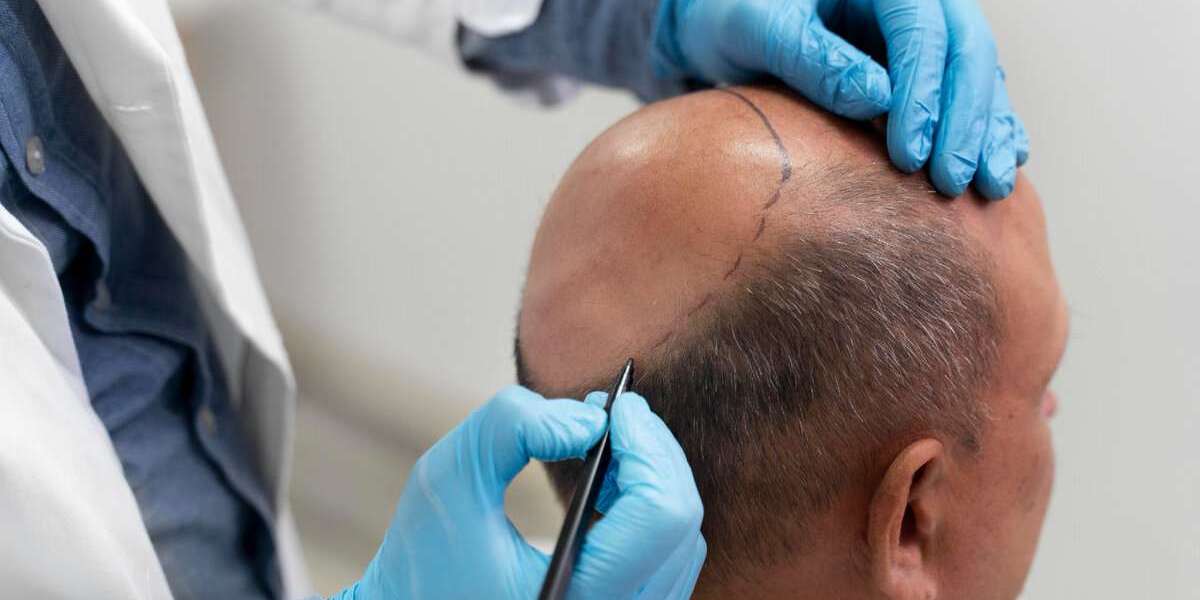

An uneven hairline can make hair loss more noticeable even when the overall amount of thinning is relatively limited. One temple may sit higher than the other, the frontal edge may have irregular gaps, or previous recession may have changed the original shape of the hairline.
For suitable candidates, FUE Hair Transplant may be used to improve selected areas and create a more balanced transition. Since the hairline is one of the most visible parts of the scalp, careful planning is essential.
For people considering hair transplant in Islamabad, understanding how an uneven hairline is assessed can help establish realistic expectations.
Why Can a Hairline Become Uneven?
Hairlines naturally contain some asymmetry. Perfectly identical sides are uncommon, and minor differences do not necessarily indicate hair loss.
However, noticeable unevenness can become more pronounced when hair loss progresses differently on each side. One temple may recede faster, or thinning may affect one section of the frontal region more than another.
The first step is determining whether the difference is natural or related to progressive hair loss.
How Can FUE Address Uneven Areas?
FUE involves harvesting individual follicular units from a suitable donor area. These follicles can then be placed into carefully selected areas where additional coverage is required.
When treating an uneven hairline, the doctor may focus on improving balance rather than making both sides mathematically identical.
The placement of each graft can be planned according to existing hair direction, density, facial proportions, and the surrounding hairline.
Why Is Natural Asymmetry Important?
A completely symmetrical hairline may not always look natural. Real hairlines typically have subtle variations in density, direction, and shape.
For this reason, treatment may aim to reduce noticeable imbalance while preserving natural-looking irregularity.
The goal is to create a transition that fits the person's face rather than producing a perfectly geometric hairline.
Can FUE Improve One Higher Temple?
In some cases, one temple may have receded more significantly than the other. If adequate donor follicles are available, selected grafts can potentially be placed in the weaker area.
The number of grafts does not necessarily need to be equal on both sides. Treatment can be customized according to the amount of recession and desired improvement.
Careful placement is particularly important around the temples because the hair naturally changes direction in this region.
What About Frontal Gaps?
Small gaps along the frontal hairline can become noticeable as density decreases. If suitable, FUE may be used to add follicles to selected areas.
The transplanted grafts should be distributed carefully so that they blend with existing hair. A gradual transition can help avoid a sharply defined appearance.
Existing follicles also need to be considered when planning the recipient sites.
Why Is Donor Hair Important?
The donor area determines how many suitable follicles may be available for transplantation. Because donor hair is limited, every graft should be considered part of a long-term restoration strategy.
Before FUE, the donor region can be evaluated for density, hair characteristics, and overall suitability.
Using donor follicles conservatively can help preserve options if additional hair loss occurs later.
Can Hair Type Affect the Result?
Yes. Hair characteristics can influence how an uneven area looks after transplantation.
Thicker hair may provide greater visual coverage, while fine hair may require more careful distribution. Wavy and curly hair can also create different coverage effects compared with straight hair.
Hair color and scalp contrast can influence how easily the scalp is seen through the hair.
These details are useful when establishing realistic expectations.
What Happens After Treatment?
Following FUE, the scalp requires a healing period. Temporary redness, small crusts, or sensitivity may occur around the treated areas.
The transplanted follicles then enter a gradual growth cycle. Patients should understand that the final appearance develops over time rather than immediately after the procedure.
Following the recommended aftercare instructions is an important part of the recovery process.
Can Future Hair Loss Affect the Hairline?
Yes. Existing natural hair can continue to thin after transplantation.
This is why a hairline should be designed with future changes in mind. Creating an extremely low or dense hairline without considering surrounding hair may create an imbalance if untreated follicles later become weaker.
A thoughtful treatment plan considers both present appearance and potential long-term changes.
Is FUE Suitable for Uneven Hairlines?
FUE may be appropriate for selected individuals, but suitability depends on the cause of the unevenness and the patient's overall hair condition.
Donor density, existing hair, age, scalp characteristics, progression of hair loss, and personal goals should all be evaluated.
For anyone searching for hair transplant in Islamabad, a professional consultation can provide a more accurate assessment than photographs or general assumptions.
Consultation With Dr Adnan Bashir
A consultation with Dr Adnan Bashir can help evaluate the hairline from different angles and identify the areas where improvement may be most useful.
The assessment can include the temples, frontal edge, existing density, donor area, and potential future hair-loss pattern.
This type of planning can help ensure that treatment is based on the individual's actual needs rather than a standard design.
Enfield Royal Clinic in Islamabad
At Enfield Royal Clinic in Islamabad, patients can discuss uneven hairlines and explore personalized FUE treatment options.
For those considering hair transplant in Islamabad, treatment planning can focus on hairline proportions, graft placement, donor management, and the relationship between transplanted and existing hair.
The aim is to create an improvement that complements the patient's natural appearance.
Final Thoughts
An uneven hairline can result from natural asymmetry, temple recession, or progressive thinning. FUE Hair Transplant may help suitable candidates improve selected areas while maintaining a natural transition between transplanted and existing hair.