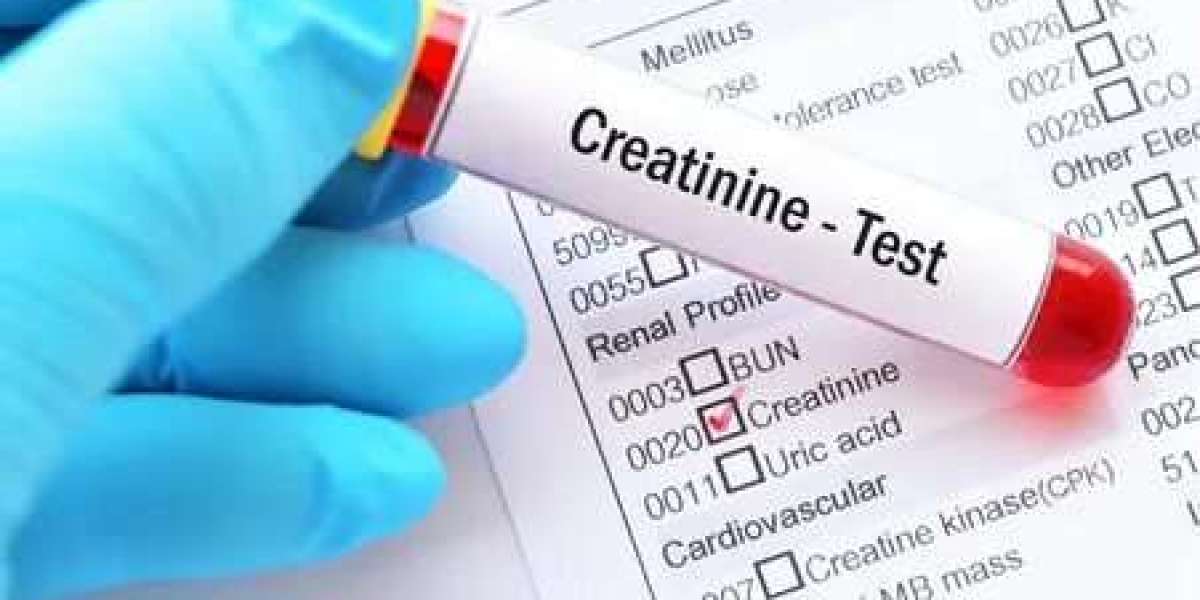

A 24-hour creatinine clearance test is a kidney function test that estimates how efficiently your kidneys remove creatinine from your bloodstream. Unlike a standard Creatinine Clearance Test in Dubai, this test generally requires you to collect your urine for an entire 24-hour period and provide a blood sample for serum creatinine measurement.
The idea may sound complicated, but the purpose is straightforward: the laboratory compares the amount of creatinine in your urine with the amount in your blood and uses the urine volume and collection time to estimate creatinine clearance.
The most important part for patients is collecting the urine correctly. Understanding what happens during each stage can help you complete the test accurately and avoid common mistakes.
What Is a 24-Hour Creatinine Clearance Test?
Creatinine is a waste product produced naturally through normal muscle metabolism. The kidneys usually remove creatinine from the blood and excrete it in urine.
A creatinine clearance test estimates how efficiently this process occurs.
During a typical 24-hour collection, the laboratory measures:
Urine creatinine concentration
Total urine volume
Collection duration
Serum creatinine from a blood sample
These measurements are used to calculate an estimated creatinine clearance, commonly reported in mL/min.
Although the test provides information about kidney filtration, it is important to understand that creatinine clearance is not a direct measurement of true GFR.
Why Would a Doctor Recommend This Test?
A 24-hour creatinine clearance test is not necessarily required for everyone who needs a kidney function assessment.
For routine evaluation, healthcare professionals often use serum creatinine, eGFR, and urine tests. However, creatinine clearance may be considered when additional information about kidney filtration is useful for a particular clinical situation.
It may be used to help evaluate renal function or, in selected circumstances, support decisions where kidney filtration is clinically important.
The reason for testing can affect how the final result is interpreted.
Before the Clock Starts:
The first step is receiving the correct collection container and instructions from your laboratory or healthcare professional.
Before beginning, make sure you know:
The exact starting time
The exact ending time
How the first urine should be handled
Whether the container needs refrigeration or other storage
Where and when the completed sample should be returned
When your blood sample will be collected
Do not rely solely on general instructions found online. Collection procedures can vary, so the instructions provided with your specific test should take priority.
Hour 0: Starting the Collection
A 24-hour urine collection begins at a specific time.
A common procedure involves urinating at the designated start time and not saving that first urine. The time is recorded, and the collection begins with the next urine produced.
However, the exact instructions can differ between laboratories.
The reason the first urine may not be collected is that the bladder needs to be emptied at the starting point so that the collection period has a clearly defined beginning.
Once the collection begins, every urine sample during the remaining 24 hours generally needs to be saved.
Hours 1 to 12: Keep Collecting Carefully
This is the part of the test that requires the most attention.
Every time you urinate during the collection period, follow the laboratory's instructions for transferring the urine into the designated container.
The collection container should be stored exactly as instructed. Some specimens may require refrigeration or another specific storage method.
Do not discard urine that should be part of the collection.
If you will be away from home, plan ahead. Ask the laboratory how you should handle urination outside the home rather than improvising with an unsuitable container.
What If You Forget One Sample?
It is surprisingly easy to forget a collection during a busy day or overnight.
If this happens, tell your healthcare professional or laboratory.
A 24-hour creatinine clearance calculation depends on knowing the urine produced during the entire collection period. Missing a sample can change the measured urine volume and total creatinine excretion and may make the final result unreliable.
Depending on the circumstances, the laboratory may recommend repeating the collection.
Do not simply continue and assume the missing sample will not matter.
What About Drinking Water?
You should generally follow your normal fluid instructions unless your healthcare professional has given you different directions.
Do not deliberately drink excessive amounts of water to produce more urine, and do not severely restrict fluids in an attempt to alter the creatinine clearance result.
Both hydration and overall health status can influence kidney function measurements.
The goal is to collect an accurate sample that reflects your usual physiological state according to the testing instructions.
Can You Eat Normally?
Whether you need to make dietary changes depends on your laboratory instructions and whether other blood tests are being performed at the same time.
Do not make major changes to your diet solely to influence creatinine levels.
Creatinine production can be influenced by dietary factors, muscle mass, and physical activity, which is why your healthcare professional interprets the result in context.
If you have been given fasting or dietary instructions, follow them carefully.
What About Exercise?
Normal daily activity may not require special changes, but strenuous exercise can influence creatinine levels in some circumstances.
If your healthcare professional has provided instructions about physical activity before or during the test, follow them.
If you are unsure whether a planned intense workout could affect your testing, ask the laboratory or healthcare professional before the collection begins.
The Blood Sample: Why Is It Necessary?
The urine collection is only part of the test.
A blood sample is generally needed to measure serum creatinine, which tells the laboratory how much creatinine is present in your bloodstream.
The laboratory then compares blood creatinine with urine creatinine and urine flow.
In simplified form, creatinine clearance is calculated using:
Urine creatinine × urine flow rate ÷ serum creatinine
The laboratory performs the actual calculation using the correct units and reporting method.
This produces an estimate of creatinine clearance rather than a direct measurement of kidney filtration.
Hour 24: Completing the Collection
When the designated 24-hour period ends, you generally need to provide the final urine sample at the specified time.
This final sample is important because the collection must represent the complete time period.
For example, if the laboratory instructed you to start at a particular time, the collection should finish at the corresponding ending time rather than simply stopping whenever the container becomes full or when it is convenient.
Follow the exact instructions given to you.
What Happens to Your Sample at the Laboratory?
Once the urine container reaches the laboratory, technicians can measure the urine creatinine concentration and total urine volume.
The blood sample provides the serum creatinine measurement.
The laboratory then combines the relevant information to estimate creatinine clearance.
The result may help the healthcare professional assess renal filtration and determine whether further kidney evaluation is appropriate.
What Can Make a 24-Hour Collection Less Reliable?
Several issues can affect the usefulness of a creatinine clearance test.
Incomplete Collection
The most common practical concern is missing urine samples.
Incorrect Timing
Starting or ending the collection at the wrong time can affect the calculated urine flow.
Improper Storage
The sample should be stored according to laboratory instructions. Incorrect storage can affect specimen integrity.
Biological Variation
Muscle mass, age, diet, physical activity, and certain medical conditions can influence creatinine levels.
Temporary Health Changes
Dehydration, acute illness, and changes in kidney function can affect the test result.
Because of these factors, a creatinine clearance value should not be interpreted without considering the overall clinical situation.
What Does the Result Tell You?
A low creatinine clearance may suggest reduced kidney filtration. However, it can also be affected by an incomplete urine collection or other factors.
A higher clearance does not automatically mean that kidney function is healthier. Increased filtration, sometimes called hyperfiltration, can occur in certain circumstances.
There is no single universal value that should be considered normal for every person. Laboratory reference information and individual characteristics matter.
Your healthcare professional may also compare the result with serum creatinine, eGFR, urine albumin, urinalysis, and previous kidney function results.
How Does It Relate to eGFR?
You may hear the term estimated glomerular filtration rate, or eGFR, when discussing kidney health.
eGFR is generally calculated from blood creatinine using a validated equation and does not usually require a 24-hour urine collection.
Because the two measurements use different methods, their numerical values may not match exactly.
Creatinine clearance and eGFR should therefore not be treated as interchangeable measurements.
Does a 24-Hour Creatinine Clearance Test Diagnose Kidney Disease?
Not by itself.
A low result can indicate reduced filtration, but one abnormal creatinine clearance measurement does not automatically diagnose chronic kidney disease.
CKD is assessed using evidence of persistent kidney abnormalities or kidney damage over time. Healthcare professionals may consider eGFR, urine albumin, urinalysis, blood pressure, medical history, and other findings.
This broader evaluation is important because kidney damage can sometimes occur even when filtration remains relatively preserved.
Frequently Asked Questions:
Is a 24-hour urine collection difficult?
It can be inconvenient, but the process is usually straightforward once you understand the timing and storage requirements. The key is to collect every urine sample during the designated period.
What happens if I miss a urine sample?
Tell your healthcare professional or laboratory. Depending on the testing protocol, you may need to repeat the collection.
Does the test hurt?
The urine collection itself is not painful. The blood portion involves the brief discomfort associated with a routine blood draw.
Can I continue my normal routine?
Usually, you can continue normal activities unless your healthcare professional gives you specific instructions. Make sure your routine allows you to collect and store every urine sample correctly.
How long does the test take?
The urine collection commonly lasts 24 hours. Laboratory processing and reporting take additional time depending on the facility.
A Simple Way to Remember the Process:
Think of the test as a complete 24-hour record:
Start the clock → follow the urine collection instructions → save every required sample → store it correctly → complete the final collection → provide the blood sample → laboratory calculates creatinine clearance.
This sequence helps ensure that the laboratory has the information needed to estimate kidney filtration.
Final Takeaway:
A 24-hour creatinine clearance Lab tests provides an estimate of how efficiently the kidneys remove creatinine from the blood. It combines a timed urine collection with a serum creatinine measurement and uses urine volume and collection duration to calculate creatinine clearance.
For patients, accurate collection is the most important part. Missing urine, incorrect timing, or improper storage can affect the reliability of the result.
Creatinine clearance should also be viewed alongside other measures of kidney health, including serum creatinine, eGFR, urine albumin, urinalysis, blood pressure, and previous kidney function results.
If your healthcare professional has ordered this test, carefully follow the laboratory's instructions and report any collection problems. A properly completed test gives your healthcare team more useful information for understanding your kidney filtration and deciding whether further evaluation is needed.