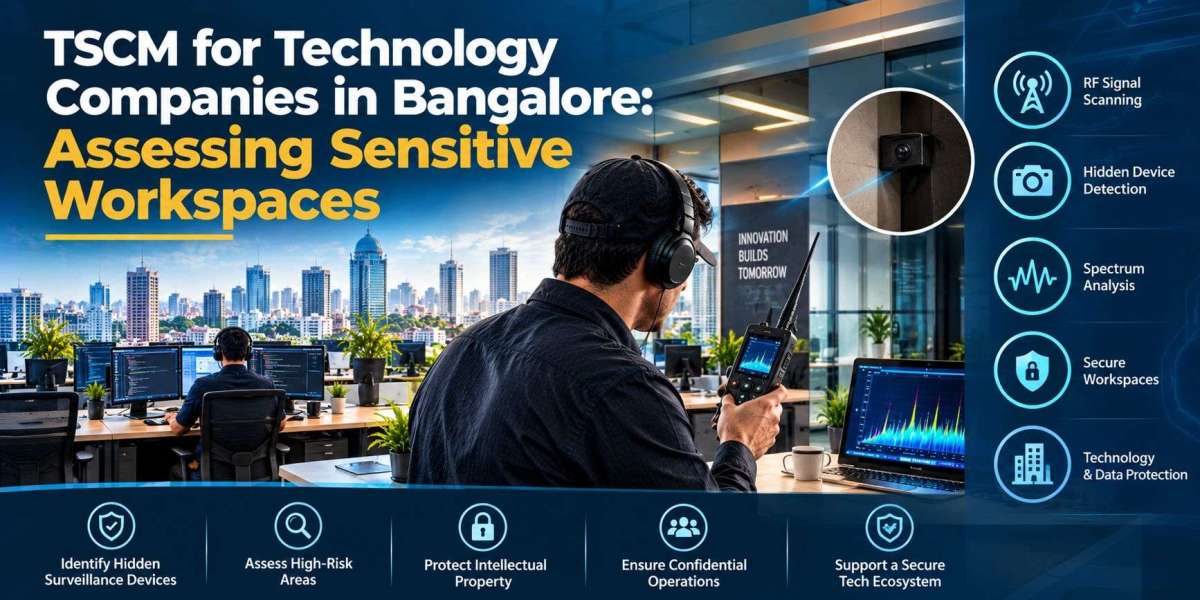

Bangalore’s technology ecosystem brings together software development companies, IT service providers, startups, research teams, and product engineering firms working on commercially valuable information. From proprietary source code and product designs to business strategies and investor discussions, sensitive information is central to many technology-driven operations.
While cybersecurity protects digital systems and data, organizations must also consider the physical environments where confidential discussions take place. Meeting rooms, executive offices, product development areas, and research facilities may warrant technical risk assessments when there are specific concerns about unauthorized electronic monitoring.
Technical Surveillance Countermeasures (TSCM) provides a structured approach to assessing potential technical surveillance risks in selected environments. For businesses seeking TSCM services in Bangalore, understanding the inspection process can help establish appropriate procedures for evaluating sensitive workspaces.
Why Technology Companies Should Assess Sensitive Workspaces
Technology businesses manage different categories of commercially important information, and not every risk originates from a network or digital device.
Sensitive discussions may involve product roadmaps, software architecture, intellectual property, mergers and acquisitions, client requirements, pricing strategies, or confidential negotiations. Organizations may therefore consider whether their physical workspaces require additional technical assessment as part of a broader risk-management programme.
Potential reasons to review a workspace include:
- Preparing for confidential meetings or strategic negotiations
- Assessing a recently renovated or reconfigured office
- Reviewing access to rooms used for product development or research
- Investigating specific signs of unauthorized equipment installation
- Establishing periodic technical inspection procedures for designated areas
These circumstances do not automatically indicate that surveillance has occurred. Rather, they provide an opportunity to evaluate relevant risks through a measured, evidence-based process.
What Is TSCM in a Corporate Technology Environment?
Technical Surveillance Countermeasures, commonly known as TSCM, involve assessing potential technical surveillance devices and related indicators within an agreed inspection area.
Unlike a routine office security check, a professional bug sweep inspection may combine physical examination, radio-frequency (RF) analysis, and specialized technical instruments to investigate relevant concerns.
For technology companies, the scope may include selected boardrooms, executive offices, conference rooms, research areas, and other workspaces where sensitive discussions or activities take place.
The objective is to identify and assess potential technical indicators, distinguish suspicious findings from legitimate electronic activity, and document the results. An inspection should be tailored to the environment rather than relying on a single detection method.
Key Areas to Consider During a Corporate TSCM Assessment
1. Boardrooms and Executive Meeting Rooms
Boardrooms often host discussions about business expansion, partnerships, investments, product launches, and strategic decisions. These environments may warrant particular attention when an organization has a specific reason to assess possible electronic surveillance risks.
A professional inspection may examine agreed areas, accessible fixtures, meeting-room equipment, and relevant electronic installations. Depending on the circumstances, suitable technical testing may also be considered.
Organizations can complement such assessments with controlled room access, clear visitor procedures, and appropriate handling of sensitive meeting materials.
2. Product Development and Research Areas
Technology companies may work on unreleased products, prototypes, hardware designs, software systems, and research initiatives that have commercial value.
The appropriate inspection scope depends on the nature of the work and the physical environment. An assessment may focus on selected workspaces where sensitive design discussions take place or where specific technical concerns arise.
Inspection planning should account for legitimate electronic equipment, operational requirements, and authorization to examine the relevant areas. Findings should be interpreted carefully rather than treating unfamiliar components or ordinary technical activity as evidence of surveillance.
3. Offices Used for Client and Commercial Discussions
IT service providers and software development firms regularly discuss client requirements, project timelines, contracts, pricing, and service delivery arrangements.
Where there is a credible reason to assess potential unauthorized monitoring, professional office debugging services may help evaluate relevant technical indicators in designated rooms.
The scope should be clearly defined before the inspection begins, including the rooms covered, access requirements, proposed methods, and expected documentation. This helps businesses understand what has been assessed and what remains outside the inspection.
4. Recently Renovated or Reconfigured Workspaces
Office renovations, equipment replacements, and changes to room layouts can create practical reasons to review installed fixtures and electronic systems.
A Debugging assessment may be considered when there are specific concerns about unexplained modifications or unauthorized equipment. Physical examination can help identify anomalies, while additional testing may be appropriate depending on the observations.
However, routine maintenance, new installations, and unfamiliar equipment can have legitimate explanations. Any concerns should be evaluated objectively before conclusions are drawn.
How Professional Corporate Surveillance Detection Works
A professional assessment typically follows a defined process based on the location, the concerns raised, and the agreed inspection requirements.
Step 1: Define the Inspection Scope
The organization identifies the workspaces requiring assessment and explains any relevant observations or concerns. The inspection provider establishes which areas and systems are included and discusses access, operational constraints, and limitations.
Step 2: Conduct a Physical Examination
The inspection may include a methodical examination of accessible fixtures, room equipment, cable installations, and other relevant areas. The purpose is to identify physical anomalies or unfamiliar equipment that warrants further evaluation.
Step 3: Perform Appropriate RF Analysis
Where relevant, radio-frequency instruments may be used to assess signals that require investigation. Results must be interpreted in the context of ordinary office activity, including Wi-Fi networks, Bluetooth devices, mobile communications, and other legitimate transmissions.
RF analysis alone cannot identify every possible surveillance device. Equipment that does not transmit during the inspection or stores information locally may require different assessment methods.
Step 4: Use Specialized Instruments Where Appropriate
Depending on the environment, a TSCM assessment may involve spectrum analyzers, non-linear junction detectors (NLJDs), or other specialized inspection tools. Each instrument has particular capabilities and limitations, and its results require competent technical interpretation.
No single instrument can guarantee the detection of every surveillance device.
Step 5: Document Findings and Recommendations
A professional report should explain the inspection coverage, methods used, relevant observations, limitations, and recommended next steps. It should distinguish verified findings from unresolved indicators and avoid unsupported conclusions.
This documentation allows the organization to make informed decisions about any additional technical checks or procedural changes that may be appropriate.
Integrating TSCM into Corporate Risk Management
For technology businesses, TSCM is best considered one component of a broader approach to managing sensitive information. It does not replace cybersecurity controls, access management, employee policies, or physical security measures.
Organizations can establish practical procedures for reviewing selected workspaces:
- Identify sensitive areas: Determine which rooms regularly host high-value commercial or technical discussions.
- Set clear authorization rules: Define who can approve inspections and which spaces or equipment may be examined.
- Establish inspection criteria: Determine when a review may be appropriate, such as after specific concerns or relevant changes to a workspace.
- Coordinate with IT and facilities teams: Account for legitimate electronic systems, network equipment, and operational requirements.
- Maintain suitable records: Document the scope, observations, limitations, and follow-up actions from each assessment.
- Review procedures periodically: Adjust the approach when business operations, workspace configurations, or risk considerations change.
These measures help create a consistent process without assuming that every office or meeting room requires frequent specialist inspections.
Choosing TSCM Services for IT Companies in Bangalore
Selecting an appropriate service provider requires more than comparing equipment lists or service descriptions. Technology companies should understand how the provider will conduct the inspection and communicate its results.
Before appointing a provider, consider the following:
Technical capability: Ask about experience with corporate environments and the methods suitable for the workspace being assessed.
Inspection methodology: Request a clear explanation of the proposed physical examination, RF analysis, and other relevant procedures.
Defined coverage: Confirm which rooms, fixtures, or systems will be included and whether any access restrictions may affect the assessment.
Clear reporting: Ensure the provider explains technical observations, limitations, and recommended next steps in understandable language.
Professional conduct: Confirm that the inspection will be conducted with appropriate authorization and respect for business operations and property rights.
Realistic claims: Avoid guarantees that every device will be detected or that a single inspection can eliminate all surveillance-related risks.
A reliable assessment should provide clarity about the work performed, the observations made, and the conclusions that can reasonably be supported.
Professional TSCM Inspections for Technology Workspaces in Bangalore
Technology companies operate in an environment where product development, intellectual property, commercial negotiations, and strategic planning can have significant business value. Assessing potential electronic surveillance risks in selected workspaces can support a more comprehensive approach to managing sensitive information.
Through structured inspections, appropriate technical methods, and clear reporting, organizations can better understand relevant concerns and decide whether to conduct further investigation.
Have concerns about possible electronic surveillance in your office, boardroom, or product development workspace? Contact Trace Point India to discuss professional TSCM services and corporate surveillance detection in Bangalore, tailored to your organization's inspection requirements.
Frequently Asked Questions
1. What is TSCM for IT companies in Bangalore?
TSCM is a technical assessment process used to investigate potential electronic surveillance risks in selected environments. For IT companies, it may cover boardrooms, executive offices, research spaces, and other designated work areas.
2. Can TSCM inspections help assess risks to intellectual property?
TSCM inspections can assess relevant technical indicators of possible unauthorized electronic monitoring in physical workspaces. They do not independently prevent intellectual property theft or replace cybersecurity and information-access controls.
3. What equipment may be used during a corporate TSCM inspection?
Depending on the requirements, an inspection may use RF spectrum analyzers, non-linear junction detectors, and other specialized instruments alongside physical examination. Equipment selection depends on the environment and the concerns being assessed.
4. How often should a technology company arrange a TSCM inspection?
There is no universal inspection schedule suitable for every business. Frequency should depend on the organization's risk assessment, the sensitivity of its operations, specific concerns, workspace changes, and professional advice.
5. Is office debugging services suitable for startups and smaller IT firms?
Yes. The inspection scope can be tailored to a business's premises and requirements. Smaller organizations may choose to assess specific meeting rooms or other sensitive areas rather than commission a wider inspection.