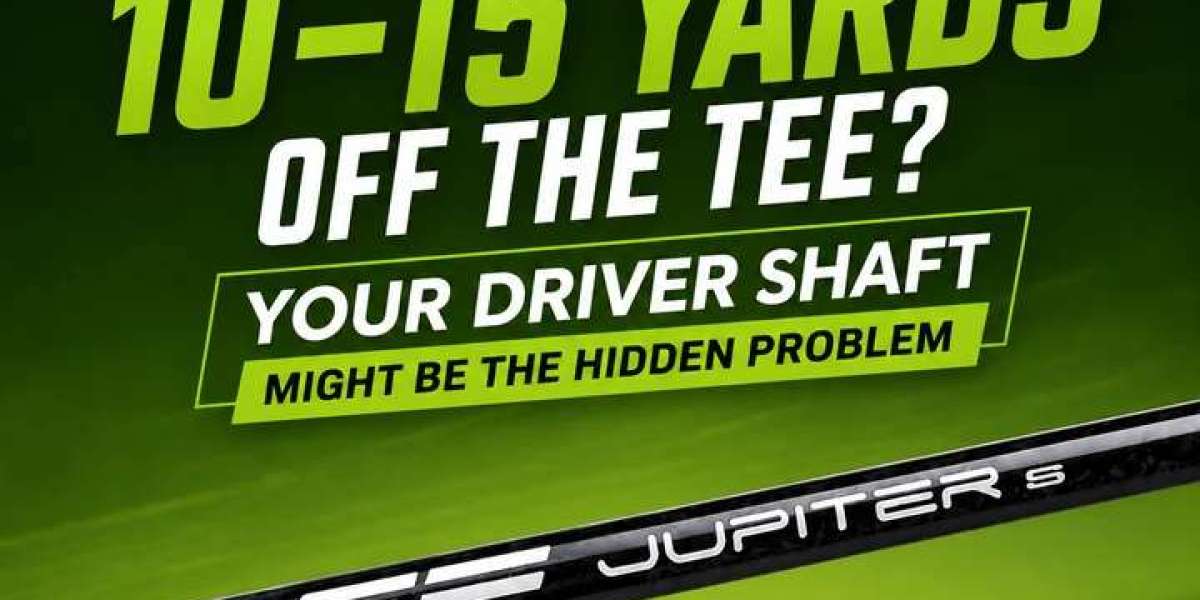

Losing distance with your driver doesn't always mean your swing is getting worse. A poorly fitted driver shaft can affect your timing, impact location, launch angle, and spin, potentially costing you valuable yards off the tee. However, shaft fit is only one possible cause, and identifying the real problem is the first step toward recovering distance.
Maybe your drives used to carry 240 yards, but now they're struggling to reach 225. Your swing feels familiar, your contact seems solid, and you're still finding fairways. So where did those extra yards go?
Before rebuilding your swing or buying a new driver, take a closer look at the shaft you're using.
At Steadfast Golf, we believe the right equipment should complement your natural swing. Understanding how driver shaft flex, weight, and stability influence performance can help you make a more informed decision about your next upgrade.
Why Am I Losing Distance With My Driver?
If you're suddenly losing distance with your driver, the most common areas to investigate are clubhead speed, strike location, launch angle, spin rate, and equipment fit. Even a small change in how the clubhead meets the ball can reduce carry distance without making your swing feel noticeably different.
Several factors may explain why your drives aren't traveling as far as they used to.
1. You're Not Hitting the Center of the Clubface
Center-face contact plays an important role in transferring energy from the clubhead to the golf ball.
Shots struck toward the heel or toe can lose ball speed and produce different spin characteristics. Even when the swing feels solid, repeated off-center contact may explain why your drives are falling short.
2. Your Launch Angle or Spin Rate Has Changed
Launch angle describes the vertical angle at which the ball leaves the clubface. Spin rate measures how quickly the ball rotates after impact.
Too much backspin can create a high, floating ball flight that sacrifices distance. Too little spin, particularly with insufficient launch, can cause the ball to fall out of the air early.
The ideal combination depends on your ball speed, angle of attack, and other launch conditions.
3. Your Driver Shaft No Longer Matches Your Swing
Changes in tempo, strength, mobility, or swing mechanics can affect how you deliver the club.
A shaft that performed well several years ago may not produce the same results today.
If your swing speed remains relatively consistent but your contact pattern or launch conditions have changed, driver shaft fitting is worth investigating.
How Can the Wrong Driver Shaft Affect Your Distance?
A mismatched driver shaft can contribute to distance loss by influencing your swing timing, clubhead delivery, and impact consistency. The shaft doesn't generate extra energy on its own, but its weight, stiffness, and bending characteristics can affect how efficiently you deliver the clubhead to the golf ball.
During your swing, the shaft bends and twists in response to the forces you apply.
Its design influences how the club feels throughout the backswing, transition, and downswing.
When those characteristics suit your natural movement, it may become easier to deliver the club consistently.
When they don't, several problems can appear.
A shaft that feels excessively heavy may make it difficult to maintain your preferred swing speed. One that feels too stiff may affect your timing or confidence through impact.
Likewise, a shaft that's too light for your preferred tempo can make it harder to control the clubhead.
These effects vary between golfers. That's why the best driver shaft for distance isn't necessarily the stiffest, lightest, or most expensive option.
It's the shaft that helps you produce the most efficient combination of speed, contact, launch, and consistency.
What Are the Warning Signs of a Poorly Fitted Driver Shaft?
Common signs of a potentially mismatched driver shaft include inconsistent strike location, unpredictable ball flight, uncomfortable shaft feel, and reduced distance despite relatively consistent swing speed. These symptoms don't automatically confirm a shaft problem, but repeated patterns can indicate that your current setup deserves closer examination.
Watch for the following warning signs.
Low Ball Flight With Limited Carry
If your drives launch unusually low and struggle to stay airborne, your launch conditions may be inefficient.
Shaft characteristics can influence how you deliver loft at impact, although driver loft, strike location, and swing mechanics also play important roles.
High, Floating Drives That Lose Distance
A drive that climbs excessively and seems to stop moving forward may have too much spin for its launch conditions.
The solution isn't automatically a stiffer shaft. A fitting can help determine whether the issue involves your shaft, driver head, strike pattern, or swing delivery.
Inconsistent Distance on Similar Swings
One drive travels 250 yards. The next barely reaches 225, even though both swings feel similar.
Variations in contact, face angle, and launch conditions may explain the difference.
If those inconsistencies happen repeatedly, comparing different shaft profiles may help identify a more comfortable and repeatable fit.
Your Driver Feels Difficult to Control
A driver that feels excessively heavy, unstable, or difficult to time can interfere with confidence.
Comfort matters because golfers often adjust their swings unconsciously to compensate for equipment that doesn't feel right.
Recognizing these wrong driver shaft symptoms can help you decide whether a professional fitting or controlled equipment test is worthwhile.
Does Driver Shaft Flex Really Affect Distance?
Driver shaft flex can affect distance because it influences how the shaft bends during the swing and how the golfer responds to that movement. However, flex alone doesn't determine ball speed or launch conditions. Weight, overall stiffness profile, shaft length, and individual swing characteristics are equally important.
Golf shafts are commonly labeled:
Senior Flex: Often designed for golfers seeking a softer overall flex profile.
Regular Flex: Commonly considered by golfers with moderate swing speeds and smoother transitions.
Stiff Flex: Frequently preferred by players who benefit from a firmer shaft response.
Extra Stiff Flex: Typically considered by faster or more aggressive swingers who fit that profile.
These labels are starting points, not universal fitting standards.
One manufacturer's stiff shaft may feel or perform differently from another manufacturer's stiff shaft.
Why Swing Tempo Matters as Much as Swing Speed
Imagine two golfers who both swing their drivers at 95 mph.
The first has a smooth transition and gradually accelerates through the downswing.
The second makes an aggressive move from the top and applies force much earlier.
Despite having identical swing speeds, they may prefer different shaft weights, flex profiles, or bending characteristics.
That's why choosing a driver shaft based only on swing speed can overlook important details.
A proper fitting considers how you swing, not just how fast.
How Do Shaft Weight and Torque Affect Driver Performance?
Shaft weight and torque influence how a driver feels and responds during the swing. Weight can affect swing speed, tempo, and control, while torque describes the shaft's resistance to twisting under a specified load. Neither characteristic guarantees better distance or accuracy independently; performance depends on the complete club and golfer.
Driver Shaft Weight and Swing Speed
A lighter shaft may help some golfers swing faster without increasing effort.
This can be particularly relevant for players who struggle with heavier equipment or want to explore a more comfortable overall club weight.
However, lighter isn't automatically better.
Some golfers lose consistency when a shaft becomes too light, leading to less predictable contact and ball flight.
The goal is to find a weight that supports both comfortable speed and repeatable impact.
What Is a Low Torque Golf Shaft?
Torque measures how much a shaft twists when a specified rotational force is applied.
A low torque golf shaft is designed to resist twisting more than a higher-torque shaft under comparable testing conditions.
Lower torque can influence feel and how the shaft responds to applied forces, but it doesn't automatically prevent the clubface from opening or closing.
Shaft torque measurements can also differ depending on testing methods.
For golfers exploring premium carbon fiber shafts, torque is one useful specification to consider alongside weight, flex, length, and overall bend profile.
Can the Right Driver Shaft Help You Recover 10–15 Yards?
A properly fitted driver shaft can help some golfers recover lost distance by improving swing efficiency, strike consistency, and launch conditions. Gains of 10–15 yards may be possible when the original setup is significantly mismatched, but results vary. Some golfers gain fewer yards, while others benefit primarily from tighter dispersion.
Consider a golfer who consistently misses the center of the clubface because their current shaft feels difficult to control.
A more suitable shaft may help that player produce better contact more often.
Improved strike location can increase ball speed and create more efficient launch conditions.
The result may be longer, more predictable drives.
However, changing shafts won't automatically fix every distance problem.
If you're already using a well-fitted shaft and consistently delivering the club efficiently, your potential improvement may be relatively small.
Distance Isn't the Only Measurement That Matters
When evaluating a new shaft, pay attention to more than your longest drive.
Look at:
Average carry distance
Ball speed
Launch angle
Backspin rate
Strike location
Shot dispersion
Consistency across multiple swings
A shaft that produces slightly shorter maximum distance but significantly better average results may be the stronger choice for your game.
The objective is dependable performance, not one unusually long shot.
How Do You Choose the Right Driver Shaft for Your Swing?
Choosing the right driver shaft involves evaluating your swing speed, tempo, preferred weight, impact consistency, and launch conditions. A professional fitting or structured comparison using launch-monitor data can help identify which shaft characteristics work best. Flex labels alone are rarely enough to make an informed decision.
Step 1: Identify Your Swing Characteristics
Start by understanding your normal driver swing speed and transition.
Do you swing smoothly or aggressively?
Does your current driver feel heavy, light, stable, or difficult to control?
These observations can help narrow your options.
Step 2: Evaluate Your Ball Flight
Pay attention to whether your drives consistently launch too low, climb excessively, or curve more than expected.
If possible, use a launch monitor to measure your actual performance rather than relying entirely on visual impressions.
Step 3: Compare Shafts Under Similar Conditions
When testing different shafts, keep as many variables consistent as possible.
Use the same driver head, comparable playing length, and similar testing conditions.
Compare several shots with each shaft rather than making a decision based on one successful swing.
Step 4: Use a Shaft Selection Tool
If you're unsure where to begin, the Steadfast Golf Shaft Selector Quiz can help you explore shaft options based on your playing characteristics.
It's a useful starting point for identifying a potential match before considering a more detailed fitting.
Why Consider Steadfast Golf Jupiter Shafts?
Steadfast Golf offers carbon fiber golf shafts designed for golfers seeking a different combination of weight, stability, and performance characteristics. The Jupiter lineup provides options for players with varying swing preferences, making it worth exploring when your current driver shaft no longer feels comfortable or produces consistent results.
Rather than assuming one shaft suits every golfer, consider which profile best matches your needs.
Jupiter One: Explore a Stable Driver Shaft Option
The Jupiter One is part of Steadfast Golf's carbon fiber shaft lineup.
It's an option to consider if you're looking to evaluate a different driver shaft profile with an emphasis on stability and consistent performance.
As with any shaft, the right flex and configuration should be selected according to your swing characteristics.
Jupiter One: Another Option for Your Swing Profile
The Jupiter One gives golfers another choice within the Jupiter family.
When comparing it with Jupiter One, consider the available specifications, fitting recommendations, and how each option performs with your driver head.
The best choice is the one that delivers more repeatable results for your particular swing.
Jupiter Lite: Consider a Lighter Shaft
For golfers interested in reducing shaft weight, Jupiter Lite is a lightweight option within the Steadfast lineup.
A lighter shaft may help certain golfers swing more comfortably or maintain speed, especially when their current equipment feels excessively heavy.
However, balance and control remain essential. The lightest shaft isn't always the most effective.
Explore the Steadfast carbon fiber golf shaft lineup to compare available options and find a suitable starting point.
Frequently Asked Questions
1. Why am I suddenly losing distance with my driver?
Sudden driver distance loss can result from changes in swing speed, strike location, launch angle, spin rate, or equipment fit. Start by checking whether your ball speed and contact pattern have changed. If your swing remains consistent but performance declines, testing your current driver setup may help identify the cause.
2. Can a driver shaft really make a 10–15-yard difference?
Yes, a different driver shaft can produce meaningful distance improvements for some golfers, particularly when their current shaft is poorly matched to their swing. However, gaining 10–15 yards isn't guaranteed. The outcome depends on how the new shaft affects clubhead speed, impact consistency, launch conditions, and overall efficiency.
3. What happens if my driver shaft is too stiff?
A shaft that feels too stiff for your swing may make it harder to maintain comfortable timing and consistent clubhead delivery. Some golfers experience lower launch or inconsistent contact, although these symptoms aren't universal. Testing alternative flex profiles can help determine whether a softer shaft improves your results.
4. Will a lighter driver shaft increase my distance?
A lighter driver shaft may increase clubhead speed for some golfers, potentially creating an opportunity for additional distance. However, the benefit depends on maintaining efficient contact and suitable launch conditions. If a lighter shaft disrupts your timing, the extra speed may not translate into longer or straighter drives.
5. Is low torque better for driver accuracy?
Low torque shafts resist twisting under a specified test load and can provide a different feel than higher-torque designs. However, lower torque doesn't automatically produce straighter shots. Clubface delivery, strike location, shaft profile, and swing mechanics all affect accuracy. Torque should be considered as one part of a complete fitting.
6. How do I know if I need a new driver shaft?
Consider evaluating your driver shaft if you're experiencing repeated contact problems, uncomfortable shaft feel, inconsistent ball flight, or unexplained distance loss. Before replacing it, check your swing, driver head, and launch conditions. A fitting or controlled shaft comparison can help establish whether a change is worthwhile.
7. Can I replace my driver shaft without buying a new driver?
Yes. Many modern drivers have adjustable hosel systems that allow compatible shafts to be replaced without purchasing a new driver head. You'll need the correct adapter, suitable playing length, and appropriate installation. A properly selected replacement shaft can be a practical way to explore different performance characteristics.
Ready to Find the Right Driver Shaft?
If you're losing distance with your driver, don't assume your swing needs a complete overhaul.
Start by understanding what's happening at impact. Check your strike location, evaluate your launch conditions, and consider whether your current shaft still complements the way you swing.
The right shaft won't replace sound technique, but it can help you make better use of the swing you already have.
At Steadfast Golf, our Jupiter shaft lineup gives golfers options to explore different weight and performance profiles without automatically replacing their entire driver.
Take the Steadfast Golf Shaft Selector Quiz to discover a potential match, or explore our custom golf shafts to find a configuration suited to your equipment.
Your next 10 yards might not require a new swing. They might start with a better shaft fit.