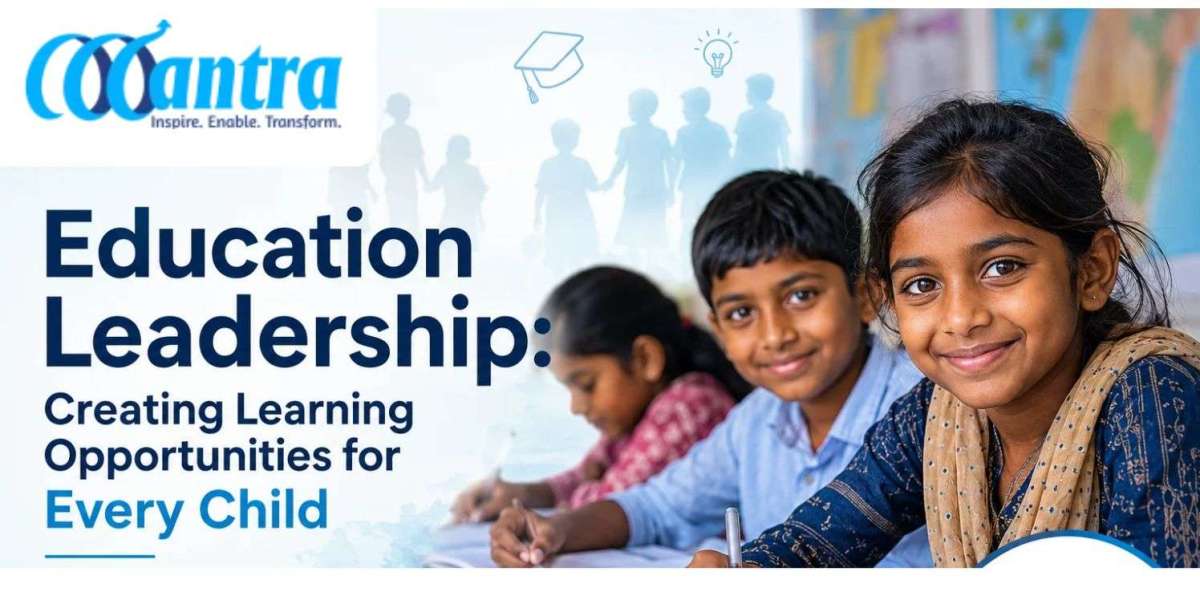

every child to develop knowledge, confidence, practical skills, and the ability to build a better future. However, many children face circumstances that prevent them from accessing education or continuing their learning journey. Poverty, family responsibilities, social barriers, and limited access to suitable learning opportunities can make it difficult for children to remain connected to education.
Education Leadership plays an important role in addressing these challenges. By bringing together educators, communities, institutions, and policymakers, effective leadership can help create learning environments where every child receives the opportunity to grow and succeed.
Initiatives such as Missing Millions by mantra4change highlight the importance of reaching children who are outside the formal education system and helping them explore meaningful pathways towards learning, personal development, and livelihood opportunities.
Understanding the Challenge of Out-of-School Children
Children who are out of school are often overlooked when education progress is measured through enrolment figures and examination results alone. Some children may never have enrolled, while others may have discontinued their education or experienced difficulties transitioning to the next grade.
Behind every missed learning opportunity is an individual child with unique interests, abilities, and aspirations. Addressing this challenge requires more than encouraging children to return to classrooms. It involves understanding the reasons behind educational exclusion and developing appropriate solutions.
Some common barriers include:
Financial difficulties: Families may struggle to manage educational expenses, transportation, or other essential needs.
Family responsibilities: Children may need to contribute to household work or support family livelihoods.
Limited access: Distance, transportation challenges, and a lack of accessible facilities can affect school attendance.
Social inequalities: Discrimination and unequal opportunities can prevent children from participating fully in education.
Learning difficulties: Children who fall behind academically may lose confidence and become disconnected from school.
Insufficient support: A lack of guidance, encouragement, and suitable learning pathways can make returning to education challenging.
Recognising these barriers is the first step towards building a more inclusive education system.
Education Leadership: Building a More Inclusive Learning System
Effective educational change requires leaders who understand the needs of children and can translate that understanding into practical action. Education Leadership is not limited to managing schools or supervising teachers. It also involves creating a shared vision, encouraging collaboration, and ensuring that learning opportunities reach children who need them most.
Strong leadership can help educational institutions identify gaps, strengthen teaching practices, and build meaningful relationships with families and communities.
Several leadership practices can contribute to this progress:
Identifying children at risk: Use community engagement and appropriate information to identify children who are out of school or at risk of leaving.
Supporting educators: Equip teachers and facilitators with the guidance and resources needed to address diverse learning needs.
Encouraging collaboration: Connect schools, families, local organisations, and public institutions to develop coordinated solutions.
Promoting inclusive learning: Create safe, supportive environments where children from different backgrounds can participate without discrimination.
Tracking progress: Monitor participation, learning development, and continued engagement to understand whether interventions are working.
When these practices become part of everyday educational planning, leadership can help move the focus from enrollment alone towards meaningful and sustained learning.
How Missing Millions Is Addressing Educational Exclusion
The Missing Millions initiative by mantra4change focuses on children who are outside the formal education system and may face challenges returning to conventional schooling. Its central idea is that every child deserves the opportunity to live a dignified life and pursue a future shaped by learning and personal growth.
The initiative recognises that children may require different forms of support depending on their circumstances. A single approach may not work for everyone, making flexible learning opportunities and individual support important considerations.
The broader approach associated with Missing Millions includes opportunities such as:
Foundational education to strengthen essential learning skills.
Life skills development to build confidence, communication, and decision-making abilities.
Vocational pathways that help young people explore future livelihood opportunities.
Socio-emotional support to encourage personal well-being and positive development.
Learning opportunities that recognise the needs and circumstances of children beyond conventional schooling.
By bringing attention to children who are often overlooked, Missing Millions encourages stakeholders to consider how educational support can extend beyond the classroom and respond to different stages of a child's learning journey.
The Role of Communities in Reconnecting Children with Learning
Families and communities are essential partners in creating lasting educational change. Teachers and school administrators may identify some challenges, but community members can also help recognise children who are not participating in formal education.
Local engagement makes it easier to understand the circumstances that influence a child's learning journey. It can also help families discover available support and encourage children to explore suitable educational opportunities.
Communities can contribute by:
Identifying children who have discontinued their education.
Speaking with families to understand the challenges they face.
Sharing information about available educational and skill-development programmes.
Encouraging inclusive attitudes towards children from different social and economic backgrounds.
Supporting safe learning environments through local partnerships.
Connecting children with appropriate organisations and services.
These actions can help build trust between families and educational institutions. When children feel supported rather than judged, they may be more willing to reconnect with learning and explore new possibilities.
Developing Skills Beyond Traditional Classrooms
Education should prepare children not only to understand academic concepts but also to navigate everyday life. For children who have experienced interruptions in their education, practical and flexible learning opportunities can provide an important starting point.
Foundational literacy and numeracy help learners build confidence in essential skills. Life skills can support communication, teamwork, problem-solving, and responsible decision-making. Vocational learning can introduce practical capabilities that may be relevant to future employment or further training.
A balanced learning approach can help children recognise their strengths and understand the opportunities available to them.
For example, a young person who has been disconnected from formal schooling may benefit from strengthening basic literacy before exploring a vocational course. Another learner may need emotional support and flexible learning arrangements before returning to an academic pathway.
These examples demonstrate why educational interventions should respond to individual needs rather than assume that every child requires the same solution.
Through initiatives such as Missing Millions, mantra4change brings attention to the importance of creating pathways that connect learning, personal development, and future opportunities.
Collaboration Between Educators, Institutions, and Policymakers
Educational challenges cannot always be resolved by individual schools or organisations working independently. Sustainable progress often requires cooperation between different stakeholders who bring complementary knowledge, resources, and experience.
Schools can identify learning gaps and provide educational support. Community organisations can help reach families and understand local challenges. Policymakers can strengthen systems and develop appropriate frameworks, while funding partners can help support programmes and their continued implementation.
Effective collaboration can contribute to:
Better identification of children who are excluded from education.
More coordinated support for families and learners.
Improved access to relevant learning resources.
Stronger connections between education and vocational opportunities.
More consistent monitoring of participation and learning outcomes.
Partnerships are especially important when children face multiple barriers simultaneously. A coordinated response can help ensure that support is relevant to their circumstances rather than limited to a single intervention.
Measuring Progress Through Meaningful Outcomes
Educational initiatives should be evaluated by more than the number of children contacted or enrolled in a programme. These figures can provide useful information, but they do not fully explain whether children are learning, developing confidence, or progressing towards their goals.
A meaningful evaluation approach can consider several indicators:
Participation in learning activities and continued engagement.
Improvement in foundational literacy and numeracy.
Development of practical and life skills.
Access to appropriate education or vocational pathways.
Feedback from children, families, educators, and programme facilitators.
Progress towards sustained learning and personal development.
Regular assessment can help organisations understand which approaches are effective and where additional support is needed. It can also encourage accountability and support better decisions about programme design.
For educational leaders, the objective should be to use evidence to improve learning experiences and respond to emerging challenges.
Conclusion
Every child deserves the chance to learn, develop essential skills, and build a future with dignity. Addressing educational exclusion requires sustained effort, inclusive practices, and collaboration between the people and institutions responsible for supporting children.
Education Leadership provides an important foundation for this work by encouraging purposeful decision-making, community participation, and a focus on meaningful learning outcomes. When educational leaders recognise individual needs and bring stakeholders together, they can help create more accessible and supportive learning pathways.
The Missing Millions initiative by mantra4change highlights the importance of reaching children who remain outside formal education and helping them access opportunities for continued learning and growth.
Creating a future where every child can learn requires collective responsibility. By strengthening partnerships, addressing barriers, and prioritising each child's potential, communities can take meaningful steps towards a more inclusive education system.