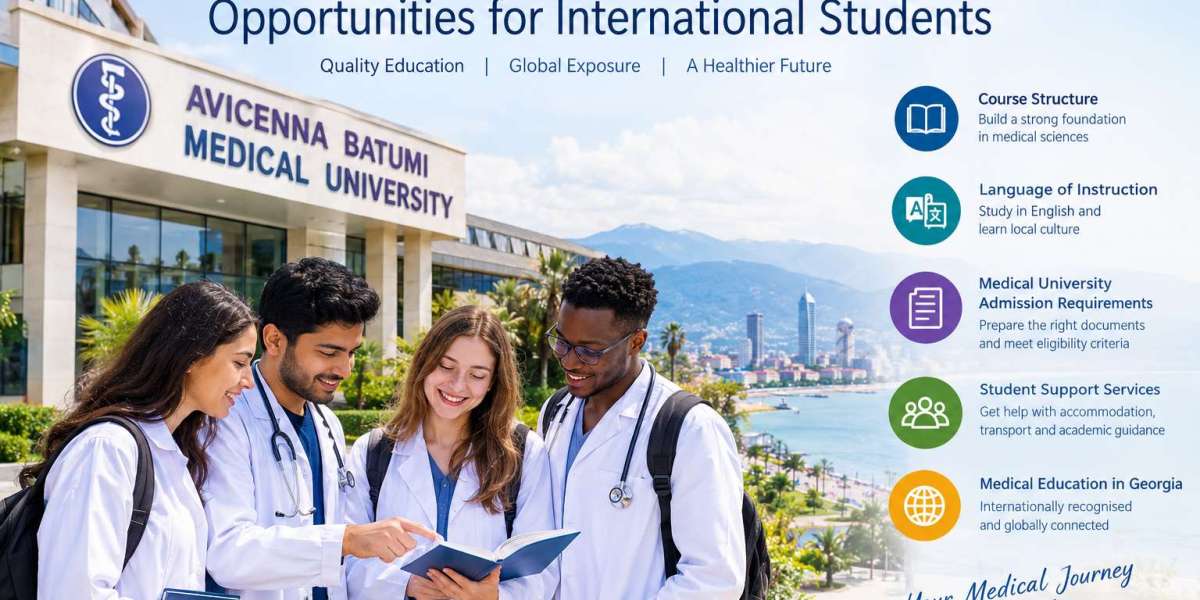

Choosing a medical university is an important decision for students planning a future in healthcare. They need an institution that offers a structured curriculum, opportunities to develop clinical skills, and an academic environment that supports professional growth. Avicenna Batumi Medical University in Batumi, Georgia, offers a one-cycle Medical Doctor programme taught in English, making it an option for international students exploring medical education abroad.
Understanding the Medical Doctor Programme
Medical education begins with a strong foundation in the basic sciences. Students need to understand how the human body functions before studying diseases, diagnosis, and treatment. The university's published curriculum follows three broad phases: basic, preclinical, and clinical learning.
The basic phase introduces subjects such as anatomy, physiology, and biochemistry. During the preclinical phase, students explore pathology, diagnostics, and pharmacology while developing their understanding of different medical conditions. The clinical phase focuses on patient care, diagnosis, disease management, and supervised clinical learning.
This progressive structure helps connect scientific knowledge with clinical applications and encourages students to develop their reasoning abilities throughout their studies.
The Importance of Practical Medical Training
Medical students need opportunities to apply what they learn in lectures. Practical activities, laboratory sessions, clinical case discussions, and simulation exercises can help them understand how medical knowledge is used in real situations.
The university describes teaching methods that include problem-based learning, case-based learning, role-playing simulations, laboratory training, and bedside teaching. These approaches are designed to encourage active participation rather than relying entirely on memorisation.
Students researching Practical Medical Training should ask about the facilities available, how practical competencies are assessed, and what supervised clinical placements involve. Confirming these details helps applicants understand how the curriculum supports their development.
Learning in an International Environment
Studying abroad introduces students to different academic expectations, cultures, and healthcare environments. An international university setting can encourage learners to communicate with classmates from varied backgrounds and develop a broader understanding of healthcare challenges.
At Avicenna Batumi Medical University, the Medical Doctor programme is delivered in English. However, students should also consider whether learning basic Georgian would be useful for everyday life and interactions during clinical placements.
Applicants should research accommodation, transportation, living expenses, and student support before relocating. Planning these practical details in advance can make the transition to university life more manageable.
Developing Clinical Knowledge and Professional Skills
Becoming a doctor requires more than understanding medical science. Students must also develop communication skills, ethical awareness, teamwork, and the ability to make informed decisions.
The university's programme description highlights clinical reasoning, patient communication, evidence-based medicine, and professional responsibility as important learning outcomes. Its curriculum also includes clinical subjects and clerkships in areas such as internal medicine, surgery, paediatrics, and obstetrics and gynaecology.
Students interested in Clinical Skills Development should examine how these competencies are taught and evaluated. They should also verify the current clinical placement arrangements and the level of supervision provided.
Accreditation and Career Planning
Before applying, international students should verify the programme's current accreditation status, entry requirements, tuition fees, and graduation requirements through official university sources.
Students should also research professional licensing rules in the country where they intend to practise. For Indian applicants, this means checking the applicable National Medical Commission requirements before enrolling. Studying at a university abroad does not automatically guarantee eligibility to practise medicine in another country.
Comparing these requirements early can help students make a more informed decision about their education and long-term career plans.
Final Thoughts
A well-planned medical education combines scientific knowledge, practical experience, and professional development. Avicenna Batumi Medical University is worth exploring for students considering Medical Education in Georgia, particularly those who want to understand its curriculum, practical learning methods, and clinical training arrangements before applying.