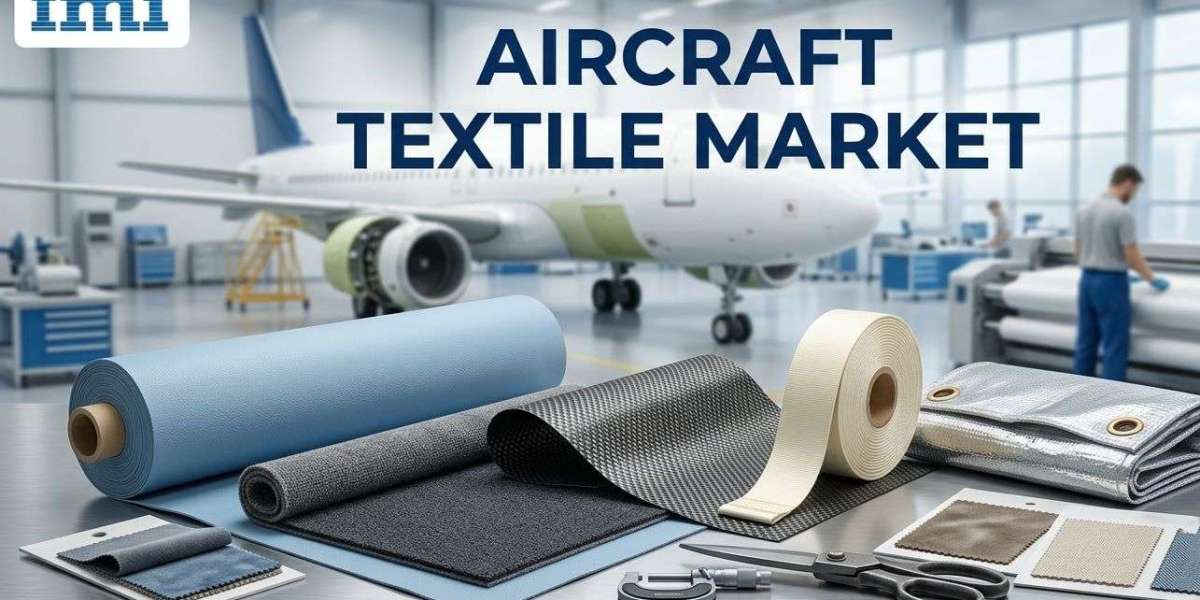

The global aircraft textile market is projected to grow from USD 2.3 billion in 2025 to USD 3.1 billion by 2035, registering a CAGR of 3.1% during the forecast period, according to Future Market Insights (FMI). Woven fabrics are expected to lead the product type category with a 58% share in 2025, while seat fabrics are projected to account for 65% of application demand. First-fit original equipment manufacturer (OEM) installations are expected to represent approximately 70% of sales-channel demand.
Aircraft textiles are essential for passenger seating, carpets, curtains, wall coverings, and other cabin interior applications. Airlines and aircraft manufacturers are prioritizing passenger comfort, cabin aesthetics, material durability, and regulatory compliance. Advances in flame-retardant treatments, lightweight fabrics, and customizable textile solutions are creating opportunities for suppliers serving commercial, private, and regional aviation.
Get Detailed Market Forecasts, Competitive Benchmarking, and Pricing Trends: https://www.futuremarketinsights.com/repaorts/sample/rep-gb-22375
Key Takeaways of the Aircraft Textile Market
- The market is projected to reach USD 3.1 billion by 2035, growing at a 3.1% CAGR from 2025 to 2035.
- Market valuation is estimated at USD 2.3 billion in 2025.
- Woven fabrics are expected to account for 58% of the product type category in 2025.
- Seat fabrics are projected to represent 65% of application demand.
- First-fit OEM installations are expected to account for approximately 70% of sales-channel demand.
- China is projected to register the fastest growth among the profiled countries at a 5.0% CAGR.
- Key companies include Tex Tech Industries, Tisca Tiara, Tapis Corporation, Acme Mills, Belgraver Aircraft Interiors, Lantal, DIATEX SAS, NIEMLA, and SNT Group.
How Is the Aircraft Textile Market Segmented?
The aircraft textile market is segmented by product type, application, sales channel, and region. Product types include woven, non-woven, and knitted fabrics. Applications cover seat fabrics, carpets, curtains, panel coverings, and thermal blankets. Sales channels comprise first-fit OEM installations and aftermarket replacements.
These segments address different aircraft interior requirements, including passenger comfort, durability, fire safety, weight reduction, and cabin design.
Why Do Woven Fabrics Lead the Product Type Category?
Woven fabrics are expected to account for 58% of the product type category in 2025. Their durability, structural consistency, and adaptability to different cabin applications support their use in aircraft interiors.
- Woven materials offer suitable strength and wear resistance for frequently used seating and cabin surfaces.
- Flame-retardant treatments help manufacturers meet aviation interior safety requirements.
- Different textures, colors, and fabric blends allow airlines to customize cabin interiors while maintaining performance specifications.
What Drives Demand for Seat Fabrics and First-Fit OEM Installations?
Seat fabrics are projected to represent 65% of application demand in 2025. Seating materials directly influence passenger comfort, cabin appearance, and maintenance requirements. Airlines increasingly seek fabrics that combine durability, stain resistance, lightweight construction, and ease of cleaning.
First-fit OEM installations are expected to account for approximately 70% of sales-channel demand. Aircraft manufacturers incorporate textiles during initial cabin assembly, creating opportunities for suppliers that can meet technical specifications, certification requirements, and delivery schedules.
What Are the Key Dynamics in the Aircraft Textile Market?
- Driver: Growing air travel, aircraft deliveries, and cabin modernization are encouraging demand for durable, lightweight, and visually appealing textiles.
- Restraint: Strict fire-safety requirements, material certification, and testing procedures can increase development costs and extend approval timelines.
- Opportunity: Recyclable textiles, antimicrobial treatments, stain-resistant materials, and customizable cabin fabrics offer opportunities for product differentiation.
Which Country Shows the Highest Growth Potential?
China is projected to register the fastest growth at a 5.0% CAGR through 2035. India follows at 4.5%, Germany at 3.5%, the United States at 3.2%, and France at 3.0%.
Country-level opportunities reflect differences in aircraft production, airline fleet expansion, refurbishment activity, and textile manufacturing capabilities. China's expanding aviation sector supports demand for cabin materials and localized sourcing. India's growing air travel market and fleet acquisitions create opportunities for suppliers serving new installations and refurbishment projects.
Germany benefits from its established aerospace manufacturing base and demand for technically compliant interior materials. The United States offers opportunities through aircraft maintenance, repair, and overhaul activities, while France's aerospace industry supports demand for customized textiles and cabin interior solutions.
Which Companies Are Notable in the Aircraft Textile Market?
Major companies include Tex Tech Industries, Tisca Tiara, Tapis Corporation, Acme Mills, Belgraver Aircraft Interiors, Lantal, DIATEX SAS, NIEMLA, and SNT Group.
Competition reflects differences in textile engineering, material performance, customization, manufacturing capabilities, and aftermarket support. Suppliers develop fabrics for seating, flooring, curtains, and other cabin applications while addressing aviation safety requirements.
Lightweight construction, fire resistance, durability, and consistent product quality remain important competitive considerations. Companies investing in recyclable materials, advanced fabric treatments, and customized interior solutions can address evolving requirements from aircraft manufacturers and airlines.
About the Report
Future Market Insights' Aircraft Textile Market report examines market size, growth forecasts, product types, applications, sales channels, regional demand, country-level opportunities, and the competitive landscape from 2025 to 2035. The study provides insights into aircraft interior modernization, lightweight and fire-retardant materials, cabin customization, aftermarket requirements, and emerging textile technologies to support strategic planning and market assessment.
Explore More Related Studies Published by FMI Research:
FMI Custom Research: Strategic Intelligence for Confident Decision-Making
In today's rapidly evolving construction environment, leadership teams need more than market data—they need actionable intelligence tailored to their strategic priorities. FMI's Custom Research solutions help organizations evaluate growth opportunities, validate investments, assess competitive dynamics, understand technology adoption, and reduce uncertainty before making critical business decisions.
Key Executive Benefits
- Decision-Ready Insights: Research tailored to specific business challenges, expansion plans, technology priorities, and investment requirements.
- Reduced Strategic Risk: Validate market opportunities, customer demand, competitive positioning, and technology adoption before committing resources.
- Market Entry Confidence: Assess opportunity size, regulatory barriers, distribution dynamics, project specifications, and competitive landscapes before entering new markets.
- Competitive Advantage: Gain proprietary intelligence unavailable through syndicated reports or internal datasets.
- Faster Growth Decisions: Accelerate market expansion, product development, portfolio optimization, partnerships, and investment planning.
Business Impact
FMI helps organizations transform market complexity into strategic clarity, enabling leadership teams to identify growth opportunities faster, optimize resource allocation, strengthen competitive positioning, and make high-stakes business decisions with confidence.
To explore how FMI Custom Research can support your strategic priorities, connect with the team at sales@futuremarketinsights.com.