
Working at height is a regular part of construction, industrial maintenance, warehousing, and manufacturing operations across the UAE. Whether workers are installing steel structures, inspecting equipment, or maintaining industrial facilities, having the right fall protection equipment is essential.
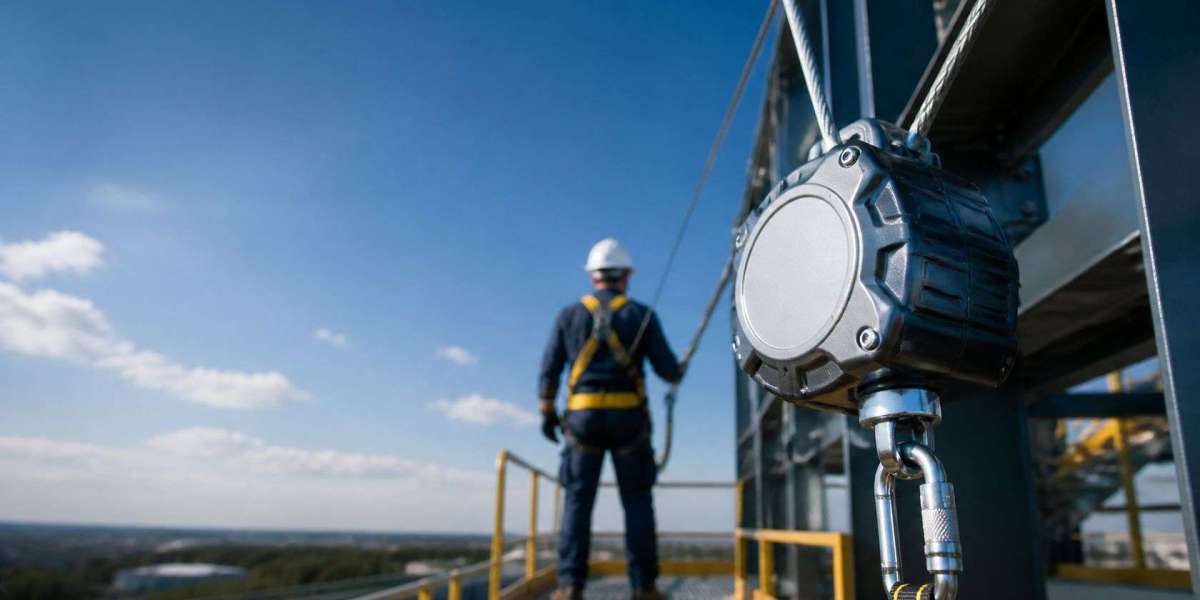
A retractable fall arrester (SRL) helps protect workers by automatically extending and retracting its lifeline and locking when a sudden fall occurs. However, simply choosing an SRL with the right cable length is not enough. The anchorage point, working height, fall clearance, and movement requirements must also be considered.
So, how do you select the correct lifeline length and anchorage point for an SRL? Let's look at the key factors that contractors, safety managers, and industrial buyers should understand before choosing fall protection equipment.
1. Understand How a Retractable Fall Arrester Works
A Self-Retracting Lifeline (SRL), commonly called a retractable fall arrester, is a personal fall protection device designed to limit the distance a worker falls.
It generally includes a protective housing, retractable lifeline, internal braking mechanism, and connecting hook. As the worker moves, the lifeline extends and retracts automatically. If a sudden fall occurs, the braking mechanism activates to arrest the fall.
Unlike traditional fixed-length lanyards, SRLs allow greater freedom of movement while keeping the lifeline relatively taut.
They are commonly used in UAE construction projects, industrial plants, warehouses, manufacturing facilities, and elevated maintenance operations.
2. How to Choose the Correct SRL Lifeline Length
The correct lifeline length depends on where workers need to move and how far they must reach to complete their tasks.
Consider these factors before selecting an SRL:
Working Height: Measure the distance between the anchorage point and the worker's working position. Ensure the selected device provides sufficient reach for the intended application.
Movement Requirements: Consider whether workers need to move vertically, horizontally, or around equipment. A fixed working position may require a different SRL configuration from a large industrial work area.
Fall Arrest Distance: A longer lifeline does not automatically provide better protection. The actual fall distance depends on the SRL's deployment characteristics, locking mechanism, anchorage position, and system configuration.
Manufacturer Recommendations: Check the manufacturer's instructions for maximum lifeline extension, permitted working angles, and approved applications. Never exceed the device's specified operating limits.
3. How to Select the Right Anchorage Point
An anchorage point is the secure connection location that supports the personal fall protection system during a fall. Selecting an unsuitable anchorage can compromise the entire safety arrangement, even when using a certified retractable fall arrester.
Here are four important considerations:
Structural Strength: The anchorage must be capable of supporting the expected forces generated during fall arrest. Under OSHA's general personal fall protection requirements, an anchorage must support 5,000 pounds (22.2 kN) per attached worker or be designed and installed as part of a complete system with an appropriate safety factor.
Overhead Positioning: Whenever possible, position the anchorage directly above the worker. This helps reduce free-fall distance and limits the risk of swing falls.
Compatible Connections: Use approved anchorage connectors that are suitable for the structure and compatible with the selected SRL.
Secure Installation: Avoid connecting fall protection equipment to unverified pipes, temporary railings, or structures that have not been approved for anchorage use.
4. Why Fall Clearance and Swing Fall Are Important
Two factors that are often overlooked when selecting lifting equipment and fall protection systems are fall clearance and swing fall.
Fall Clearance
Fall clearance is the minimum unobstructed distance required below a worker to prevent contact with the ground or lower level obstacles during a fall.
Before installing an SRL, calculate the required clearance using the manufacturer's instructions. Consider the device's maximum arrest distance, harness displacement, connector configuration, worker height, and applicable safety margin.
Swing Fall
A swing fall happens when a worker falls while positioned away from the anchorage point. Instead of falling straight down, the worker may swing sideways and collide with nearby structures, machinery, or walls.
The best way to reduce this risk is to position the anchorage as close as possible to directly above the work area and stay within the SRL's permitted working angle.
5. What Should UAE Buyers Check Before Purchasing an SRL?
Choosing a retractable fall arrester involves more than comparing prices and cable lengths. Contractors and industrial buyers in the UAE should evaluate the following:
Safety Certification: Look for products tested and certified to applicable standards, including EN 360 for retractable-type fall arresters.
Working Conditions: Consider exposure to UAE heat, dust, moisture, chemicals, and outdoor environments.
Lifeline Material: Choose between wire rope and synthetic webbing based on the application and manufacturer specifications.
Inspection and Maintenance: Check inspection intervals, maintenance procedures, and product service-life recommendations.
System Compatibility: Ensure the SRL works correctly with the full-body harness, connectors, and anchorage system.
Worker Training: Make sure workers understand correct equipment use, pre-use inspections, and emergency rescue procedures.
Selecting appropriate lifting equipment from experienced suppliers can help businesses identify suitable safety solutions for their site requirements.
Conclusion
Selecting the correct lifeline length and anchorage point is essential for effective fall protection. Working height, movement requirements, anchorage strength, fall clearance, and swing fall risks should all be evaluated before choosing a retractable fall arrester.
For construction companies, industrial facilities, and maintenance contractors in the UAE, choosing certified equipment and following manufacturer instructions can help reduce workplace risks and improve overall safety.
Frequently Asked Questions
1. How do I choose the correct lifeline length for an SRL?
Choose the lifeline length based on working height, required movement, anchorage position, and manufacturer specifications. Always verify that the device provides sufficient reach and meets fall clearance requirements.
2. Should a retractable fall arrester be connected above the worker?
Yes, overhead anchorage is generally preferred because it helps reduce free-fall distance and swing fall risks. Below-foot anchorage should only be used with SRLs specifically approved for that application.
3. How much clearance is required below an SRL user?
The required clearance depends on the SRL's arrest distance, harness movement, connector configuration, worker height, and safety margin. Always follow the manufacturer's clearance calculation guidelines.
4. Which standard applies to retractable fall arresters?
EN 360 is a recognized European standard for retractable-type fall arresters. Buyers in the UAE should also verify applicable local regulations, product certification, and compatibility with the complete fall protection system.