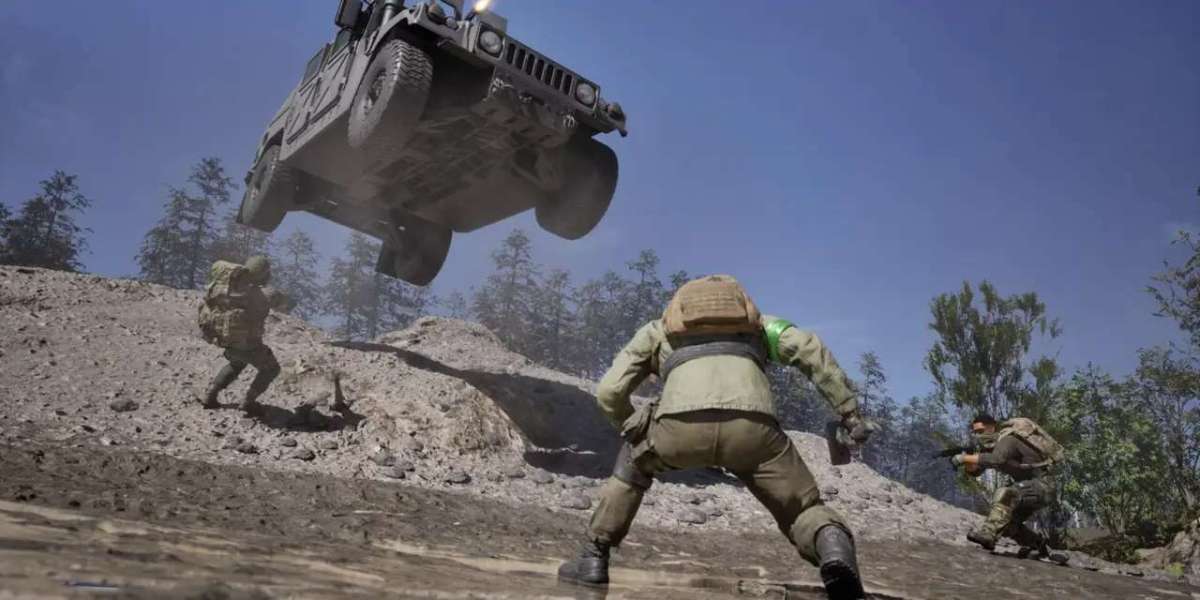

In WARDOGS, the difference between a costly defeat and a productive match often begins before the first shot is fired. Wardogs Bot Lobby cash provides a useful entry point into the game's economy-focused design, where every life involves choices about weapons, protection, utility, and transport. Cash persists between matches, so the consequences of a purchase can extend beyond a single firefight. A successful strategy therefore requires more than collecting rewards: it requires understanding which actions help the team and which expenses genuinely improve the next deployment.
How the WARDOGS Economy Works
WARDOGS connects combat, logistics, support, and objective control through a persistent cash system. Players begin with $10,000 and can spend their available funds on equipment for each life. Team-oriented actions can also generate rewards, including reviving teammates, transporting friendly players, and contributing to control of the objective.
The system gives different playstyles a reason to exist. A player does not have to pursue eliminations in every engagement to contribute to the team's progress.
| Activity | Tactical contribution | Strategic value |
|---|---|---|
| Fighting near the objective | Pressures enemy positions | Supports control of the scoring area |
| Reviving teammates | Restores friendly manpower | Helps maintain pressure during extended fights |
| Transporting players | Moves reinforcements toward important areas | Reduces the burden of long approaches |
| Spotting enemies | Provides information for the team | Helps allies choose better engagements |
| Building defensive positions | Strengthens a selected location | Can improve control over important routes |
Rewards depend on the action and its conditions, so these activities should not be treated as interchangeable sources of guaranteed income. Their broader value comes from combining financial progress with a direct contribution to the match.
Why the Hot Zone Deserves Attention
The Hot Zone adds another layer to objective planning. This shifting sub-zone sits within the larger Control Zone and offers double cash. Players inside it also count twice toward their team's player count for control purposes.
That combination makes the Hot Zone more than a bonus-income location. It can influence both the economic outcome and the team's ability to secure points.
However, moving into the Hot Zone without considering enemy positions can turn an attractive opportunity into an expensive mistake. The objective is not simply to reach the area first, but to establish a presence that can be maintained.
A practical approach involves three stages.
First, assess the route. Look for exposed crossings, likely enemy approaches, and opportunities for friendly vehicles to assist the advance.
Second, establish coordinated pressure. A group that reaches the area together is generally better positioned to support itself than scattered players arriving at different times.
Third, reassess the position. If enemy pressure becomes overwhelming, consider whether reinforcing another approach or regrouping would produce a better outcome.
The Hot Zone can be highly rewarding, but its value depends on whether the team can turn its economic and scoring benefits into sustained control.
Build a Loadout Around a Specific Job
A common budgeting mistake is buying equipment based on its apparent strength rather than its relevance to the next deployment. WARDOGS allows players to select their own approach, so a useful loadout begins with a clear role.
| Intended role | Questions to consider before spending |
|---|---|
| Assault | Can the setup support the planned advance and the expected engagement distance? |
| Defense | Is the equipment suitable for holding the chosen route or position? |
| Medical support | Are the required recovery tools available and affordable? |
| Logistics | Will the selected vehicle or supplies help the team reach and sustain its objective? |
| Reconnaissance | Can the equipment help identify enemy activity before the squad commits? |
These categories are planning aids rather than rigid class restrictions. Players can adapt their equipment to changing circumstances, but the loadout should still have a reason to exist.
For example, an expensive vehicle offers limited value if the squad has no clear destination or passengers to transport. Similarly, a powerful weapon may not justify its cost when the planned task involves supplying teammates or reinforcing a defensive position.
The best purchase is the one that solves a specific problem.
Calculate the Cost of Repeated Deployments
Persistent cash makes it important to think beyond one life. A loadout that feels affordable before a match may become expensive when the same equipment is purchased repeatedly.
Consider a simple hypothetical budget:
| Purchase pattern | Cost per life | Four deployments |
|---|---|---|
| Budget setup | $2,000 | $8,000 |
| Mid-range setup | $4,000 | $16,000 |
| Expensive setup | $7,000 | $28,000 |
These figures are illustrative planning examples, not the prices of specific in-game items. They show how quickly repeated purchases can change the overall cost of a play session.
The lesson is not to avoid expensive equipment altogether. Instead, compare the expected benefit with the number of deployments likely to require the same purchase. A specialist setup may be worthwhile for a critical assault, while a more economical option may be sensible for routine duties.
Keeping some cash available also preserves flexibility. If a match develops into a prolonged defensive struggle, having funds remaining can make it easier to adapt rather than repeating the same purchase regardless of the situation.
Support Players Can Influence the Economy Without Chasing Kills
WARDOGS makes support and logistics meaningful parts of the battlefield. Transporting teammates, delivering supplies, reviving casualties, and contributing to a forward operating base can all help a team maintain its presence around important areas.
These activities also require judgment. A transport run is useful when it moves players toward a relevant objective, but less useful when the vehicle travels repeatedly without improving the team's position. A defensive structure can create value when it protects an important approach, but construction becomes wasteful when the team builds somewhere that has little connection to the current fight.
Support players can improve their efficiency by checking the team's immediate needs before committing to an action.
If the objective is under pressure, transporting reinforcements may matter more than making another supply run. If the team already controls the area but lacks a reliable defensive position, construction may become the better priority. When friendly casualties accumulate, medical support can help restore the numbers needed to keep fighting.
The most productive support action is the one that addresses the team's current weakness.
Seasonal Changes Make Economic Planning More Important
Season 2, which launched on October 15, 2026, introduced new weapons, heavy rain, thunderstorms, and changes to rewards and logistics. It also added restrictions intended to reduce the influence of late team switching and introduced a vendor discount for a team that falls sufficiently far behind.
These changes reinforce the importance of adapting to the current match rather than following a fixed spending routine.
Weather can influence the way players approach an objective. New weapons offer additional equipment choices, while revised rewards affect how certain activities contribute to progression. Changes to logistics also make repeated deliveries and return trips relevant to planning.
Because WARDOGS is in Early Access, players should review current patch information when making detailed equipment or reward calculations. Specific prices and reward values may change as the developers continue balancing the game.
Avoid the Trap of Spending More to Fix Every Problem
When a match goes badly, purchasing more expensive equipment can seem like the obvious solution. Yet a weak position, poor coordination, or an exposed approach cannot always be fixed by a larger budget.
Before changing the loadout, identify the actual cause of the problem.
If enemies repeatedly reach the objective through the same route, better observation or a defensive adjustment may help. If friendly players arrive too slowly, transportation and route planning may be more useful than another weapon upgrade. If the team loses control after an initial attack, holding a second position or coordinating reinforcements may matter more than increasing individual firepower.
This approach prevents unnecessary spending and encourages players to distinguish between equipment problems and tactical problems.
Turn Cash into Consistent Battlefield Progress
A strong WARDOGS economy strategy connects three decisions: what the team needs, what the next life should accomplish, and how much the planned equipment is worth. The Hot Zone offers opportunities for additional income, while objective control, transport, support, and combat give players different ways to contribute. Seasonal changes add further reasons to review equipment choices and adapt to the current battlefield.
Players who want to buy Wardogs Cash should still approach each deployment with a clear budget and a defined purpose. The lasting advantage comes from combining available resources with sound tactical decisions, choosing the right equipment for the situation, and helping the team turn individual actions into meaningful progress.