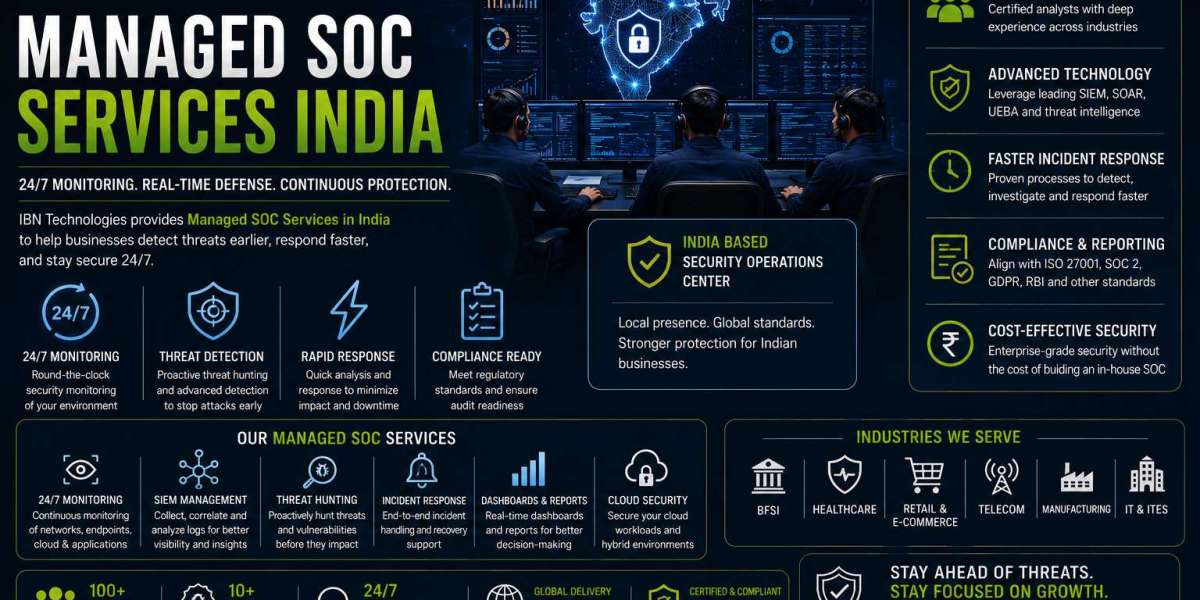

Managed SOC Services India: What Retailers Get Wrong
Retail and e-commerce leaders sometimes treat security monitoring as a technology purchase rather than an operating capability. Managed soc services india combine monitoring, alert review, escalation and reporting to help retailers protect customer accounts, payment processes, store networks and online platforms. Misunderstanding how these services work often leads to poor buying decisions.
A common pattern is to seek help only after a service disruption, an unusual pattern in customer accounts or a concern about data handling. Under time pressure, leadership may compare providers on price or dashboard appearance. The result can be coverage that looks impressive in a demonstration but does not address the retailer’s most important systems.
Myth: A SOC Is Only About Blocking Unwanted Traffic
A security operations centre does more than filter network activity. In retail, it helps distinguish genuine customer behaviour from unusual automated activity, reviews administrative changes and supports the response when a third-party integration behaves unexpectedly.
An online retailer may see thousands of failed sign-in attempts during a major sale. Blocking every source would affect genuine shoppers. A useful review process correlates sign-in activity, device signals, network behaviour, checkout activity and account changes before recommending a proportionate action.
For store-based retailers, the environment includes point-of-sale systems, store networks, staff devices and vendor connections. A concern in one location can spread through shared access or remote-support tools if those signals are not reviewed consistently.
Myth: More Alerts Mean Better Protection
Alert volume is not a measure of security maturity. A provider that forwards every firewall event, endpoint notification and sign-in failure to the retailer’s IT inbox creates noise rather than clarity. Teams then begin ignoring alerts, including the few that require timely attention.
Effective soc services in india begin with prioritisation. Which systems hold customer records? Which applications support payments? Which identities can change product catalogues, process refunds or access order data? Detections should be designed around those high-impact scenarios.
Consider an online retailer noticing repeated password-reset requests followed by changes to delivery addresses. Separately, each event may appear routine. Together, they may indicate an account-access concern. A capable provider connects those signals, escalates the pattern and helps the retailer apply proportionate controls.
How Do Managed SOC Services India Support Retail Teams?
Managed SOC services India can support a retailer that has some internal capability but cannot maintain continuous coverage alone. The internal team retains knowledge of stores, platforms, vendors and business priorities, while the external provider adds monitoring capacity, specialist review and after-hours support.
This model works well for omnichannel retailers. The internal team may handle access approvals, store-level changes and customer-impact decisions, while the provider reviews alerts across cloud platforms, endpoints, identity systems and payment-adjacent applications.
The arrangement succeeds when responsibilities are written down. Both sides should know who investigates an alert, who approves a disruptive action and who communicates with customer support during an event affecting shoppers.
Myth: Payment Risk Tools and a SOC Do the Same Job
Payment-risk tools and security monitoring overlap, but they answer different questions. Payment-risk systems assess whether a transaction or customer behaviour appears legitimate. A security operations centre asks whether an identity, endpoint, server or integration is being used in an unexpected way.
A payment-risk system may flag an unusual refund request. A SOC review may find that the request came from an employee account with unexpected activity, a shared access key or an unapproved change to a refund workflow. Treating these as interchangeable systems leaves a gap: the payment team stops the transaction, while the underlying access concern remains open.
Retailers should connect the two views rather than expect one system to do everything. Payment-risk signals can enrich security reviews, and security findings can explain patterns that would otherwise appear random.
What Retailers Get Wrong When Comparing Providers
The most common mistake is buying coverage without defining the environment. Retailers may operate cloud infrastructure, a storefront application, mobile apps, payment gateways, marketing tools, warehouse systems and store networks. If the provider is not told which systems matter most, monitoring becomes generic.
Another mistake is overlooking identity. In retail platforms, a single administrator account with excessive permissions can change prices, export customer lists, alter payout details or adjust security settings. Monitoring should give special attention to privileged access, unusual role changes and abnormal data downloads.
A third issue is assuming the provider will make business decisions. A provider can identify an unusual pattern and recommend containment, but the retailer must decide whether to pause payouts, require password resets or restrict a customer segment. Clear decision rights prevent delays during a time-sensitive event.
Buying mistake | Business consequence | Better evaluation check |
Choosing only on price | Limited log coverage or slower response during peak events | Compare scope, analyst coverage and escalation terms |
Treating payment-risk tools as SOC coverage | Access concerns may remain unaddressed | Ask how identity, endpoint and cloud signals are correlated |
No defined escalation path | Delayed action during a sale or service issue | Agree named contacts and approval boundaries in writing |
Monitoring only after launch | Blind spots in new apps, stores and integrations | Require an onboarding review for major changes |
What Should Retailers Ask Before Signing?
Ask how the provider handles peak-season risk. A credible partner should explain how it adjusts to higher traffic, increased promotional activity and a rise in automated activity. The answer should cover prioritisation, staffing coverage and escalation commitments rather than a promise that nothing will change.
Ask which systems are included in the base scope and which require additional onboarding. Payment-adjacent systems, customer databases, administrative consoles, cloud accounts and remote-access tools should be discussed explicitly. Ambiguity here is where coverage gaps usually begin.
Also ask for sample review records. A useful record shows the alert, evidence examined, actions taken, time stamps and the final outcome. If a provider can only show dashboards, ask how its team reaches a decision when the dashboard alone is inconclusive.
How Can Retailers Prepare Before Onboarding?
Start with an inventory of critical systems and data flows. Map where customer records reside, which systems touch payments, which vendors have administrative access and which identities can alter storefront behaviour. This becomes the foundation for monitoring priorities.
Then define escalation rules before the first alert arrives. Identify who can approve a password-reset campaign, who can suspend an integration and who communicates with customer support during a suspected data event. A short readiness exercise with IT, payment-risk, customer experience and leadership teams exposes gaps quickly.
Finally, review logging quality. If administrative actions, API activity or cloud configuration changes are not recorded reliably, even a strong provider will have limited visibility. Improving logging early improves both review quality and the evidence available after an event.
Frequently asked questions
Do managed SOC services India help reduce payment-related risk?
They can support risk reduction by identifying unusual account activity, administrative changes and infrastructure issues that payment rules may miss. Transaction-level decisions usually remain with the retailer’s payment-risk and finance systems.
Can managed SOC services India monitor both e-commerce platforms and physical stores?
Yes, if relevant logs from cloud platforms, applications, endpoints, store networks and point-of-sale environments are available. The provider should define coverage boundaries clearly because store infrastructure often has different visibility constraints.
What should a retailer do first after identifying an unusual account-access pattern?
Follow the agreed escalation process: preserve evidence, contact the designated security owner and apply proportionate controls such as session termination or additional verification. Avoid broad customer-facing actions without assessing the impact on genuine shoppers.
For e-commerce and retail teams reassessing their security monitoring strategy, IBN Technologies can help identify coverage gaps and define practical SOC requirements.
Contact Us
IBN Technologies
Phone: +91 20 6768 0404
Email: sales@ibntech.com