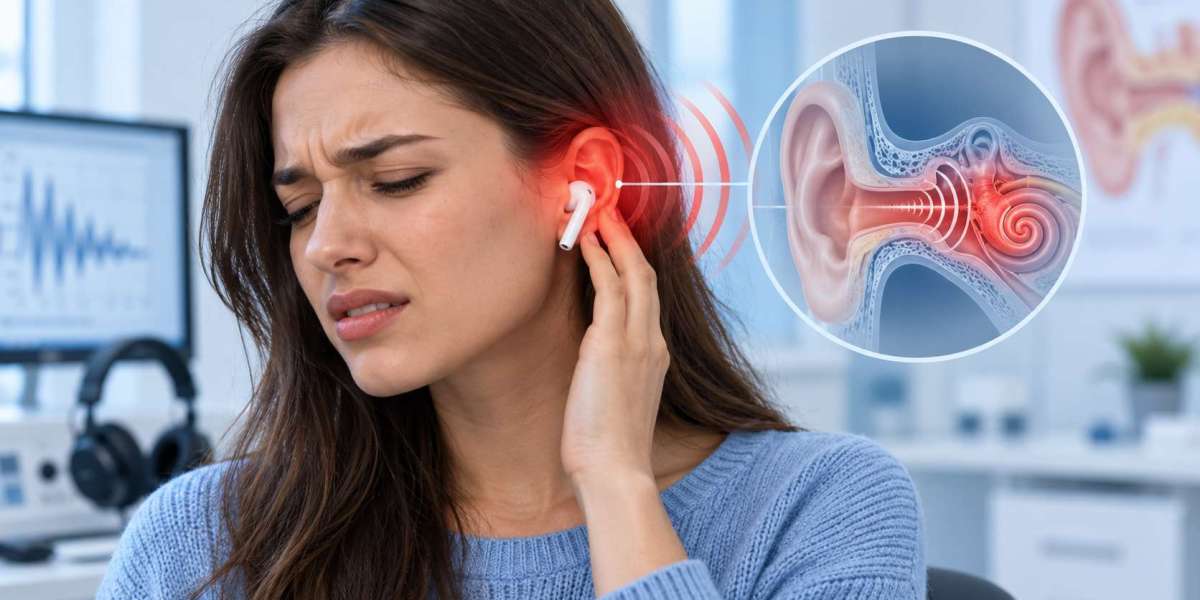

However, many people are unaware that listening to loud sounds for extended periods can gradually damage their hearing.
Hearing loss does not always develop suddenly. In many cases, the earliest changes are subtle and may go unnoticed until they begin affecting everyday communication.
According to the World Health Organization (WHO), more than one billion young adults worldwide are at risk of permanent, avoidable hearing loss because of unsafe listening practices.
People searching for the best ent specialist in Lahore may have concerns about persistent ringing in their ears, reduced hearing, ear discomfort, or difficulty understanding conversations.
Understanding the early warning signs and adopting safer listening habits can help protect hearing health.
How Can Earbuds and Headphones Damage Your Hearing?
Inside the inner ear is a delicate structure called the cochlea, which contains specialized sensory hair cells responsible for converting sound vibrations into electrical signals.
These signals travel through the auditory nerve to the brain, allowing us to hear and understand sounds.
Repeated exposure to excessively loud sound can damage these sensitive structures.
Unlike some other cells in the body, damaged human inner-ear hair cells generally cannot regenerate.
As a result, noise-induced hearing loss may become permanent.
The risk depends on three important factors: how loud the sound is, how long a person listens, and how frequently they are exposed.
Using earbuds does not automatically cause hearing loss. The main concern is excessive sound exposure, especially when devices are used at high volume for prolonged periods.
7 Early Warning Signs of Hearing Damage
1. Ringing or Buzzing in the Ears
One of the most recognizable warning signs is tinnitus, a condition in which a person hears ringing, buzzing, hissing, or other sounds without an external source.
Tinnitus may become noticeable after listening to loud music or attending a noisy event.
Temporary ringing can sometimes resolve, but persistent or recurrent tinnitus should not be ignored.
It may indicate noise-related hearing damage or another underlying ear condition.
2. Difficulty Understanding Conversations
People with early hearing loss may hear someone speaking but struggle to understand the words clearly.
This difficulty is often more noticeable in crowded restaurants, classrooms, markets, or other noisy environments.
Some individuals frequently ask others to repeat themselves without realizing their hearing has changed.
3. Increasing Headphone or Television Volume
A person who gradually increases the volume of their headphones, mobile phone, or television may be experiencing changes in hearing sensitivity.
Family members sometimes notice the increased volume before the affected person does.
Although this symptom does not confirm hearing loss, it is a reason to consider a professional hearing assessment.
4. Muffled Hearing After Listening to Loud Music
After prolonged exposure to loud sounds, hearing may temporarily seem dull or muffled.
This phenomenon can occur following concerts, loud events, or excessive headphone use.
Even when hearing appears to return to normal, repeated harmful exposure may contribute to long-term damage.
5. Difficulty Hearing High-Pitched Sounds
Noise-induced hearing loss often affects sensitivity to certain higher-frequency sounds.
People may notice difficulty hearing birds, electronic alerts, or specific speech sounds.
These changes can make conversations less clear, particularly in noisy surroundings.
6. Ear Discomfort or Sound Sensitivity
Some individuals experience discomfort or increased sensitivity to ordinary sounds.
This can occur in association with hearing-related conditions, although ear discomfort also has many other possible causes.
Pain during or after earbud use may result from poor fit, irritation, infection, or other problems rather than noise damage alone.
Persistent symptoms require evaluation.
7. Trouble Understanding Speech on the Phone
Difficulty following telephone conversations may be an early sign of hearing problems.
People may notice that they understand one voice better than another or need to switch ears frequently.
A hearing examination can help identify whether the problem is associated with hearing loss or another condition.
How Loud Is Too Loud?
Sound intensity is measured in decibels (dB).
The louder the sound, the shorter the duration of exposure that may be considered relatively safe.
The WHO provides an example that listening at approximately 80 dB for up to 40 hours per week can fall within its recommended safe-listening exposure limits for adults.
At 90 dB, that recommended exposure duration decreases to approximately four hours per week.
These figures illustrate an important principle: increasing volume significantly reduces the amount of time a person can listen safely.
Individual susceptibility varies, and exposure from other sources also contributes to total noise exposure.
Parents should remember that children generally require more conservative listening limits than adults.
7 Practical Ways to Protect Your Hearing
Keep Your Headphone Volume Low
The WHO recommends keeping personal audio devices below approximately 60% of their maximum volume as a practical precaution.
However, percentage settings alone cannot guarantee a safe sound level because different devices produce different outputs.
Whenever possible, use built-in sound monitoring features to understand actual exposure.
Use Noise-Cancelling Headphones
Well-fitting noise-cancelling headphones can reduce background noise, making it easier to hear music or speech without increasing the volume excessively.
These devices may be particularly useful during travel or in busy environments.
Take Regular Listening Breaks
Avoid listening continuously at high volume.
Taking breaks in a quiet environment helps reduce cumulative sound exposure.
The most important protective measures remain lowering sound intensity and limiting the duration of exposure.
Avoid Sleeping With Loud Audio Playing
Some people fall asleep while listening to music, podcasts, or videos through earbuds.
Prolonged playback may result in unnecessary exposure.
Using a sleep timer and keeping sound levels low can help reduce this risk.
Protect Your Ears at Loud Events
Concerts, sporting events, weddings, and other celebrations may expose people to high sound levels.
Appropriate hearing protection, such as well-fitted earplugs, can help reduce exposure.
Maintaining distance from loudspeakers is another useful precaution.
Enable Hearing Safety Features
Many smartphones offer headphone sound level notifications and volume-limiting settings.
These features can help users recognize potentially excessive listening levels.
Arrange a Hearing Assessment When Necessary
People who regularly experience tinnitus, muffled hearing, or difficulty following conversations should consider a professional hearing examination.
Early assessment may help identify an underlying problem and guide appropriate care.
Can Hearing Loss Affect Children and Teenagers?
Yes. Hearing damage from unsafe sound exposure can occur at different ages.
Children and teenagers increasingly use headphones for online learning, entertainment, gaming, and communication.
Parents should encourage sensible listening habits and consider age-appropriate volume limits.
The WHO's World Hearing Day 2026 campaign emphasized the importance of identifying hearing problems in children and ensuring appropriate early care.
Hearing difficulties can affect speech understanding, classroom participation, communication, and educational progress.
Parents should seek medical advice when a child frequently asks for repetition, struggles to hear teachers, or appears less responsive to ordinary sounds.
Importantly, childhood hearing loss may also result from ear infections, impacted earwax, congenital conditions, or other medical causes.
Not every hearing problem is related to headphone use.
Can Earwax Cause Hearing Loss?
Yes. Excessive earwax can sometimes block the ear canal and cause temporary hearing difficulties.
However, patients should not assume that every hearing problem is caused by earwax.
Inserting cotton buds, sharp objects, or other instruments into the ear canal can push wax deeper or injure the ear.
People experiencing blockage, discomfort, or reduced hearing should seek appropriate assessment rather than attempting potentially harmful home procedures.
An ENT specialist can examine the ear and determine whether wax removal or another treatment is necessary.
Sudden Hearing Loss Is a Medical Emergency
Gradual hearing changes and sudden hearing loss should not be treated in the same way.
A sudden reduction in hearing, particularly in one ear, may indicate sudden sensorineural hearing loss.
This condition can develop within hours or over a few days.
Some people mistakenly assume the problem is caused by earwax or a blocked ear and delay seeking help.
Sudden hearing loss requires immediate medical assessment, ideally within 24 hours, through an ENT service or emergency department.
Early evaluation is important because delayed treatment may reduce the chances of hearing recovery in certain cases.
Sudden hearing loss accompanied by facial weakness, severe dizziness, or neurological symptoms requires emergency medical attention.
How Does an ENT Specialist Diagnose Hearing Problems?
An ENT specialist begins by reviewing symptoms, medical history, noise exposure, medications, and associated medical conditions.
An ear examination may help identify earwax blockage, infection, eardrum abnormalities, or other possible causes.
Depending on the findings, hearing tests may be recommended.
Pure-tone audiometry measures hearing sensitivity across different sound frequencies.
Tympanometry may help assess middle-ear function.
Additional investigations may be necessary when symptoms suggest an inner-ear or neurological condition.
Treatment depends on the underlying diagnosis.
Some forms of hearing difficulty are reversible, while established noise-induced sensorineural hearing loss may be permanent.
When Should You Consult an ENT Specialist?
Professional evaluation is advisable when you experience persistent ringing, gradual hearing deterioration, repeated ear infections, unexplained ear discomfort, or difficulty understanding speech.
Patients searching for the best ent specialist in Lahore should prioritize relevant professional qualifications, appropriate clinical examination, evidence-based recommendations, and access to suitable hearing investigations.
People who work in noisy environments or regularly attend loud events may also benefit from hearing assessments based on their exposure and symptoms.
Avoid using unverified ear drops, medications, or home treatments without understanding the cause of the problem.
Frequently Asked Questions About Earbuds and Hearing Loss
Can Earbuds Cause Permanent Hearing Loss?
Yes, if they expose the ears to sufficiently loud sounds for prolonged or repeated periods. Safe listening habits can significantly reduce the risk.
Are Wireless Earbuds More Dangerous Than Wired Headphones?
Hearing risk primarily depends on sound intensity and exposure duration, not whether headphones use Bluetooth or a cable.
Is Tinnitus Always Permanent?
No. Tinnitus can be temporary or persistent, depending on the cause. Ongoing symptoms should be assessed by a healthcare professional.
Can Hearing Loss Be Reversed?
Some types of hearing loss, such as those caused by earwax blockage, may improve when the underlying problem is treated.
However, established noise-induced inner-ear damage is generally permanent.
Should I Stop Using Headphones Completely?
Not necessarily. Headphones can be used responsibly by maintaining safe listening levels, limiting exposure, and taking appropriate breaks.
Final Thoughts: Protect Your Hearing Before It Is Too Late
Hearing is an essential part of communication, learning, professional life, and social interaction.
Although earbuds and headphones offer convenience, unsafe listening habits can gradually contribute to preventable hearing damage.
Recognizing warning signs such as tinnitus, muffled hearing, difficulty understanding conversations, and increasing volume requirements can encourage timely medical evaluation.
The goal is not to avoid technology completely but to use it responsibly.
Healthy listening habits today can help protect your hearing for years to come.
ENT and Hearing Health Consultation in Lahore
Prof. Dr. M. Amir Yousaf - ENT Specialist in Lahore
Phone: 0333 4976126
Address: 7, near Khokhar Chowk, Block M Johar Town, Lahore, 54782
Google Maps: https://maps.app.goo.gl/4PCk3rhnqqmPMHN89
For hearing difficulties, persistent tinnitus, ear discomfort, or other ear, nose, and throat concerns, patients can contact the clinic for appointment information and appropriate medical evaluation.
Medical Disclaimer: This article is intended for general educational purposes only. It does not replace professional medical advice, diagnosis, or treatment. Sudden hearing loss requires immediate medical attention.








