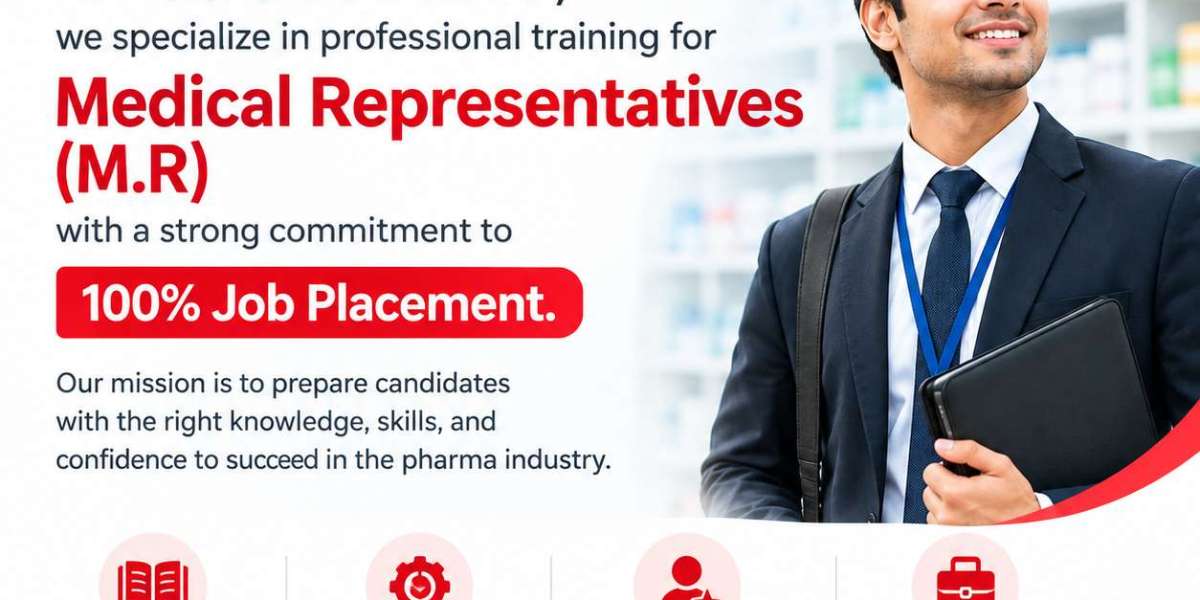

Choosing a career in the pharmaceutical industry can open doors to several professional opportunities. For students and fresh graduates who are interested in communication, sales and healthcare-related work, becoming a Medical Representative can be a practical starting point. However, completing training does not mean that your career options are limited to just one job role.
A structured medical representative training course introduces candidates to pharmaceutical products, communication skills, professional presentations and fieldwork. These skills can also be useful in other roles connected with pharmaceutical sales, distribution and customer relationships.
If you are planning to build a career in this sector, understanding the opportunities available after training can help you decide which direction suits your interests and abilities. Let's explore some career options and how the right preparation can help you work towards them.
1. Medical Representative: A Common Starting Point
One of the most direct career options after completing an MR training course is becoming a Medical Representative. Pharmaceutical companies employ representatives to communicate product information to doctors, pharmacists and other healthcare professionals.
The role generally involves visiting assigned professionals, explaining approved product information, maintaining relationships and working towards company sales targets.
Typical responsibilities include:
Visiting doctors according to an assigned schedule.
Sharing information about pharmaceutical products.
Explaining product composition and relevant details.
Maintaining professional relationships with healthcare professionals.
Coordinating with distributors and stockists when required.
Preparing daily visit reports.
Working towards assigned sales targets.
For freshers, a Medical Representative Job can provide an introduction to pharmaceutical sales and field operations. It also helps candidates develop communication, time management and relationship-building skills.
2. Pharmaceutical Sales Executive
Another possible career direction is pharmaceutical sales. Sales executives work with pharmaceutical products and help companies develop business relationships with customers and distribution partners.
The exact responsibilities depend on the employer. Some positions involve field visits, while others may focus more on sales coordination, customer enquiries or distributor relationships.
Candidates who complete a medical representative training course may already have some useful foundational knowledge, including product understanding, communication and basic sales practices.
To prepare for this role, candidates should work on:
Understanding pharmaceutical product categories.
Communicating product information accurately.
Building professional customer relationships.
Understanding basic sales processes.
Maintaining sales records.
Following company policies and ethical guidelines.
Previous sales experience may be preferred for some positions, while entry-level openings may be available for suitable freshers.
3. Business Development Executive in the Pharma Industry
Business development is another area worth exploring. Business Development Executives help companies identify potential business opportunities and maintain relationships with customers, distributors or other business partners.
In the pharmaceutical sector, responsibilities may include researching potential clients, coordinating meetings, supporting sales activities and following up on business enquiries.
The communication and presentation skills developed during MR training can provide a useful foundation for this work.
Candidates interested in business development should also develop:
Professional negotiation skills.
Market research abilities.
Basic sales planning.
Customer relationship management.
Follow-up and reporting skills.
Confidence in professional meetings.
This role may suit people who enjoy communication and business interaction but prefer responsibilities that extend beyond regular doctor visits.
4. Medical Sales Coordinator
Not every pharmaceutical career requires extensive field travel. Some companies also have sales coordination roles that support their field representatives and sales teams.
A Medical Sales Coordinator may help organise sales information, maintain records, coordinate schedules and communicate with internal departments.
Depending on the organisation, responsibilities can include:
Maintaining sales reports.
Coordinating with field representatives.
Tracking product orders.
Updating customer information.
Supporting distributor communication.
Preparing basic sales documentation.
Candidates who have learned about pharmaceutical sales processes during a medical representative training course may find this background useful.
Computer knowledge, organised working habits and clear communication are important for this type of position.
5. Pharmaceutical Product Promotion and Marketing Support
Pharmaceutical companies also need professionals who support product promotion and marketing activities. These roles may involve preparing promotional materials, coordinating campaigns, collecting market feedback and assisting the marketing team.
The responsibilities are different from those of a Medical Representative, but understanding pharmaceutical products and customer communication can be helpful.
People interested in this area can work on developing additional skills such as:
Basic marketing concepts.
Product positioning.
Market research.
Promotional content coordination.
Presentation preparation.
Digital communication.
Some marketing positions require specialised qualifications or previous experience. Candidates should review individual job descriptions before applying.
6. Sales and Distribution Coordination
Pharmaceutical products reach customers through an organised distribution network involving companies, distributors, stockists and pharmacies. This creates opportunities in sales and distribution coordination.
Depending on the employer, professionals in this area may coordinate orders, communicate with distributors, maintain stock-related records and support the movement of products through the supply chain.
A basic understanding of pharmaceutical products and the industry can be useful when entering this field.
Candidates interested in distribution-related roles should also learn about inventory records, order processing, computer applications and professional customer service.
These additional skills can help broaden career options beyond a traditional Medical Representative Job.
7. Retail Pharmacy Sales and Customer Support
Another possible direction for candidates interested in the pharmaceutical sector is customer-facing work in pharmacy or healthcare retail environments.
Depending on the employer and applicable qualifications, positions may involve customer support, sales assistance, product coordination or general retail operations.
It is important to understand that pharmacy-related responsibilities are subject to qualification and regulatory requirements. A short MR training course does not qualify someone to dispense medicines or perform the duties of a registered pharmacist.
Candidates should check the eligibility requirements for each position and apply only for roles that match their qualifications.
8. Area Sales Manager: A Long-Term Career Goal
For candidates who gain experience in pharmaceutical sales, an Area Sales Manager position may become a future career goal.
An Area Sales Manager generally supervises sales activities within an assigned geographical area. Responsibilities may include guiding Medical Representatives, monitoring performance, planning sales activities and coordinating with senior management.
This is usually an experienced-level position rather than an immediate opportunity after completing training.
A typical career progression may look like this:
Medical Representative.
Experienced Medical Representative or Senior Medical Representative.
Team Leader or First-Line Manager.
Area Sales Manager.
Regional Sales Manager.
The exact titles and progression vary between companies. Performance, experience, leadership ability and business results can influence career development.
9. How MR Training Helps You Explore These Opportunities
A medical representative training course can help candidates develop foundational skills that are relevant to several pharmaceutical industry roles.
Some important areas covered in professional preparation may include:
Product knowledge: Understanding pharmaceutical terminology, product information and basic medicine categories.
Communication: Learning to explain information clearly and interact professionally.
Presentation skills: Practising product presentations and professional introductions.
Sales understanding: Learning the basics of customer relationships, field activities and sales reporting.
Interview preparation: Practising common interview questions and improving confidence.
Professional behaviour: Understanding punctuality, workplace discipline and ethical communication.
These skills can help candidates prepare for entry-level opportunities. However, additional qualifications, technical knowledge or experience may be required for specialised positions.
10. Career Opportunities for Freshers Without Experience
Many fresh graduates worry that pharmaceutical companies will not consider them because they have no previous work experience. While some employers prefer experienced candidates, entry-level openings may be available depending on the company's recruitment requirements.
Freshers can improve their preparation by following a few practical steps:
Complete a relevant training programme.
Prepare a professional resume.
Learn basic pharmaceutical terminology.
Practise communication and interview questions.
Understand the responsibilities of an MR.
Search for suitable entry-level vacancies.
Be open to learning through field experience.
When applying for a Medical Representative Job MR Job , candidates should understand that employers may evaluate educational qualifications, communication skills, willingness to travel and overall suitability for the position.
Training can help prepare candidates, but selection depends on the employer's requirements and interview performance.
11. How to Choose the Right MR Training Institute
The training institute you choose can influence how well you understand the profession. Before enrolling, check whether the program offers a practical approach rather than focusing only on classroom theory.
Consider these points:
Does the curriculum cover pharmaceutical basics and product knowledge?
Are communication and presentation skills included?
Do students practice mock interviews?
Are field responsibilities explained?
Do trainers provide individual feedback?
Is interview guidance or placement assistance available?
Are course fees and duration clearly explained?
At Pharma MR Center, aspiring candidates can explore training designed to help them understand the Medical Representative profession and prepare for opportunities in the pharmaceutical industry.
Before joining any institute, ask about the course structure, practical activities and the exact nature of placement support. Remember that placement assistance is not the same as a guaranteed job offer.
12. Plan Your Career Beyond the First Job
Getting your first opportunity is an important step, but long-term career development requires continuous learning. Once you enter the pharmaceutical industry, focus on improving product knowledge, communication, customer relationships and professional discipline.
You can also explore additional learning in sales management, business development, digital marketing or distribution operations, depending on your interests.
Do not feel that you must choose your entire career path immediately after completing training. Your first job can help you understand your strengths and identify which professional direction suits you best.
Conclusion
Completing a medical representative training course can be a useful starting point for candidates who want to enter the pharmaceutical industry. A Medical Representative Job is one of the most direct options, but related opportunities may also be available in pharmaceutical sales, business development, sales coordination, marketing support and distribution operations.
If you are exploring a Medical Representative Job MR Job , focus on building strong product knowledge, communication skills and a clear understanding of field responsibilities. These foundations can help you prepare for interviews and adjust to professional expectations.
At Pharma MR Center, aspiring candidates can take steps towards understanding the MR profession and preparing for their career journey. Choose suitable training, keep developing your skills and explore job opportunities that match your qualifications and interests. A well-planned beginning can help you build a career with room for learning and professional growth.