
Introduction
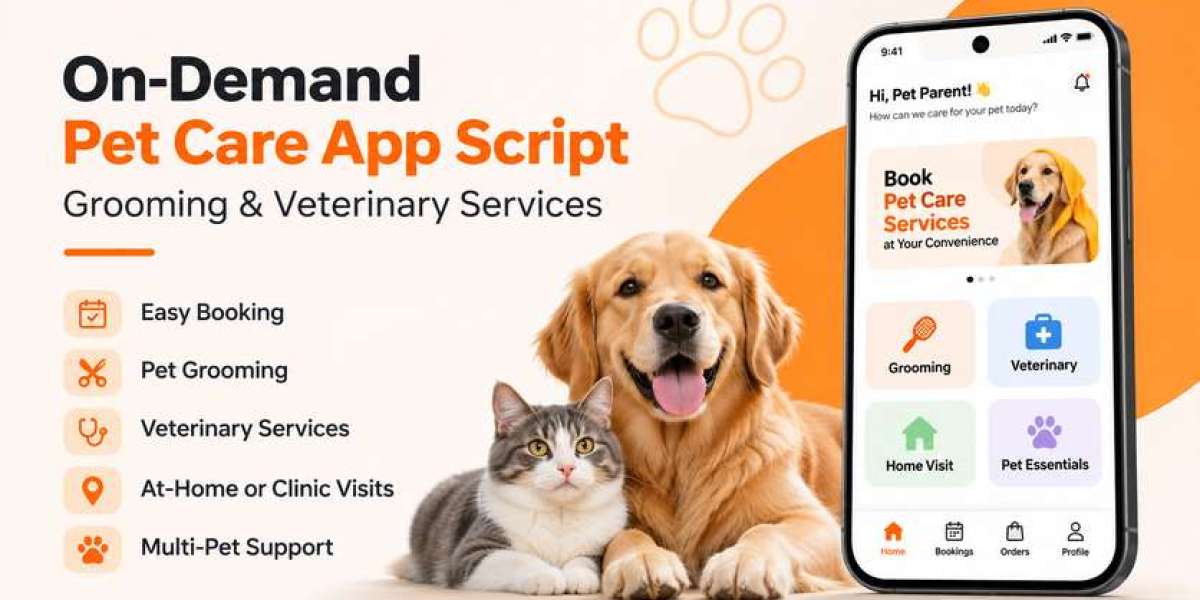
Pet owners increasingly expect convenient, reliable, and transparent services for every part of their pets' well-being. Grooming appointments, veterinary consultations, vaccination visits, medicine delivery, emergency support, and routine wellness checks can all be easier to manage through a single digital platform. An On-Demand Pet Care App Script: Grooming & Veterinary Services provides the foundation for building this kind of marketplace without developing every feature from the ground up.
An app script is a prebuilt software solution that includes essential user flows, booking tools, service management features, payment integration, and administrative controls. Businesses can customize the platform according to their brand, operating model, and local market requirements. With the right configuration, the app can connect pet owners with groomers, veterinarians, clinics, pet sitters, pharmacies, and other qualified service providers.
What Is an On-Demand Pet Care App Script?
An on-demand pet care app script is a ready-made application framework designed to coordinate pet-related services through mobile and web interfaces. It typically includes separate experiences for pet owners, service providers, and administrators. Pet owners can discover services, compare profiles, choose appointment times, make payments, and track bookings. Groomers and veterinarians can manage availability, accept requests, update service status, and communicate with customers.
The platform usually works as a multi-sided marketplace. The customer app handles discovery and booking, while the provider application focuses on service delivery and earnings. An administrative dashboard gives the business owner control over users, providers, appointments, categories, payments, promotions, reports, and customer support. This structure helps businesses launch faster than they could with a completely custom product while still allowing important features to be modified.
A script can support several operating models. A business may manage its own team of groomers and veterinarians, operate a marketplace for independent professionals, or combine both approaches. It can also support in-clinic bookings, at-home appointments, mobile grooming vans, video consultations, and recurring wellness plans. The final product depends on the selected features, integrations, compliance requirements, and service area.
Why Businesses Are Investing in Digital Pet Care Platforms
The pet care industry has moved toward more personalized and accessible services. Many pet owners work long hours, travel frequently, or live in locations where transportation is difficult. Booking a home visit or finding an available professional through a mobile application can save time and reduce stress. A digital platform also makes routine care more visible by keeping appointments, medical notes, reminders, and payment records in one place.
For service providers, an app can improve scheduling efficiency and increase customer reach. A groomer can fill open time slots, define travel zones, display pricing, and receive instant booking notifications. A veterinarian can offer in-clinic appointments, home visits, or remote consultations based on qualifications and availability. Automated workflows reduce manual calls and messages, allowing professionals to focus more attention on pets and their owners.
The business owner can benefit from several revenue channels. These may include commissions on completed bookings, provider subscription plans, customer service fees, featured listings, cancellation charges, product sales, and advertising packages. A well-designed platform can also generate useful operational data, such as peak booking times, popular services, repeat customer rates, and provider performance.
Core Grooming Features for Pet Owners
Grooming is one of the most suitable services for an on-demand marketplace because appointments are frequent, repeatable, and easy to categorize. The customer app should make it simple to choose a pet profile, select a service, view the estimated duration, and book an appropriate provider. Common categories may include bathing, hair trimming, nail clipping, ear cleaning, dental cleaning, de-shedding, flea treatment, breed-specific styling, and full grooming packages.
Pet owners should be able to create detailed profiles for each animal. Useful information includes species, breed, age, weight, coat type, allergies, temperament, vaccination status, grooming preferences, and special handling instructions. Customers may also upload photos to help a provider understand the pet's coat and appearance before accepting a booking. These details can improve preparation and reduce misunderstandings during the appointment.
An effective grooming module can include the following functions:
- Provider profiles with qualifications, service areas, reviews, prices, and photo galleries.
- Calendar-based booking with real-time availability.
- At-home, salon, mobile van, and pickup service options.
- Service packages, add-ons, discounts, and recurring appointments.
- Before and after photos uploaded by the provider.
- Booking status updates from confirmation through completion.
- Tips, ratings, reviews, and rebooking options.
Location tools are especially valuable for mobile grooming. Customers can enter an address, view providers who serve that area, and receive an estimated arrival time. Providers can organize appointments by location to reduce travel time. The platform may also calculate travel fees according to distance, display service zones, and prevent bookings outside the provider's approved operating area.
Veterinary Service Features and Digital Health Support
Veterinary care requires a more structured workflow because appointments may involve medical history, clinical notes, prescriptions, diagnostic information, and follow-up instructions. The app should allow owners to select a pet, describe symptoms, choose an appointment type, and share relevant records before the consultation. Appointment categories may include preventive checkups, vaccinations, nutrition advice, dermatology concerns, minor injuries, post-treatment follow-ups, and general consultations.
A veterinary module can support both physical and remote services. Customers may book appointments at a clinic, request a home visit, or start a video consultation where legally and clinically appropriate. The provider should be able to review the pet's profile, add notes, upload documents, record recommendations, and schedule a follow-up. Video consultations should include stable communication, appointment reminders, consent flows, and a clear explanation of when an in-person examination is required.
Important veterinary features may include:
- Digital pet medical profiles and vaccination records.
- Appointment scheduling based on provider availability and service type.
- Secure messaging between pet owners and veterinary professionals.
- Video consultation and audio calling tools.
- Prescription records and medicine delivery integration.
- Treatment notes, lab reports, invoices, and follow-up reminders.
- Emergency contact information and clinic referral workflows.
The platform must not present the app as a replacement for professional judgment. Medical advice, prescriptions, diagnosis, record storage, and telehealth functionality should follow local laws, professional standards, privacy rules, and licensing requirements. Businesses should work with qualified legal and veterinary advisors before launching these features in a specific market.
Essential Features for Providers and Administrators
Service providers need more than a profile page and booking notifications. Their dashboard should allow them to define services, prices, working hours, breaks, travel radius, cancellation rules, and blackout dates. They should be able to accept or reject requests, reschedule appointments, contact customers, update service status, and view earnings. A simple interface is important because many providers will use the app while traveling between appointments.
Providers should also have access to customer and pet information that is relevant to the booked service. For example, a groomer may need to see coat condition and handling notes, while a veterinarian may require medical history and previous treatment records. Access should be controlled according to role and business need. Sensitive records should not be visible to users who do not require them.
The administrator dashboard is the control center of the platform. Administrators can approve provider applications, verify licenses or certifications, manage service categories, review complaints, configure commissions, monitor transactions, and resolve disputes. They can also manage promotional campaigns, send announcements, moderate reviews, suspend accounts, and export business reports.
Useful administrative tools include
- Provider onboarding with identity and credential verification.
- Service area, pricing, and commission management.
- Booking, refund, cancellation, and dispute controls.
- Revenue reports and provider payout management.
- Customer support tickets and communication history.
- Fraud monitoring, audit logs, and account permissions.
- Analytics for bookings, retention, revenue, and service demand.
Booking, Payments, Notifications, and Customer Experience
The booking process should be short enough for routine appointments but detailed enough for veterinary services. A typical flow begins when the customer selects a pet and service. The app then displays suitable providers, available time slots, estimated pricing, travel fees, and appointment terms. After the customer confirms the details, the system processes payment or places an authorization on the selected payment method.
Payment flexibility can improve conversion and customer satisfaction. Depending on the market, the platform may support credit cards, debit cards, digital wallets, bank transfers, cash collection, and prepaid balances. The system should clearly show the service fee, taxes, travel charge, discounts, platform fee, and total amount before confirmation. It should also support refunds, partial refunds, provider payouts, invoices, and payment status tracking.
Notifications keep every participant informed. Customers can receive booking confirmations, reminders, provider arrival updates, payment receipts, prescription alerts, and follow-up messages. Providers can receive new request alerts, schedule changes, cancellation notices, and payout updates. Administrators may receive warnings about failed payments, unresolved complaints, overdue appointments, or unusual account activity.
Ratings and reviews help customers assess service quality, but they should be managed carefully. The platform can allow reviews only after completed appointments, identify verified bookings, and provide a process for reporting abusive or inaccurate content. Customer support should be available through in-app chat, email, phone assistance, or support tickets, depending on the business model.
Technology, Security, and Compliance Considerations
A scalable pet care platform needs a dependable technical foundation. The application should be responsive across modern mobile devices and web browsers, with a backend capable of handling bookings, user accounts, provider schedules, payments, notifications, and media files. Cloud hosting, database backups, monitoring, and load management can help the platform remain available as usage increases.
Security is particularly important when the system stores contact details, payment information, addresses, pet records, and veterinary documents. Businesses should use encrypted data transmission, secure authentication, strong password policies, role-based access, and protected payment processing. Sensitive information should be collected only when necessary and retained according to a clear data policy.
The platform should also account for regional requirements. Privacy regulations may govern consent, data access, deletion requests, and the handling of health-related information. Veterinary services may be subject to professional licensing rules, telemedicine restrictions, recordkeeping requirements, and prescription laws. Pet transportation, home visits, and medicine delivery may involve additional permits or insurance obligations.
Before launch, the business should conduct security testing, payment testing, booking stress tests, and usability reviews. It should also create policies for emergencies, missed appointments, aggressive animals, provider misconduct, medical complaints, and data incidents. These operational safeguards are as important as the visible features of the application.
How to Choose and Customize the Right App Script
Businesses should begin by defining the services they plan to offer, their launch location, target customers, provider model, and expected booking volume. A company focused on mobile grooming may prioritize maps, route planning, travel fees, and photo galleries. A veterinary marketplace may need stronger medical records, provider credentialing, secure communication, and appointment documentation.
The quality of the underlying script matters. Evaluate the code structure, documentation, update process, security practices, database design, API support, and compatibility with payment and notification services. Ask whether the vendor provides source code access, customization support, deployment assistance, bug fixes, and future maintenance. A low initial price may not be beneficial if the platform is difficult to extend or lacks reliable technical support.
Customization should cover both branding and operations. Businesses may change colors, logos, language, currencies, service categories, commission rules, booking steps, notification templates, and provider verification workflows. More advanced customization may include loyalty programs, membership plans, insurance partnerships, medicine delivery, wearable device integration, or connections to clinic management systems.
A phased launch is often more practical than releasing every possible feature at once. The first version can focus on customer registration, pet profiles, provider listings, scheduling, payments, notifications, and basic administration. Later releases can introduce video consultations, recurring care plans, advanced analytics, loyalty rewards, and integrations based on actual customer demand.
Monetization Strategies for a Pet Care App
A pet care platform can generate revenue through commissions charged on completed appointments. The business may apply a percentage to each transaction, a fixed booking fee, or a combination of both. Commission rates should account for payment processing, customer support, marketing, refunds, and the value provided to service professionals.
Subscription plans can provide recurring revenue. Providers may pay for enhanced visibility, advanced scheduling, analytics, lower commission rates, or access to high-demand service areas. Customers may subscribe to wellness plans that include reminders, discounted grooming, priority booking, routine consultations, or bundled preventive care. These plans should offer clear value and avoid hiding important cancellation terms.
Additional revenue may come from featured provider placements, sponsored service categories, pet product sales, pharmacy partnerships, delivery fees, and corporate pet care packages. However, monetization should not compromise trust. Sponsored listings should be identified, medical recommendations should remain professionally independent, and customers should always see transparent pricing before making a booking.
Launching an On-Demand Pet Care App Successfully
A successful launch requires more than purchasing software and publishing an app. The business must recruit qualified providers, verify their credentials, define service standards, establish geographic coverage, and create policies for cancellations and complaints. Early provider training can improve profile quality, response times, appointment conduct, and customer communication.
The launch area should be selected carefully. Concentrating on one city or region can make it easier to maintain provider availability and deliver consistent service. Marketing can target pet owners through local search, social media, veterinary partnerships, shelters, pet stores, residential communities, and referral programs. Educational content about grooming schedules, vaccinations, nutrition, and preventive care can also attract customers searching for reliable information.
After launch, track operational metrics rather than focusing only on downloads. Important indicators include completed bookings, repeat booking rate, provider acceptance rate, cancellation rate, average response time, customer acquisition cost, average order value, review scores, and support resolution time. These metrics show where the experience is working and where improvements are needed.
An on-demand pet care app should continue evolving from real customer and provider feedback. Improving the booking flow, adding popular services, refining search filters, and resolving payment or notification issues can produce better results than adding complex features without evidence of demand. Continuous testing and measured updates help build a trusted marketplace over time.
Conclusion
An On-Demand Pet Care App Script: Grooming & Veterinary Services can help businesses create a convenient digital marketplace for essential pet care. By combining grooming bookings, veterinary appointments, pet profiles, provider management, payments, notifications, and administrative controls, the platform can serve customers and professionals through one connected system.
The strongest results come from choosing a flexible script, protecting sensitive information, meeting local veterinary and privacy requirements, and designing around real service workflows. A focused launch, qualified provider network, transparent pricing, and responsive support can turn the application into a dependable part of everyday pet care. As demand for convenient and personalized animal services grows, a well-managed platform can support both business expansion and better experiences for pets and their owners.
Frequently Asked Questions (FAQs)
1. What is an on-demand pet care app script, and how does it work?
An on-demand pet care app script is a ready-made software solution that helps businesses launch a digital platform for pet grooming, veterinary consultations, health checkups, and other pet care services. It connects pet owners with service providers through a single platform, allowing users to find services, book appointments, make payments, and manage their pet care needs conveniently.
2. What features are essential for a pet grooming and veterinary app?
A pet grooming and veterinary app should include pet profile management, service listings, appointment scheduling, veterinarian profiles, grooming service bookings, secure payment options, ratings and reviews, push notifications, and an admin dashboard. Additional features such as video consultations, medical history tracking, and home service booking can improve the overall user experience.
3. How much does it cost to develop an on-demand pet care app?
The cost of developing an on-demand pet care app depends on its features, customization requirements, platform compatibility, integrations, and development approach. A ready-made pet care app script can reduce initial development time and costs compared with building software from scratch. The final investment depends on the business model and the level of customization required.
4. Can I launch both pet grooming and veterinary services through one app?
Yes. A single on-demand pet care platform can support both grooming and veterinary services. Pet owners can book bathing, hair trimming, and grooming appointments alongside veterinary consultations, vaccinations, and health checkups. Separate service provider panels can help groomers and veterinarians manage their respective bookings.
5. Is an on-demand pet care app script customizable for different business models?
Yes. An on-demand pet care app script can be customized for pet grooming businesses, veterinary clinics, pet care marketplaces, and multi-service pet platforms. Businesses can modify branding, service categories, pricing, booking workflows, payment integrations, and provider management features according to their operational requirements.