
Preparing for the UPSC Civil Services Examination requires a clear strategy, regular revision and consistent practice. For candidates who have selected Sociology as their optional subject, it is important to understand the syllabus, study important sociological thinkers and develop the ability to connect theoretical concepts with Indian society.
Sociology is an interesting subject because it deals with society, social relationships, institutions, inequality, culture and social change. However, preparing for this optional subject requires more than reading books. Aspirants need to understand the concepts, practise previous year questions and improve their answer-writing skills.
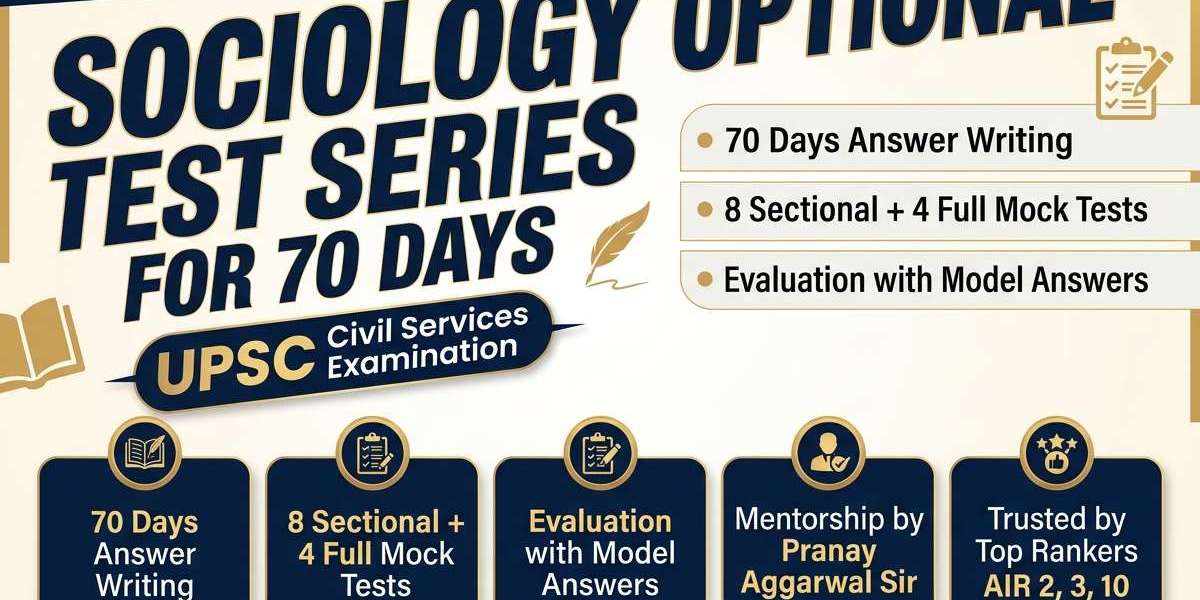
Candidates preparing for UPSC Mains can explore the Sociology Optional Test Series by IAS Gurukul under the guidance of Pranay Aggarwal Sir. Regular practice and self-assessment can help aspirants understand their preparation level and identify areas that require more attention.
Why Is Sociology a Good Optional Subject for UPSC?
Sociology helps candidates understand how society functions and how different social factors influence people's lives. Topics such as caste, class, family, religion, education, gender inequality, urbanisation and social movements are important parts of the subject.
Another useful feature of Sociology is its connection with current social developments. Aspirants can relate theoretical ideas to real-life situations and use relevant examples while writing answers.
However, candidates should not select an optional subject only because it is considered popular. They should first understand the syllabus, examine the nature of the subject and decide whether its topics match their interests and learning approach.
Understand the UPSC Sociology Optional Syllabus
The Sociology Optional syllabus is divided into two papers. Both papers require proper understanding and regular revision.
Paper 1: Fundamentals of Sociology
Paper 1 focuses on basic sociological concepts, theories, research methods and important thinkers. Some major areas include:
Sociology as a discipline.
Sociological research methods.
Karl Marx, Max Weber and Emile Durkheim.
Social institutions and social structure.
Family, religion and education.
Social stratification and mobility.
Social change and development.
Candidates should understand the main arguments of important thinkers instead of simply memorising their names. Learning how to apply theories to different questions can make answers more meaningful.
Paper 2: Indian Society
Paper 2 focuses on the structure and changing nature of Indian society. Important areas include:
Perspectives on Indian society.
Caste and class structures.
Tribal communities.
Rural and urban society.
Family, marriage and kinship.
Religion and social change.
Social movements in India.
Population and development.
Aspirants should connect the concepts studied in Paper 1 with the topics in Paper 2. For example, theoretical perspectives on inequality can help explain caste and class in Indian society.
Candidates can also explore the Sociology Optional Topics section to find relevant subject-related topics for their preparation.
How to Prepare Sociology Optional Step by Step
A planned study routine can make preparation easier and help candidates use their time effectively.
1. Start with the Complete Syllabus
Read the syllabus carefully and divide it into smaller topics. Prepare a timetable for Paper 1 and Paper 2, keeping sufficient time for revision and answer-writing practice.
2. Understand Basic Concepts
Begin with fundamental concepts such as society, culture, socialisation, social structure and social change. Make sure you understand the meaning of each topic before moving towards advanced theories.
3. Study Important Sociological Thinkers
Thinkers such as Marx, Weber and Durkheim are important for understanding different sociological perspectives. Prepare notes on their major ideas, arguments and contributions.
4. Make Short and Useful Notes
Prepare topic-wise notes with definitions, thinkers, theories, examples and important arguments. Keep them simple so that you can revise them easily before the examination.
5. Practise Previous Year Questions
Previous year questions help candidates understand the type of questions asked in the examination. Practise them topic-wise and focus on answering what the question actually demands.
Aspirants can use the Sociology Optional Question Papers resource to explore question papers and support their practice.
6. Revise Regularly
Do not wait until the syllabus is complete to start revision. Revise completed topics regularly and maintain short notes for quick reference.
Importance of Answer-Writing Practice for Sociology Optional
Many aspirants spend a lot of time reading books but do not practise enough answer writing. This can create difficulties during the Mains examination, where candidates must present their knowledge clearly within a limited time.
Regular answer-writing practice can help candidates:
Understand the demand of different questions.
Write clear introductions and conclusions.
Present arguments in a logical order.
Use sociological thinkers and theories correctly.
Include suitable examples from Indian society.
Improve time management.
Identify weak areas and work on them.
A good answer should remain focused on the question. Writing lengthy answers without relevant arguments may not be useful. Candidates should practise presenting clear points supported by appropriate sociological concepts.
How a Sociology Optional Test Series Can Help
A test series can become an important part of Mains preparation. It gives candidates an opportunity to practise questions in an examination-like setting and assess how well they can apply their knowledge.
IAS Gurukul offers a dedicated Sociology Optional Test Series for UPSC aspirants. Candidates can explore the programme and its available details to understand whether it matches their preparation requirements.
70-Day Sociology Optional Test Series
Aspirants looking for a focused test practice programme can explore the 70-Day Sociology Optional Test Series.
The programme is offered under the guidance of Pranay Aggarwal Sir. The official course page lists the following details:
Programme: Sociology Optional Test Series for 70 Days.
Mode: Offline.
Location: New Delhi.
Listed course fee: ₹16,000.
Candidates should visit the official page or contact IAS Gurukul to confirm the latest fee, batch schedule and registration details.
35-Day Sociology Optional Test Series
Candidates who are looking for another test practice option can also explore the 35-Day Sociology Optional Test Series.
Visit the official course page to understand the programme details and check its suitability for your preparation schedule.
Sociology Optional Classroom Course at IAS Gurukul
Some candidates prefer classroom-based learning because it provides a planned study environment and an opportunity to learn with other aspirants.
IAS Gurukul offers a Sociology Optional Classroom Course for candidates preparing for the UPSC Civil Services Examination.
Classroom learning can be useful for aspirants who want to follow a structured study routine and strengthen their understanding of different Sociology topics.
Candidates can also visit the UPSC Sociology Courses page to explore the available Sociology preparation programmes at IAS Gurukul.
Best Books and Study Materials for UPSC Sociology Optional
Selecting the right study material is another important part of preparation. Candidates should avoid collecting too many books and focus on resources that help them understand the syllabus.
Aspirants can explore the IAS Gurukul Books and Notes section for Sociology-related study resources.
Here are some useful resource categories to explore:
IAS Gurukul Books for UPSC Sociology
Candidates can visit the IAS Gurukul Books for UPSC Sociology page to explore relevant books for their optional subject preparation.
IGNOU Sociology Books
IGNOU study material can be useful for understanding different Sociology topics. Aspirants can explore the IGNOU Sociology Books resource.
NCERT Sociology Books
NCERT books can help candidates build a foundation in basic Sociology concepts and understand important social topics. Visit the NCERT Books for Sociology section for related resources.
NIOS Sociology Books
Candidates can also explore the NIOS Sociology Books section for additional study material.
The main aim should be to understand the subject rather than collect a large number of resources. Select useful material, prepare short notes and revise regularly.
Learn from Sociology Toppers' Notes
Toppers' notes can provide useful insights into how candidates organise their study material and revise important topics. They may also help aspirants understand how to present information in a clear and organised manner.
Candidates can explore the Sociology Toppers' Notes resource available on IAS Gurukul.
Remember that notes should be used as supporting study material. Every aspirant should develop their own understanding of the subject and prepare according to the official UPSC syllabus.
Common Mistakes to Avoid During Sociology Optional Preparation
Even candidates who study regularly may face difficulties because of an unclear preparation strategy. Some common mistakes should be avoided:
Ignoring the syllabus: Study according to the prescribed syllabus and avoid unnecessary topics.
Only memorising theories: Understand the ideas of thinkers and learn how to apply them.
Avoiding answer writing: Practise questions regularly instead of waiting until the final months.
Neglecting Paper 2: Give proper attention to Indian society and its different dimensions.
Collecting too many books: Select relevant resources and revise them properly.
Skipping revision: Keep regular time for revising important concepts and thinkers.
Not analysing mistakes: Review your practice answers and identify areas that need improvement.
A consistent approach can help candidates avoid confusion and make their preparation more organised.
Final Preparation Strategy for UPSC Sociology Optional
Aspirants should follow a balanced routine that includes reading, note-making, revision and answer-writing practice. Start with the basic concepts, understand important thinkers, complete both papers and regularly practise previous year questions.
Use relevant examples from Indian society and connect them with sociological theories wherever appropriate. Attempt tests to assess your preparation and spend time reviewing your performance.
IAS Gurukul provides Sociology Optional courses, classroom learning options, test series and study resources under its Sociology preparation programme. Candidates can explore the UPSC Sociology Courses page and visit the official IAS Gurukul website for more information.
Conclusion
Preparing for Sociology Optional is a continuous process that requires patience, conceptual clarity and regular practice. Understanding the syllabus, studying important thinkers, selecting useful books and improving answer writing are all important parts of preparation.
A suitable classroom programme or test series can help candidates follow a more organised learning and practice routine. Explore the Sociology Optional courses and resources available at IAS Gurukul to find options that match your preparation needs.