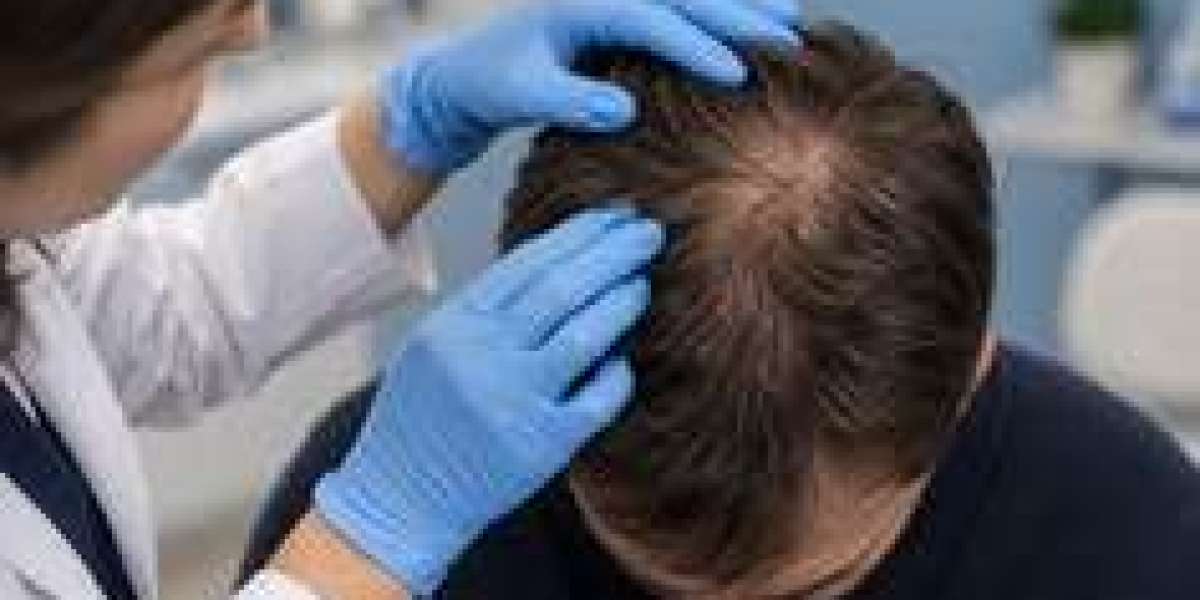

Hair loss around the crown can gradually change the overall appearance of the scalp. The crown is the rounded area at the back of the head, where thinning may create a visible patch or make the scalp more noticeable. For many individuals, this change affects their hairstyle and confidence. Fortunately, modern hair restoration techniques offer options for addressing crown hair loss and improving hair coverage.
An advanced crown hair transplant in Islamabad can help suitable candidates restore hair to areas affected by permanent follicle loss. With careful planning, appropriate graft placement, and professional aftercare, the procedure aims to create a natural-looking result that complements the individual's existing hair.
Understanding Crown Hair Loss
Crown hair loss is often associated with androgenetic alopecia, commonly known as pattern baldness. This condition is influenced by genetics and hormonal sensitivity, which can gradually cause hair follicles to shrink. As follicles become smaller, they produce thinner strands until some stop producing visible hair.
Other factors, including nutritional deficiencies, certain medical conditions, stress, and hormonal changes, may also contribute to hair thinning. The cause should be assessed before choosing a treatment.
Early signs of crown hair loss include:
Reduced hair density around the crown.
A widening circular area of thinning.
Increased visibility of the scalp.
Hair strands becoming finer and weaker.
A noticeable change in the natural crown pattern.
Identifying the reason for hair loss helps a specialist recommend an appropriate treatment plan.
What Is an Advanced Crown Hair Transplant?
A crown hair transplant is a surgical hair restoration procedure that moves healthy hair follicles from a donor area, usually the back or sides of the scalp, into the thinning crown region.
The transplanted follicles are carefully positioned to follow the natural direction and circular growth pattern of crown hair. This planning is important because the crown has a distinctive swirl that can make the results look unnatural if grafts are placed without considering their natural orientation.
Individuals exploring Crown Hair Transplant in Islamabad should begin with a consultation to assess their hair loss pattern, donor-area condition, scalp health, and expectations.
Modern Techniques Used for Crown Restoration
Hair restoration specialists may use different techniques depending on the patient's needs and donor hair availability.
Follicular Unit Extraction (FUE)
FUE involves extracting individual follicular units from the donor area using specialized instruments. The collected grafts are then implanted into the recipient area. Since a strip of scalp is not removed, the technique generally leaves tiny scattered scars.
FUE may be suitable for people who prefer shorter hairstyles, although the final choice depends on their individual circumstances.
Follicular Unit Transplantation (FUT)
FUT involves removing a narrow strip of scalp from the donor area. A trained team separates the strip into individual follicular units under magnification. These grafts are then placed into the crown.
FUT may be appropriate for selected patients who require a particular graft yield and have suitable donor characteristics. It usually leaves a linear scar in the donor region.
How the Procedure Is Planned
Successful crown restoration begins with detailed planning rather than simply deciding how many grafts to implant. The specialist evaluates the size of the thinning area, existing hair density, donor supply, and the likely progression of pattern hair loss.
The procedure generally includes several stages:
Consultation: The specialist reviews medical history and examines the scalp.
Hairline and crown planning: The recipient area and natural hair direction are assessed.
Donor preparation: The selected donor region is prepared according to the chosen technique.
Graft extraction: Healthy follicular units are collected.
Graft placement: The follicles are implanted carefully into the crown.
Aftercare instructions: The patient receives guidance for protecting the treated area during recovery.
The exact process and duration depend on the number of grafts and the technique used.
Benefits of Advanced Crown Hair Restoration
A carefully planned transplant can offer several benefits to suitable candidates. It can add hair to areas with reduced density and help create a fuller-looking crown.
Potential benefits include:
Improved hair coverage in the treated region.
A more balanced overall hair appearance.
Use of the patient's own hair follicles.
A restoration plan based on individual hair characteristics.
Results that can be long-lasting when transplanted follicles survive successfully.
However, results differ between individuals. A transplant cannot guarantee complete density, and natural hair surrounding the transplanted area may continue to thin.
Recovery and Hair Growth Timeline
After the procedure, patients may experience mild redness, swelling, tenderness, and small scabs around the transplanted follicles. These effects generally improve during the initial healing period.
Following the specialist's aftercare instructions is essential. Patients should avoid scratching the recipient area, follow the recommended washing routine, and temporarily avoid strenuous activities when advised.
Some transplanted hairs may shed during the first few weeks. This is a normal stage of the hair growth cycle and does not necessarily indicate treatment failure. New growth often becomes noticeable after three to six months, with more visible improvement developing over six to twelve months. Crown results may continue maturing for up to 18 months.
Maintaining Your Hair After Treatment
Long-term hair care supports scalp health and helps patients maintain their existing natural hair. A balanced diet, gentle hair care, and appropriate treatment of underlying conditions can all be useful.
A specialist may recommend medical hair-loss treatments when suitable. These treatments can help manage ongoing pattern hair loss, but they are not necessary or appropriate for everyone. Regular follow-up appointments also allow the specialist to monitor progress and address concerns.
Choosing the Right Hair Restoration Specialist
The experience and planning of the treating professional are important factors in crown restoration. Patients should ask about qualifications, experience with crown procedures, donor-area management, possible complications, and realistic results.
When considering Crown Hair Transplant in Islamabad, choose a qualified provider who explains the procedure clearly and offers an individualized treatment plan. Avoid making decisions based only on promotional photographs or promises of guaranteed results.
Conclusion
Advanced crown hair transplantation offers a possible solution for people experiencing permanent hair loss around the crown. Modern FUE and FUT techniques allow specialists to move healthy follicles into thinning areas while considering natural hair direction and scalp characteristics.
A professional assessment helps determine whether transplantation is appropriate and what results may realistically be achieved. With careful planning, suitable candidacy, and proper aftercare, patients can work toward improved crown coverage and a more balanced appearance.
Frequently Asked Questions
1. Is a crown hair transplant suitable for every person with thinning hair?
No. Suitability depends on the cause of hair loss, donor hair availability, scalp health, and the stability of the hair-loss pattern. A consultation is necessary to identify the most appropriate treatment.
2. How many grafts are needed for crown restoration?
The number of grafts depends on the size of the thinning area, existing hair density, hair characteristics, and desired coverage. During an assessment for Crown Hair Transplant in Islamabad, the specialist can estimate the graft requirement.
3. When will I see the final results of a crown hair transplant?
Initial growth may appear after three to six months, while more noticeable results usually develop over six to twelve months. The crown can take up to 18 months to mature fully.
4. Why should I consider Crown Hair Transplant in Islamabad?
Crown Hair Transplant in Islamabad may be an option for suitable individuals seeking to improve hair coverage around the crown. A qualified specialist can assess donor hair, explain available techniques, and develop a realistic restoration plan.
For more information visit
Enfield royal clinic in islamabad