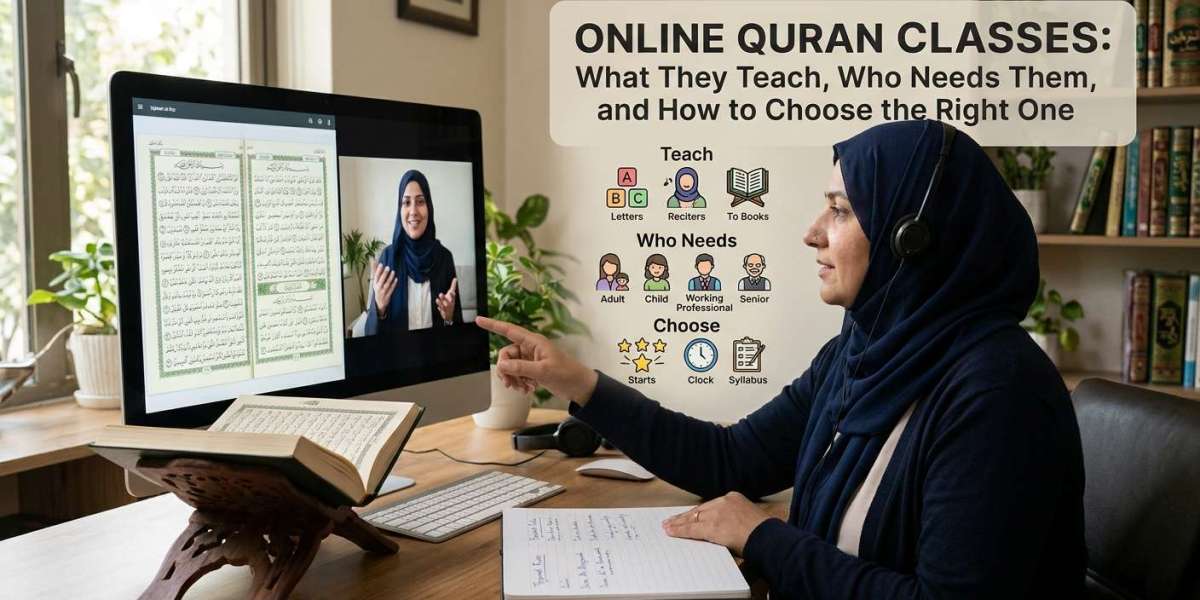

Quran Classes: What They Teach, Who Needs Them, and How to Choose the Right One
Millions of Muslims want to recite the Quran correctly, yet many are unsure how to begin or which type of course fits their needs. Some want to fix their pronunciation, some want to teach their children, and others want to start from the Arabic alphabet as adults. This guide explains how Quran learning works, what each level covers, and how to pick a program that gives real results.
1. What Are Quran Classes?
Quran classes are organized lessons in which a qualified teacher helps students read, recite, memorize, and understand the Holy Quran. A standard course begins with Arabic letters and sounds, then moves to reading words, full verses, and Tajweed rules, followed by memorization or translation. Lessons can be one-on-one or in small groups, and they are open to children, teenagers, adults, and new Muslims at any level.
2. Why Does Tajweed Matter?
Tajweed means giving every letter its proper sound, length, and characteristics when reciting. The Quran was revealed to be recited in a specific way, and small errors, such as shortening a stretched vowel or mixing up similar letters, can change how a word is heard. Tajweed is not only for advanced students. Even beginners benefit from learning the basic rules early, because correcting a habit later takes much more effort than learning it correctly the first time.
3. What Are the Main Levels of Learning?
Most programs follow this sequence:
- Noorani Qaida: Arabic letters, vowel marks, and basic reading practice.
- Nazra: reading the Quran from the Mushaf with fluency.
- Tajweed: rules such as Noon Sakinah, Meem Sakinah, Madd, and Qalqalah.
- Hifz: memorizing surahs with structured revision.
- Translation and Tafseer: understanding the meaning and context of the verses.
Moving in order gives stronger results than skipping ahead.
4. How Do You Find Tajweed Support Near You?
Pronunciation is the hardest part to learn alone, since you cannot always hear your own mistakes. Many students start by searching for tajweed classes near me to find a teacher who can listen to their recitation and correct it in real time. Whether you choose a local center or an online academy, ask for a trial lesson first. Pay attention to how clearly the teacher recites, how patiently they correct you, and whether the lesson plan matches your level.
5. Online vs. In-Person Learning
- Online: flexible timings, no travel, access to qualified teachers anywhere, and easy rescheduling.
- In-person: a community atmosphere and face-to-face presence, but limited by location and fixed schedules.
The format matters less than the quality of the teacher. A live, one-on-one online lesson with a certified teacher is more effective than a crowded class with little individual attention.
6. What to Look for in a Teacher or Academy
- Credentials: formal Tajweed training or an Ijazah.
- Experience: especially with your age group or level.
- Structured curriculum: clear levels, goals, and a written plan.
- Small class size: one-on-one or very small groups.
- Progress reports: regular feedback on strengths and weak areas.
- Patience and respect: vital for children and adult beginners.
7. Who Can Join?
- Children: can begin around age 4 to 6 with short, engaging sessions.
- Adults: can start from the alphabet, and teachers adjust the pace to avoid embarrassment.
- New Muslims: can begin with simple guidance and gradual Arabic practice.
- Fluent readers: can join Tajweed-only courses to refine their recitation.
There is no age limit for learning the Quran.
8. How Long Does It Take?
Estimates vary by effort and consistency:
- Noorani Qaida: 2 to 4 months.
- Fluent reading: 6 to 12 months after Qaida.
- Tajweed basics: 3 to 6 months.
- Complete Hifz: around 2 to 4 years with daily revision.
Three to five lessons per week plus 20 to 30 minutes of daily practice supports steady progress.
9. Tips to Improve Faster
- Keep a fixed schedule for lessons and practice.
- Revise the last lesson before each new class.
- Listen to a skilled reciter daily to train your ear.
- Record yourself and compare it with your teacher.
- Study in a quiet place without distractions.
- Ask questions whenever a rule is unclear.
- Set small goals, such as mastering one rule each week.
10. Common Mistakes to Avoid
- Skipping the basics and starting with advanced material.
- Learning only from videos or apps without live correction.
- Irregular attendance, which slows progress.
- Memorizing before reading fluently, which builds errors into memory.
- Choosing by price alone instead of quality.
Frequently Asked Questions
What is the difference between Nazra and Tajweed?
Nazra is reading the Quran from the text. Tajweed is the set of rules that makes the reading accurate and correct.
Can adults learn Tajweed from scratch?
Yes. With a patient teacher and regular practice, adults can learn the rules and apply them within months.
At what age can a child start?
Most children start between 4 and 6 years old, depending on readiness.
Do I need to know Arabic first?
No. Courses begin with the Arabic alphabet and progress step by step.
Are online lessons effective?
Yes, when they are live and one-on-one, so the teacher can hear and correct you immediately.
How often should I attend lessons?
Three to five sessions per week is a good balance for most students.
Conclusion
Learning the Quran is a rewarding journey, and correct recitation is built through guidance, patience, and daily effort. Start with the basics, choose a qualified teacher, practice regularly, and apply Tajweed from the beginning. With the right support, anyone can recite the Quran with confidence.