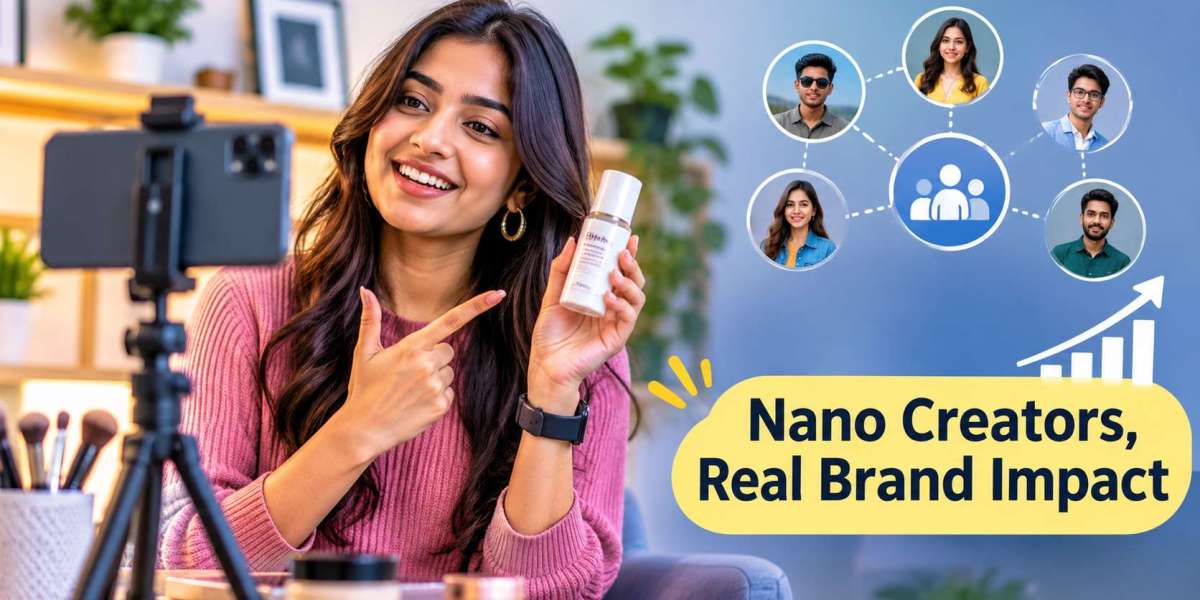

Nano influencers are becoming an important part of brand marketing strategies, particularly for businesses seeking targeted reach, authentic recommendations and stronger community connections. With follower counts typically ranging from 1,000 to 10,000, these creators may have smaller audiences than established influencers, but their content often focuses on specific interests, locations and consumer groups.
For brands, collaborating with nano influencers in India offer a practical way to introduce products, build local awareness, encourage customer interaction and generate relatable content. These partnerships can be particularly useful for D2C businesses, regional brands, retail outlets, restaurants, beauty companies and emerging startups.
However, every successful campaign involving nano creators requires more than selecting influencers solely on follower counts. Brands must evaluate audience quality, understand collaboration costs, establish realistic engagement benchmarks and plan measurable deliverables.
This article provides in-depth information about what brands can expect to spend and how campaigns can be structured for better results.
Nano Influencer Rates in India: Cost per Post
There is no fixed nano influencer rates in India, so brands should treat published estimates as indicative rather than fixed prices.
Factors That Influence Creator Pricing
Engagement quality: Creators with relevant comments, saves and shares may charge more than accounts with similar follower counts but limited interaction.
Content format: A professionally edited Reel may cost more than a simple Story or static post.
Category expertise: Creators working in specialised categories such as finance, technology, fitness and beauty may price collaborations according to their knowledge and audience relevance.
Production requirements: Scripting, filming, editing, additional revisions and product demonstrations can affect the final fee.
Usage rights: Reusing creator content on brand websites, social media channels or paid advertisements may involve additional charges.
Exclusivity: Restrictions preventing creators from working with competing brands can increase collaboration costs.
Nano Influencer Engagement Rate: Key Benchmarks
The nano influencer engagement rate measures how actively an audience interacts with a creator's content in relation to the creator's follower count or reach.
A commonly used follower-based formula is:
Engagement Rate = (Likes + Comments + Other Interactions) ÷ Followers × 100
For a more detailed assessment, brands can examine saves, shares, video views, Story interactions and link clicks. The same calculation method should be used when comparing creators.
The following ranges can be used as indicative screening benchmarks:
Engagement Rate | General Interpretation |
Below 2% | Requires closer evaluation |
2–4% | Moderate interaction |
4–6% | Useful nano-creator benchmark |
6–8% | Strong interaction |
Above 8% | High interaction; validate quality |
A high engagement rate does not automatically indicate campaign effectiveness. Brands should examine comment relevance, follower authenticity, audience geography and performance consistency across recent posts.
Nano Influencer Campaign Playbook
A structured campaign process helps brands manage multiple creators, maintain consistent messaging and measure performance.
Step 1: Define the Campaign Objective
Brands should establish the campaign's primary purpose before selecting creators. Common objectives include:
Increasing brand awareness in a specific location.
Generating product trials or store visits.
Driving traffic to an e-commerce website.
Collecting reviews and customer testimonials.
Producing creator-led content for social channels.
Generating enquiries, registrations or sales.
The objective should guide creator selection, content formats and performance indicators.
Step 2: Identify Relevant Creators
Creator discovery should prioritise audience relevance rather than follower count alone. Brands should evaluate:
Audience demographics and location.
Language and regional relevance.
Content quality and consistency.
Engagement rate and interaction quality.
Category expertise and brand suitability.
Previous sponsored collaborations.
For campaigns involving hyperlocal influencers, audience location is particularly important. A creator based in a particular city may still have a substantial following elsewhere. Audience insights should therefore be reviewed before finalising partnerships.
Step 3: Establish Deliverables and Commercial Terms
Before onboarding creators, brands should document the content formats, posting dates, collaboration fees, campaign duration and approval requirements.
A clear campaign brief should include product information, key messages, mandatory disclosures, content guidelines and the intended call to action. Usage rights, exclusivity, revision limits and reporting expectations should also be agreed upon.
Step 4: Develop Relatable Content
Nano influencer content should communicate the brand message without losing the creator's natural style. Excessively scripted promotions can make collaborations appear less authentic.
Suitable formats include product demonstrations, first-use experiences, tutorials, local recommendations, comparisons and customer-style testimonials. Brands should provide accurate product information while allowing creators reasonable creative freedom.
Step 5: Coordinate Publishing and Track Results
A shared publishing calendar can help manage creator deadlines, content approvals and campaign schedules. Brands should also use unique tracking links, coupon codes or campaign identifiers wherever possible.
These tools make it easier to assess individual creator performance rather than relying exclusively on combined reach or impressions.
Step 6: Review and Optimise
Once the content is published, brands should compare results against the original campaign objectives. Strong-performing creators may be considered for repeat partnerships, while weaker results should be examined for potential issues involving audience fit, content quality or campaign execution.
Measuring Campaign Performance
Nano influencer campaigns should be evaluated through visibility, engagement and business outcomes.
Campaign objective | Relevant key performance indicators |
Brand awareness | Reach, impressions and video views |
Audience engagement | Likes, comments, saves and shares |
Website traffic | Link clicks and landing-page visits |
Lead generation | Enquiries, registrations and qualified leads |
Sales | Conversions, orders and revenue |
Content production | Approved assets and content usage performance |
Brands can also calculate cost per engagement, cost per click and cost per acquisition where relevant. These metrics provide a clearer understanding of campaign value beyond basic visibility.
Conclusion
Nano influencers in India offer brands an opportunity to connect with focused communities through relatable content and targeted creator partnerships. Their smaller audience sizes can be advantageous for businesses seeking local visibility, product trials, community engagement and cost-conscious content production.
However, campaign success depends on more than low collaboration costs or high engagement percentages. Careful creator selection, transparent commercial terms, clear campaign objectives and consistent performance tracking are essential. A structured approach allows brands to assess the value of nano influencer partnerships and build stronger creator relationships over time.
Frequently Asked Questions (FAQs)
1. What do you mean by the term nano influencers?
The term nano influencers meaning refers to social media creators who generally have between 1,000 and 10,000 followers. They often focus on specific interests, locations or communities and build relationships through consistent content and direct audience interaction.
2. What are the typical nano influencer rates in India?
The nano influencer rates in India vary according to content format, audience quality, engagement, niche and usage rights. Indicative rates may range from ₹500–₹5,000 for a static post and ₹1,500–₹8,000 for an Instagram Reel.
3. What is a good nano influencer engagement rate?
A nano influencer engagement rate of approximately 4–6% can serve as an indicative Instagram planning benchmark. However, results vary by category and platform. Brands should also assess comment quality, saves, shares and audience authenticity.
4. Is barter collaboration effective for nano influencer campaigns?
A barter collaboration can help brands introduce products and encourage trials without paying a standard creator fee. However, product value, deliverables, timelines, content usage rights and advertising disclosures should be agreed upon before the campaign begins.
5. Should brands choose nano vs micro influencers for UGC from nano creators?
The choice between nano vs micro influencers depends on campaign objectives. Nano creators can be useful for hyperlocal reach and UGC from nano creators, while micro influencers may offer broader niche visibility. Brands should compare audience relevance, content quality and collaboration costs before making a decision.