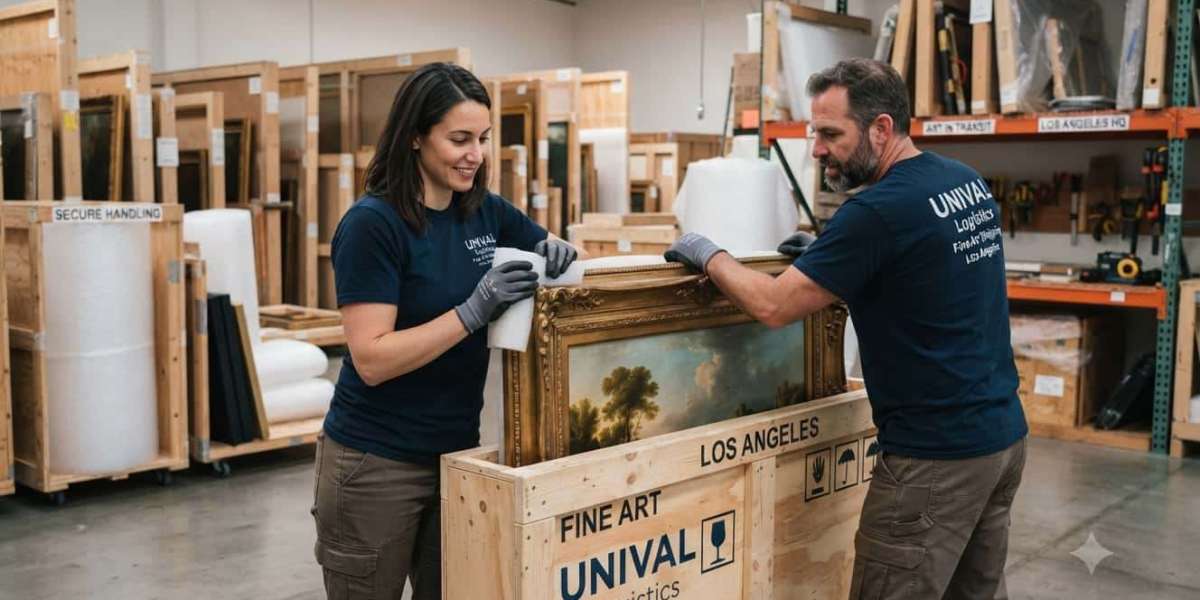

Summary: Fine art requires more than basic parcel transportation. Paintings, sculptures, framed pieces, antiques, and collectibles may need specialized packaging, careful handling, suitable insurance, and documented delivery. Standard parcel services may have limitations involving liability, coverage eligibility, package dimensions, and handling procedures. This guide explains why ordinary carriers may not be suitable for every valuable artwork shipment and what businesses should consider when choosing fine art shipping in Los Angeles.
Overview: Art galleries, collectors, dealers, auction businesses, and interior designers often transport items that have significant financial, historical, or artistic value. A damaged painting or sculpture can create costs beyond its purchase price. Therefore, businesses should assess the complete shipping process before selecting a provider. The right arrangement should consider artwork condition, packaging, transit risks, insurance terms, tracking, and final delivery.
Key Takeaways:
Standard parcel services may not provide the handling required by fragile or valuable artwork.
Carrier liability and shipping insurance are not the same.
Some carriers restrict artwork, antiques, or specific high-value items.
Proper packaging should reflect the artwork's size, materials, and condition.
Document artwork value and condition before collection.
Confirm insurance eligibility, exclusions, and claim requirements in writing.
UNIVAL Logistics offers eligible full-value insurance options and transportation support for valuable shipments.
Quick Answer: Standard parcel carriers may fall short when artwork needs specialized packaging, controlled handling, suitable insurance, and documented delivery. Businesses should choose a shipping arrangement based on the artwork's value, fragility, dimensions, and destination. UNIVAL Logistics helps coordinate eligible high-value shipping options.
Why Standard Parcel Carriers Can Be Risky for Fine Art
Standard parcel carriers are designed to move a wide range of packages through established delivery networks. These services can work well for ordinary goods. However, valuable artwork often has requirements that go beyond routine parcel handling.
A painting may have delicate paint layers, an antique frame, or a fragile support structure. A sculpture may contain materials that can crack under pressure or impact. Even a small handling mistake can reduce an artwork's value or create costly restoration work.
Businesses arranging fine art shipping Los Angeles should consider how their shipment will be collected, sorted, transferred, stored, and delivered. A carrier's general package service does not automatically provide art-specific handling at every stage.
Routine Parcel Handling May Not Suit Fragile Artwork
Standard parcel networks often involve multiple handling points. Packages may pass through sorting facilities, conveyor systems, vehicles, and transfer locations. This process is suitable for many commercial goods, but it can create additional risks for delicate artwork.
For example, a framed painting may be vulnerable to pressure on its corners. A sculpture may need support that prevents movement inside its container. A large canvas may require protection from bending or puncture.
Art businesses should ask how the provider handles fragile and high-value goods. They should also confirm whether special handling instructions are available and whether those instructions are guaranteed under the selected service.
Standard Packaging Rules May Be Insufficient
Ordinary parcel packaging is not always suitable for artwork. A basic cardboard box may not provide enough protection for a large painting, fragile frame, or delicate sculpture.
Fine art packaging may require several protective layers. These can include surface protection, corner guards, cushioning, rigid supports, custom crates, and moisture protection where appropriate.
The packaging method should match the artwork's material, dimensions, weight, and condition. Businesses should also check whether the shipping provider has specific packaging requirements for insurance eligibility.
Common Problems With Standard Parcel Carriers
Choosing a standard carrier without checking its limitations can create financial and operational problems. The main concerns involve handling, coverage, delivery control, and claims.
1. Limited Protection Against Physical Damage
Artwork can be damaged by vibration, impact, pressure, moisture, or poor positioning. Standard parcel services may not provide the specialized environment needed for particularly fragile pieces.
A damaged item may require professional restoration. In some cases, restoration cannot fully recover the original condition or market value.
For this reason, fine art shipping in Los Angeles should be planned around the artwork's physical characteristics. Businesses should select packaging and transportation arrangements that reduce avoidable movement and handling risks.
2. Carrier Liability May Not Cover the Full Artwork Value
One of the most important issues is the difference between carrier liability and insurance.
A carrier may limit its responsibility under its service terms. The amount available after a loss may not equal the artwork's full market or agreed value. Some services also exclude particular categories of valuable goods.
Declared value should not be confused with comprehensive insurance. It may establish a limit for the carrier's contractual liability, subject to applicable conditions.
Before shipping, businesses should confirm whether the artwork is eligible for coverage and whether the selected protection reflects its documented value.
3. Artwork May Be Restricted or Excluded
Some carriers apply special rules to antiques, fine art, fragile items, or high-value goods. Restrictions may depend on the service, artwork type, value, packaging, and destination.
A business should never assume that a carrier accepts every painting, sculpture, or collectible. It should describe the contents accurately and obtain confirmation before booking.
4. Limited Control Over Handling and Transfers
Artwork may pass through several facilities and transportation stages. Each transfer can introduce another opportunity for mishandling or delay.
Standard parcel tracking may show a package's movement through the delivery network. However, tracking alone does not guarantee careful handling or provide complete information about every physical transfer.
Businesses with valuable collections should consider whether the selected provider offers appropriate collection records, delivery confirmation, and additional handling controls.
5. Claims Can Require Detailed Evidence
If artwork arrives damaged or goes missing, the business may need to provide evidence of its original condition, value, packaging, and shipment history.
A lack of documentation can make an already difficult situation more complicated. Photographs, invoices, condition reports, packaging records, and delivery documents can all help support an investigation or claim.
Before dispatch, review the provider's notification deadlines and required claim documents. Do not wait until a problem occurs to understand the procedure.
Why Fine Art Needs Specialized Packaging and Handling
Fine art is not a single product category. Different materials require different protection methods. A framed oil painting, a paper print, a bronze sculpture, and an antique mirror all have different transportation risks.
Paintings and Framed Artwork
Paintings can be vulnerable to surface contact, punctures, pressure, and environmental changes. Frames may also have delicate corners, glass, or decorative elements.
Use suitable surface protection and secure the frame so it cannot shift inside the package. Glass-covered artwork may need additional protection against breakage and movement.
For particularly valuable pieces, a custom crate may be appropriate. The packaging should be selected based on the artwork's size, construction, and condition.
Sculptures and Three-Dimensional Art
Sculptures can have uneven weight distribution and delicate protruding parts. A weak package may allow movement or place pressure on vulnerable sections.
Use internal supports designed for the sculpture's shape. Avoid allowing the item to rest on fragile details. Large or heavy pieces may need custom crating and suitable lifting arrangements.
Antiques and Collectibles
Antiques can have fragile finishes, aged materials, and unique construction. Damage may be difficult to repair without affecting authenticity or value.
Document the item's condition before packing. Use materials that are appropriate for its surface and avoid adhesives or direct contact that could cause damage.
How to Arrange Safer Fine Art Shipping in Los Angeles
A reliable shipping process begins before collection. Businesses should identify the artwork's requirements, confirm service eligibility, and prepare the necessary records.
1. Assess the Artwork Before Booking
Start with a clear description of the item. Record its dimensions, weight, materials, condition, and estimated or documented value.
For multiple artworks, prepare an itemized inventory. Give each piece a unique reference so it can be matched with its photographs and shipping documents.
This assessment helps the provider recommend suitable packaging and transportation options.
2. Confirm the Provider Accepts the Artwork
Before booking, explain exactly what is being shipped. Include the type of artwork, its value, dimensions, destination, and any special handling requirements.
Ask the provider to confirm acceptance in writing. Check for restrictions involving antiques, fragile items, oversized packages, or high-value goods.
Businesses arranging fine art shipping in Los Angeles should not rely only on a general statement that a carrier handles fragile packages. They need confirmation that the specific artwork qualifies for the selected service.
3. Verify Insurance and Coverage Conditions
Insurance should be reviewed before the artwork leaves the premises. Check the approved value, coverage period, exclusions, packaging rules, and claim process.
Ask whether coverage includes physical damage, theft, and loss. Confirm whether it applies during collection, transit, transfers, and final delivery.
UNIVAL Logistics offers eligible full-value insurance options up to $150,000, subject to shipment approval and applicable terms. Businesses should confirm whether their artwork and shipping arrangements qualify before dispatch.
4. Choose Appropriate Packaging
The packaging should protect the artwork from movement, impact, pressure, and environmental exposure.
Depending on the item, preparation may include protective wrapping, rigid supports, corner guards, cushioning, reinforced boxes, or custom crates. Large and unusually shaped pieces may require specialist packing.
Take photographs before and after packaging. Keep a record of the materials and methods used.
5. Arrange Tracking and Delivery Confirmation
Choose a service with suitable shipment visibility. Tracking can help businesses monitor progress and respond to delays.
For valuable artwork, consider signature confirmation and documented handovers. Confirm who is authorized to receive the package and whether the delivery location can safely accept it.
If the artwork is going to a gallery, collector, auction business, or exhibition venue, coordinate the delivery schedule in advance.
6. Retain All Shipment Records
Keep invoices, valuation documents, condition reports, photographs, packing records, booking confirmations, tracking details, and proof of delivery.
These records help businesses manage their collections and provide evidence if a shipping problem occurs.
Fine Art Shipping Insurance: What Businesses Should Check
Insurance is an important part of art transportation. However, not all coverage arrangements provide the same protection.
Carrier Declared Value
Declared value may set a limit for the carrier's contractual liability. It is not automatically an insurance policy that covers every cause of loss or damage.
The carrier's terms may include exclusions, restrictions, and conditions. Some artwork categories may not qualify for the selected service.
Third-Party Shipping Insurance
A separate shipping insurance arrangement may provide protection for eligible goods during transportation. The actual coverage depends on the policy wording and approved shipment details.
Businesses should confirm when coverage begins and ends. They should also check whether the policy requires approved packaging, a specific delivery method, or particular documentation.
Full-Value Coverage
Full-value coverage is intended to protect eligible goods based on an accepted shipment value, subject to the applicable limit and policy conditions.
It is important to understand that full-value coverage does not mean every item is automatically insured for any amount. The provider must confirm eligibility and approve the shipment under its terms.
For fine art shipping in Los Angeles, businesses should obtain written confirmation of the insurance arrangement before handing over valuable pieces.
What Does Fine Art Shipping Cost?
Fine art transportation costs vary because artwork differs in size, fragility, value, packaging requirements, and delivery needs. A small framed print will not have the same shipping requirements as a large sculpture or a custom-crated painting.
Businesses should request a detailed quote based on the actual shipment rather than relying on a standard parcel price.
Main Fine Art Shipping Cost Components
Transportation charges: Based on package dimensions, weight, destination, delivery speed, and selected service.
Professional packaging: Protective materials, reinforced containers, custom crates, and specialist packing labor can affect the total.
Insurance costs: Depend on the accepted artwork value, eligibility, coverage terms, and provider requirements.
Special handling: Additional collection, loading, or handling arrangements may increase the quote.
Delivery requirements: Scheduled delivery, signature confirmation, restricted access, or special receiving arrangements may add costs.
Additional logistics fees: Route conditions, storage, handling exceptions, and other service requirements may affect the final price.
UNIVAL Logistics can help businesses review available transportation and eligible insurance options based on the artwork and delivery requirements. Its preferred FedEx pricing is shaped by shipping volume, while suitable arrangements for valuable goods can be discussed before booking.
Important Disclaimer
All cost figures or quotations should be treated as baseline estimates where applicable. Actual prices may change because of market fluctuations, supplier changes, artwork dimensions, packaging requirements, insurance conditions, and variable logistics fees. Contact UNIVAL Logistics for the latest and most accurate prices before arranging transportation.
When Should Businesses Avoid Standard Parcel Shipping?
Standard parcel services may still be suitable for some low-risk, properly packaged art shipments. However, businesses should consider another arrangement when the artwork has special handling or protection requirements.
A more specialized service may be appropriate when:
The artwork has a high financial or historical value.
The item is unusually fragile, oversized, or difficult to package.
The carrier excludes the artwork from its standard protection.
The shipment needs custom crating or special handling.
The delivery requires documented handovers or controlled access.
The business needs coverage based on an approved artwork value.
The decision should reflect the actual shipment risk. A more expensive service is not automatically better, but a low-cost option may create greater exposure if it does not meet the artwork's requirements.
How UNIVAL Logistics Helps Businesses Protect Valuable Artwork
Businesses shipping paintings, sculptures, antiques, and collectibles need a transportation partner that understands the importance of value, coverage, tracking, and delivery coordination.
UNIVAL Logistics helps customers explore shipping arrangements for eligible high-value goods. Its services provide businesses with options beyond relying solely on standard parcel liability.
Eligible Full-Value Insurance Options
UNIVAL Logistics offers eligible full-value insurance options up to $150,000, subject to approval and applicable terms. This can help businesses consider protection based on the accepted value of qualifying artwork.
Before dispatch, confirm the artwork category, declared value, destination, coverage conditions, and any packaging requirements.
Shipment Tracking and Delivery Visibility
Tracking helps businesses monitor valuable shipments and coordinate with recipients. UNIVAL Logistics offers tracking options designed to support shipment visibility from pickup to signature, subject to the selected service.
Documented delivery can also help businesses maintain accurate collection and inventory records.
Transportation Options for Valuable Goods
Artwork can require different transportation arrangements depending on its size, value, fragility, and destination. UNIVAL Logistics helps businesses review available shipping options based on these requirements.
Businesses should provide accurate shipment information so the proposed service can be assessed before booking.
Support for Commercial Shipping Needs
Art galleries, dealers, collectors, and businesses may need recurring transportation or one-time delivery support. A clear shipping process can help reduce administrative work and improve consistency.
UNIVAL Logistics can help customers review eligible coverage, transportation requirements, and delivery arrangements. This allows businesses to make informed decisions before valuable artwork enters transit.
Best Practices for Galleries, Dealers, and Collectors
A consistent shipping procedure can reduce mistakes and improve accountability. Businesses should establish clear responsibilities for artwork preparation, approval, collection, and delivery.
First, assign a responsible employee to verify each shipment. This person should check the item description, value, destination, packaging, and insurance approval.
Next, maintain a condition report for every valuable piece. Include clear photographs and note any existing marks, cracks, scratches, or other damage. This makes it easier to distinguish pre-existing conditions from possible transit damage.
Then, use approved packaging procedures. Staff should know which materials are suitable for paintings, sculptures, antiques, and framed pieces. High-value or fragile artwork may need professional packing or custom crating.
Finally, confirm the delivery process with the recipient. Make sure someone authorized can accept the shipment and inspect the package. Keep the signed delivery record with the rest of the shipment documents.
These procedures help businesses improve control over their artwork and make shipping arrangements more reliable.
Final Thoughts on Choosing the Right Fine Art Shipping Service
Standard parcel carriers can be useful for routine deliveries. However, valuable artwork may need additional protection, specialized packaging, suitable insurance, and stronger delivery controls. Businesses should never assume that ordinary parcel handling or declared value automatically protects a valuable painting, sculpture, or collectible.
The right shipping arrangement should match the artwork's value, fragility, dimensions, and destination. Reviewing coverage terms and documenting the shipment before dispatch can help reduce avoidable risks.
UNIVAL Logistics helps businesses explore eligible full-value insurance options, shipment tracking, and transportation arrangements for valuable goods. With careful preparation and the right service selection, businesses can make more informed decisions when moving artwork in Los Angeles.
Frequently Asked Questions
1. Why are standard parcel carriers not always suitable for fine art?
Standard parcel services are designed for general package delivery. They may not provide the specialized packaging, handling, insurance, or delivery controls required by valuable or fragile artwork.
2. Can I ship paintings through a standard parcel carrier?
Some carriers accept paintings and framed artwork under specific conditions. However, restrictions may apply based on value, dimensions, packaging, and service type. Confirm acceptance before booking.
3. Does standard carrier declared value cover the full value of artwork?
Not necessarily. Declared value generally relates to the carrier's contractual liability and is subject to service terms. It should not be treated as automatic full-value insurance.
4. What is the safest way to package valuable artwork?
Use packaging suited to the artwork's material, size, and condition. This may include protective wrapping, corner guards, cushioning, rigid supports, reinforced boxes, or custom crates. Follow the shipping provider's requirements.
5. What documents are needed for fine art shipping?
Useful documents include invoices, valuation records, condition reports, photographs, itemized inventories, packaging records, booking confirmations, tracking information, and proof of delivery.
6. Is insurance necessary when shipping valuable artwork?
Insurance is an important consideration because artwork can be expensive or impossible to replace. Businesses should confirm whether the item is eligible and review coverage limits, exclusions, and claim requirements before dispatch.
7. How much does fine art shipping in Los Angeles cost?
Costs depend on dimensions, weight, destination, packaging, artwork value, insurance, delivery speed, and handling requirements. Request a shipment-specific quote for an accurate estimate.
8. Does UNIVAL Logistics provide insurance for fine art shipments?
UNIVAL Logistics offers eligible full-value insurance options up to $150,000, subject to shipment approval and applicable terms. Confirm the artwork's eligibility and coverage conditions before booking.
9. Should the artwork be photographed before shipping?
Yes. Clear photographs can help document the artwork's condition before packing. Businesses should also retain invoices, valuation records, and packaging photographs.
10. What should I do if the artwork arrives damaged?
Document the damage immediately. Photograph the package and artwork, retain the packaging, and notify the shipping provider and insurer within the required reporting period. Follow their instructions and preserve all shipment records.
11. When should I use custom crating for artwork?
Custom crating may be appropriate for large, fragile, unusually shaped, or particularly valuable pieces. The decision should consider the artwork's materials, dimensions, weight, and transportation risks.
12. How can I arrange fine art shipping with UNIVAL Logistics?
Prepare the artwork description, dimensions, weight, value, destination, and delivery requirements. Contact UNIVAL Logistics to discuss available transportation options, eligible insurance, tracking, and a shipment-specific quote before dispatch.