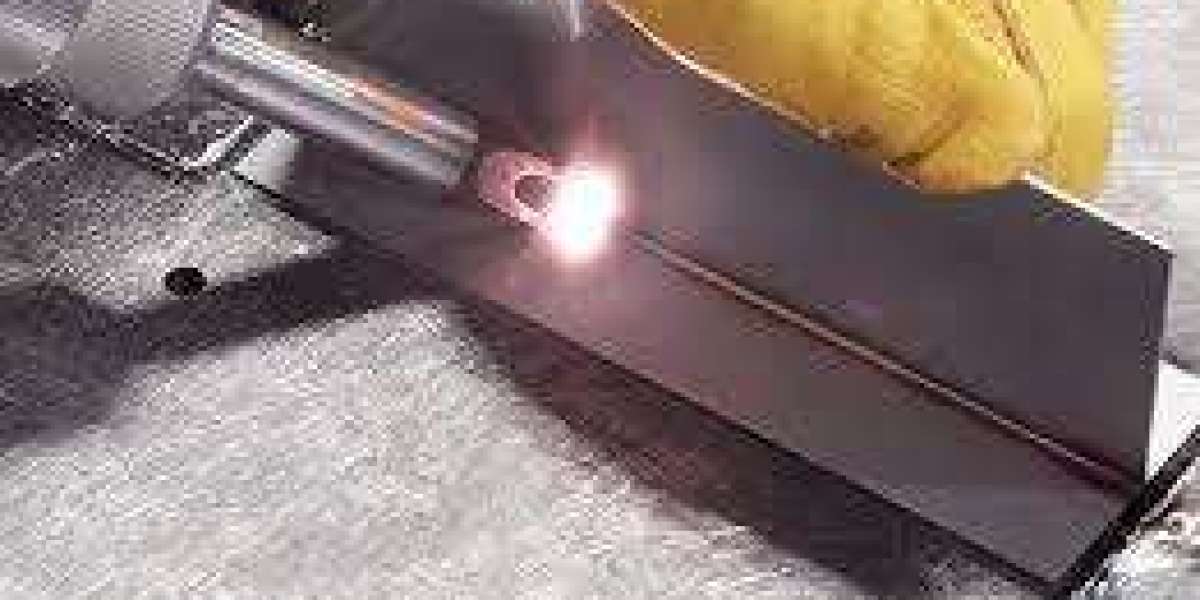

A Laser Beam Welding Tool is an advanced industrial solution designed to join metal components with exceptional precision, speed, and consistency. As modern manufacturing continues to demand higher production efficiency and superior product quality, laser welding technology has become an important choice for industries seeking reliable metal-joining solutions. By using a concentrated laser beam to generate heat, this technology creates strong, precise, and clean welds across various metal materials.
LaserChina is dedicated to providing advanced laser technology and industrial equipment solutions that support modern manufacturing requirements. With a focus on precision, performance, and innovation, LaserChina helps businesses explore advanced laser welding solutions for different industrial applications.
What Is a Laser Beam Welding Tool?
A Laser Beam Welding Tool is a specialized welding system that uses a highly concentrated laser beam to melt and join metal surfaces. The laser energy is directed toward a specific welding area, creating a controlled heat source that allows materials to fuse together. Once the molten metal cools and solidifies, it forms a strong and durable joint.
Unlike conventional welding methods that use broader heat sources, laser beam welding concentrates energy into a small area. This makes it suitable for applications requiring accurate welding, controlled heat input, and consistent results.
Modern laser welding tools can be integrated into manual, automated, and robotic manufacturing systems. This flexibility allows manufacturers to select suitable equipment according to their production requirements, material types, and welding applications.
How Does Laser Beam Welding Technology Work?
Laser beam welding works by generating a high-energy laser beam and directing it onto the surface of the materials being joined. The concentrated energy heats the metal until it reaches its melting point. The molten areas then combine to create a welding joint.
The main working process includes several important stages:
Laser Generation: The laser source produces a concentrated beam of energy.
Beam Transmission: Optical components guide the laser toward the welding position.
Material Heating: The focused beam heats the metal surfaces within the welding area.
Material Fusion: The heated materials melt and combine to form a joint.
Cooling and Solidification: The molten metal cools, creating a strong welded connection.
This controlled process makes a Laser Beam Welding Tool valuable for manufacturers that require accurate and repeatable welding performance.
Key Advantages of a Laser Beam Welding Tool
1. High Welding Precision
One of the biggest advantages of laser beam welding is its exceptional precision. The concentrated laser beam allows operators to target specific welding areas with excellent control. This is particularly useful when working with small components, intricate designs, and products that require accurate joints.
Industries producing electronic components, automotive parts, and precision machinery can benefit from this level of welding accuracy.
2. Fast Welding Performance
Production speed plays an important role in industrial manufacturing. A modern Laser Beam Welding Tool can provide fast welding performance, helping manufacturers improve production efficiency and complete projects within shorter production cycles.
Its concentrated energy delivery supports rapid material heating and efficient welding operations, making it suitable for demanding manufacturing environments.
3. Strong and Reliable Welding Joints
Welding quality directly affects the durability and performance of manufactured products. Laser welding creates strong joints by precisely melting and fusing metal surfaces.
With suitable equipment settings and material preparation, manufacturers can achieve consistent weld quality for a wide range of industrial components.
4. Reduced Heat-Affected Areas
Laser welding delivers energy to a concentrated working area. This helps minimize unnecessary heat exposure around the welding position.
A smaller heat-affected zone can help maintain the original properties and appearance of surrounding materials. It is particularly beneficial when working with thin metal sheets, delicate components, and precision-engineered products.
5. Flexible Industrial Applications
A laser welding system can support different manufacturing requirements. Depending on the laser source, equipment configuration, and process parameters, it can be used for various metal materials and product designs.
This flexibility makes laser welding an attractive technology for businesses serving multiple industries.
Important Features of Modern Laser Beam Welding Tools
Choosing the right welding equipment involves understanding the features that contribute to its performance and usability.
Advanced Laser Source: The laser source determines important aspects of welding performance, including output power, beam characteristics, and processing capabilities.
Precision Welding Head: A well-designed welding head helps direct laser energy accurately toward the target area, supporting stable and consistent welding operations.
Intelligent Control System: Modern control systems allow operators to adjust important welding parameters according to material thickness, joint design, and production requirements.
Efficient Cooling System: Proper cooling helps maintain equipment temperature during operation and supports stable performance during extended production cycles.
User-Friendly Operation: Modern laser welding equipment is designed with practical operating interfaces that make parameter adjustment and production management more convenient.
Applications of Laser Beam Welding Tools Across Industries
Automotive Manufacturing
The automotive industry uses laser welding technology to join different metal components during vehicle production. Applications include body structures, automotive panels, battery components, and precision metal parts.
A Laser Beam Welding Tool supports accurate joints and consistent production quality, making it valuable for modern automotive manufacturing facilities.
Electronics Industry
Electronic products often contain small metal components that require precise joining. Laser welding provides controlled energy delivery, making it suitable for manufacturing electronic housings, connectors, sensors, and other precision components.
Aerospace Manufacturing
Aerospace production requires advanced joining technologies that support high manufacturing standards. Laser welding can be used for selected metal components, precision assemblies, and specialized structural applications.
Its ability to deliver controlled heat input makes it an important option for precision-oriented aerospace manufacturing processes.
Medical Equipment Production
Medical equipment manufacturing involves various precision metal components and specialized assemblies. Laser welding can support the production of surgical instruments, medical device housings, and other metal parts where accurate joining is essential.
Machinery and Industrial Equipment
Manufacturers of industrial machinery frequently work with metal structures, machine components, and fabricated assemblies. Laser welding technology provides an efficient solution for joining suitable metal parts while supporting consistent production quality.
Benefits of Using Laser Beam Welding Tools in Modern Manufacturing
The benefits of laser welding extend beyond the welding process itself. It can contribute to improvements throughout the manufacturing workflow.
Improved Production Efficiency: Fast processing capabilities help manufacturers increase output and manage production schedules more effectively.
Consistent Product Quality: Controlled laser energy delivery supports repeatable welding results across multiple production batches.
Better Product Appearance: Precise welding can produce clean and attractive joints, which is important for products where appearance matters.
Manufacturing Flexibility: Laser welding equipment can accommodate different component shapes, joint configurations, and production requirements.
Automation Compatibility: Laser welding technology can be integrated with robotic systems and automated production lines, helping manufacturers develop more efficient manufacturing processes.
Precision Material Processing: Concentrated energy delivery supports accurate welding of suitable thin and intricate metal components.
How to Choose the Right Laser Beam Welding Tool
Selecting an appropriate Laser Beam Welding Tool is essential for achieving the desired manufacturing results. Businesses should evaluate several factors before choosing their equipment.
First, consider the material type. Different metals have different thermal properties, so the welding system should be suitable for the materials being processed.
Second, evaluate the material thickness. The required laser power and welding parameters depend on the thickness and joint configuration of the workpieces.
Third, examine the production requirements. Manufacturers handling large production volumes may benefit from automated systems, while smaller workshops may prefer flexible handheld solutions.
Another important consideration is the control system and equipment configuration. Reliable parameter adjustment, stable laser output, and suitable cooling capabilities all contribute to effective operation.
Finally, consider the supplier's technical expertise, equipment specifications, product quality, and after-sales support. Working with an experienced laser technology provider can help businesses make informed equipment decisions.
Why Choose LaserChina for Laser Welding Technology?
LaserChina focuses on advanced laser equipment and solutions designed to meet the changing needs of industrial manufacturing. Businesses looking for modern laser processing technologies can explore equipment solutions that support precision, productivity, and manufacturing flexibility.
With an emphasis on industrial applications and laser technology development, LaserChina aims to help manufacturers understand the value of advanced laser equipment.
When evaluating a Laser Beam Welding Tool, customers should consider the intended application, material requirements, welding precision, and production capacity. Selecting equipment with suitable technical specifications helps establish an efficient welding process and supports long-term manufacturing objectives.
LaserChina's commitment to laser technology makes it a valuable brand to consider when exploring modern industrial laser solutions.
Future of Laser Beam Welding Technology
The future of laser welding is closely connected to the development of smart manufacturing, automation, and intelligent production systems. As industries continue to improve their manufacturing processes, laser welding technology is expected to play an increasingly important role.
Developments in fiber laser sources, robotic welding, intelligent monitoring, and digital control systems are helping manufacturers achieve greater process consistency and production efficiency.
Automated laser welding systems can perform repetitive operations with controlled movement and carefully managed parameters. These capabilities support advanced production lines in automotive manufacturing, electronics, machinery, and other industrial sectors.
For manufacturers planning to modernize their operations, investing in suitable laser welding technology can be an important step toward building a more productive and technologically advanced facility.
Final Thoughts on Laser Beam Welding Tools
A Laser Beam Welding Tool is an advanced solution for manufacturers seeking precision, speed, reliable welding joints, and improved production efficiency. Its concentrated energy delivery, flexible applications, automation compatibility, and controlled welding performance make it suitable for a wide range of industrial manufacturing processes.
From automotive components and electronic products to machinery and precision metal assemblies, laser welding technology offers valuable benefits for modern production environments.
LaserChina represents an industrial laser technology brand focused on supporting manufacturers with advanced laser equipment solutions. By choosing the right laser welding system and matching its specifications to specific production requirements, businesses can improve welding quality, enhance manufacturing productivity, and strengthen their industrial capabilities.
As manufacturing continues to evolve, laser welding will remain an important technology for companies seeking precision, innovation, and high-quality metal joining.