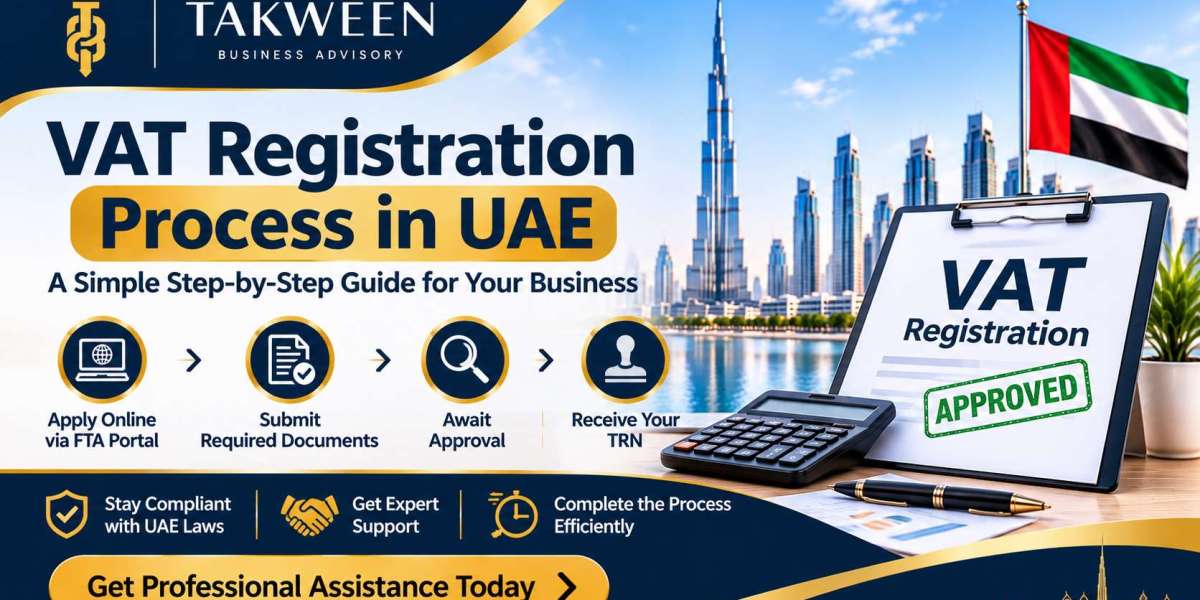

Starting and managing a business in Dubai involves several legal and financial responsibilities, and Value Added Tax (VAT) compliance is an important part of operating in the UAE. Businesses that meet the applicable registration criteria must complete VAT registration with the Federal Tax Authority (FTA) and follow the relevant tax regulations. However, understanding eligibility requirements, preparing documents, and completing the registration application can be challenging, particularly for startups and foreign entrepreneurs unfamiliar with the UAE tax system.
For business owners looking to understand the vat registration process uae, professional assistance can make the entire procedure more organised and straightforward. VAT registration involves several steps, from checking eligibility and gathering supporting documents to submitting an application through the appropriate FTA channels. Working with an experienced business consultancy such as Takween Advisory can help businesses understand their obligations, prepare accurate information, and navigate the registration process with greater confidence.
1. Understanding VAT Registration Requirements in Dubai
Before applying for VAT registration, businesses must determine whether they meet the mandatory or voluntary registration requirements.
In the UAE, mandatory VAT registration generally applies when the value of taxable supplies and imports exceeds AED 375,000 over the previous 12 months or is expected to exceed this threshold within the next 30 days.
Voluntary registration may be available when taxable supplies, imports, or eligible taxable expenses exceed AED 187,500, subject to the applicable conditions.
Professional VAT consultants help businesses understand these thresholds and assess their registration eligibility. This reduces confusion and helps business owners identify the appropriate registration category.
2. Preparing the Required VAT Registration Documents
Documentation is an important part of the VAT registration process. Incomplete or inaccurate information can result in additional queries and delays during application review.
Depending on the business structure and circumstances, commonly requested documents may include:
Valid UAE trade licence.
Certificate of incorporation, where applicable.
Memorandum of Association (MOA), where applicable.
Passport copies of business owners and authorised signatories.
Emirates ID copies of relevant individuals.
Business contact information.
Company bank account details, where applicable.
Sales and purchase invoices.
Supporting financial records.
Details of taxable supplies and business activities.
Professional registration services help business owners identify the relevant documents, organise supporting information, and check the application before submission.
3. Simplifying the FTA Application Process
The Federal Tax Authority manages VAT registration applications through its online services. Businesses must provide accurate information about their legal structure, business activities, financial details, and authorised representatives.
For entrepreneurs who are unfamiliar with the FTA portal, completing the application can be confusing.
Professional VAT registration consultants can guide businesses through important application stages, including:
Understanding the FTA registration requirements.
Creating or accessing the relevant tax account.
Selecting the appropriate registration category.
Entering company and ownership information.
Providing financial and business details.
Uploading supporting documents.
Reviewing application information before submission.
This structured approach helps reduce common application errors and makes the process easier to manage.
4. Reducing Documentation Errors and Application Delays
Incorrect business information, missing documents, and inconsistent financial details can create complications during VAT registration.
For example, differences between trade licence information and application details may lead to additional clarification requests.
Professional VAT consultants review the information provided by business owners and help identify potential inconsistencies before submission.
Their guidance can help businesses:
Maintain consistency across supporting documents.
Provide accurate business information.
Identify missing documentation.
Understand additional information requests.
Respond appropriately to FTA queries.
Although registration approval and processing timelines depend on the FTA, proper preparation can help minimise avoidable errors.
5. Helping Businesses Understand VAT Responsibilities
VAT registration is not the final step in tax compliance. Once a business is registered, it must understand its ongoing responsibilities under UAE VAT regulations.
These responsibilities may include:
Issuing VAT-compliant tax invoices.
Maintaining appropriate accounting records.
Tracking input and output VAT.
Filing VAT returns within applicable deadlines.
Paying VAT liabilities when due.
Keeping business and registration information updated.
Professional consultants can explain these responsibilities and help business owners understand how VAT affects their daily financial operations.
This is particularly useful for startups that do not have an in-house accounting or tax department.
6. Supporting Startups and Foreign Entrepreneurs
Startups and foreign investors may face additional challenges when establishing businesses in Dubai. They may be unfamiliar with local tax regulations, administrative procedures, and the documentation expected by the authorities.
Professional VAT registration services provide practical guidance throughout the registration journey.
Consultants can help entrepreneurs understand whether their business activities fall within the VAT framework, determine registration eligibility, and prepare the necessary supporting information.
Takween Advisory helps entrepreneurs navigate business-related administrative requirements in the UAE. Its professional guidance can help business owners approach VAT registration with a clearer understanding of the process.
7. Why Choose Professional VAT Registration Services from Takween Advisory?
Selecting an experienced consultancy can make VAT registration more manageable, especially for business owners handling multiple operational responsibilities.
Takween Advisory supports businesses by helping them understand registration requirements, organise documentation, and navigate relevant administrative procedures.
Professional assistance can benefit businesses through:
Clear guidance on VAT registration eligibility.
Support with document preparation.
Assistance with understanding FTA application requirements.
Guidance on registration-related queries.
Better awareness of post-registration compliance responsibilities.
With the right professional support, entrepreneurs can spend more time developing their businesses while managing their tax obligations responsibly.
Frequently Asked Questions (FAQs)
1. What is the VAT registration process in Dubai?
The process involves checking registration eligibility, preparing the required business and financial documents, completing the VAT application through the FTA portal, and submitting it for review and approval.
2. When is VAT registration mandatory in the UAE?
VAT registration is generally mandatory when taxable supplies and imports exceed AED 375,000 over the previous 12 months or are expected to exceed this amount within the next 30 days.
3. Can a small business voluntarily register for VAT in Dubai?
Yes. Eligible businesses can apply voluntarily when their taxable supplies, imports, or qualifying taxable expenses exceed AED 187,500, subject to applicable FTA conditions.
4. What documents are required for VAT registration in Dubai?
Common documents include a valid trade licence, incorporation documents, passport and Emirates ID copies of relevant individuals, financial records, business information, and supporting invoices.
5. How can professional VAT registration services help businesses?
Professional consultants help assess eligibility, prepare documentation, complete application information, understand FTA requirements, and navigate registration-related queries.
6. Can foreign entrepreneurs apply for VAT registration in the UAE?
Yes. Foreign-owned businesses operating in the UAE can apply for VAT registration when they meet the relevant registration requirements.
7. What happens after VAT registration is approved?
The business receives a Tax Registration Number (TRN) and VAT registration certificate. It must then comply with applicable invoicing, recordkeeping, VAT return filing, and payment obligations.
8. Why should businesses choose Takween Advisory for VAT registration assistance?
Takween Advisory provides business consultancy support to help entrepreneurs understand UAE administrative requirements, organise documentation, and navigate VAT registration procedures.
Conclusion
VAT registration is an important compliance responsibility for businesses operating in Dubai. Although the process involves eligibility checks, documentation, and FTA application procedures, professional assistance can make each stage easier to understand and manage.
By working with experienced consultants, businesses can reduce documentation mistakes, understand their tax obligations, and prepare for ongoing VAT compliance. Takween Advisory helps entrepreneurs navigate essential business procedures and approach VAT registration with greater confidence, allowing them to focus on building and growing their businesses in the UAE.