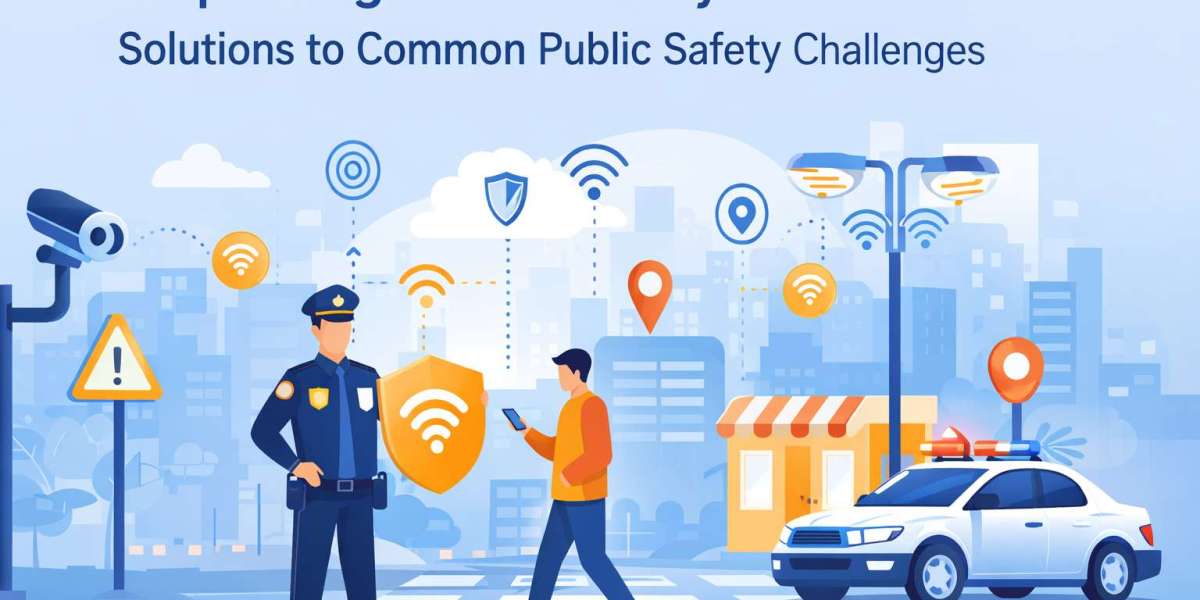

Urban safety has become a central concern for city governments worldwide. Rapid urbanization, aging infrastructure, rising traffic density, and evolving security threats have increased operational pressure on municipalities. According to the United Nations, nearly 68% of the global population will live in urban areas by 2050. At the same time, Gartner estimates that there will be more than 25 billion connected IoT devices deployed globally in the coming years. Additionally, IDC reports that worldwide spending on smart city initiatives continues to grow steadily, reaching hundreds of billions of dollars annually.
These numbers reflect a clear trend: cities increasingly rely on connected technologies to address public safety challenges. Internet of Things (IoT) systems now support traffic management, surveillance, emergency response coordination, disaster monitoring, and infrastructure protection. This article examines how IoT improves urban safety, the architecture behind these systems, practical implementation strategies, and measurable business impact.
Understanding Urban Public Safety Challenges
Urban safety issues extend beyond crime prevention. Cities face multiple operational and environmental risks:
Road accidents and traffic congestion
Delayed emergency response times
Infrastructure failures (bridges, water systems, power grids)
Natural disasters and climate-related events
Public event crowd management
Cyber threats targeting connected infrastructure
Traditional systems operate in silos. Law enforcement, fire departments, transportation authorities, and utilities often rely on separate communication platforms. That fragmentation reduces visibility and slows response times.
IoT introduces interconnected sensing, real-time analytics, and centralized monitoring. When deployed properly, it enables faster detection and coordinated response.
Core IoT Applications for Urban Safety
1. Smart Surveillance and Video Analytics
Modern IoT-enabled surveillance systems integrate high-resolution cameras with AI-based video analytics. These systems detect:
Suspicious activity
Abandoned objects
Perimeter breaches
Crowd density anomalies
Edge processing reduces latency by analyzing video near the data source. Law enforcement receives alerts in real time rather than reviewing footage after an incident.
Facial recognition and behavioral pattern detection require strong regulatory oversight. Cities must comply with privacy laws and implement transparent data governance policies.
2. Intelligent Traffic Management
Traffic accidents remain a leading cause of urban fatalities. IoT improves traffic safety through:
Connected traffic lights
Vehicle-to-infrastructure (V2I) communication
Real-time congestion monitoring
Adaptive signal timing
Sensors embedded in roadways and intersections collect vehicle count, speed, and density data. Traffic control centers analyze this data to adjust signal cycles dynamically.
Emergency vehicles benefit significantly. Smart traffic systems can create priority corridors by automatically switching lights along a route.
3. Emergency Response Optimization
IoT devices installed in public spaces, buildings, and vehicles transmit live data to emergency operations centers. For example:
Smart fire alarms report exact temperature gradients
Gas sensors detect leaks in industrial zones
Wearable devices track firefighter biometrics
Integrated dashboards give responders situational awareness before arrival. This reduces response time and improves safety outcomes for both civilians and personnel.
4. Environmental and Disaster Monitoring
Cities face increased flooding, heatwaves, and air pollution. IoT sensors monitor:
River water levels
Seismic activity
Air quality index
Structural vibrations in bridges
Early-warning systems trigger alerts when thresholds exceed safe limits. Authorities can evacuate areas before conditions escalate.
5. Critical Infrastructure Protection
Water plants, power grids, and transportation hubs rely on industrial IoT sensors for predictive maintenance. These systems detect unusual vibration patterns, pressure fluctuations, or voltage irregularities.
Predictive alerts reduce catastrophic failures and enhance resilience against both physical and cyber threats.
Technical Architecture of an Urban IoT Safety System
A well-designed architecture ensures reliability, scalability, and security. The typical stack includes:
1. Device Layer
Cameras
Environmental sensors
Traffic detectors
Wearable safety devices
Devices collect raw data continuously.
2. Network Layer
5G
LPWAN (LoRaWAN, NB-IoT)
Fiber backbone
Secure communication protocols transmit encrypted data to aggregation points.
3. Edge Layer
Edge gateways process time-sensitive data locally. They filter noise, compress video streams, and trigger immediate alerts without waiting for cloud processing.
4. Cloud Platform
Cloud systems store historical data and run advanced analytics models. Machine learning algorithms identify patterns and anomalies.
5. API and Integration Layer
APIs connect law enforcement systems, traffic control dashboards, emergency services, and mobile applications.
6. Security Layer
End-to-end encryption
Zero-trust access control
Device authentication
Security information and event management (SIEM) tools
A reputable IoT development company typically designs architecture with security built into each layer rather than added afterward.
Real-World Case Example: Singapore’s Smart Nation Initiative
Singapore has implemented one of the most advanced urban IoT deployments under its Smart Nation program. Authorities deployed thousands of sensors and connected cameras across public housing estates and transport corridors.
Key safety outcomes include:
Faster detection of illegal parking and road hazards
Improved flood monitoring through water-level sensors
Centralized command center integration
The city also enforces strict data governance standards to maintain public trust. Agencies use anonymization and data minimization techniques where possible.
This example demonstrates how coordinated governance and strong technical architecture create measurable safety improvements.
Risk vs Control in Urban IoT Deployments
Risk Category | Example Threat | IoT Control Mechanism | Impact Reduction |
Cybersecurity | Device hijacking | Strong authentication & encrypted firmware | Prevents unauthorized control |
Data Privacy | Surveillance misuse | Role-based access & audit trails | Maintains compliance |
Network Failure | Connectivity loss | Redundant networks & edge processing | Ensures uptime |
Data Overload | Excessive false alerts | AI filtering at edge | Reduces operator fatigue |
System Integration | Siloed departments | Unified API gateway | Improves coordination |
Cities that partner with an experienced iot solution provider typically address these risk categories during the planning stage.
Implementation Strategy for Municipalities
Cities should avoid large-scale deployments without phased validation. A practical approach includes:
Conducting a safety risk assessment
Prioritizing high-impact zones
Launching pilot programs
Measuring KPIs such as response time and incident rates
Expanding deployment based on validated results
Procurement teams should evaluate vendors on:
Security certifications
Interoperability standards
Long-term support capability
Compliance with regional data regulations
A qualified IoT development company will provide technical documentation, integration roadmaps, and lifecycle maintenance planning.
ROI and Measurable Business Impact
Urban IoT investments generate both direct and indirect returns.
1. Reduced Incident Costs
Smart traffic systems lower accident rates. Fewer collisions reduce medical, insurance, and litigation expenses.
2. Lower Infrastructure Repair Costs
Predictive maintenance prevents catastrophic failures. Cities avoid emergency repair premiums.
3. Improved Emergency Response Time
Studies show that real-time dispatch coordination can reduce response times by 15–25%, directly affecting survival rates in medical emergencies.
4. Insurance and Liability Benefits
Documented monitoring reduces legal exposure in public incidents.
5. Operational Efficiency
Automation reduces manual monitoring requirements in traffic and surveillance centers.
When municipalities measure ROI, they often track:
Incident reduction percentage
Mean response time improvement
Maintenance cost savings
Insurance premium adjustments
Most cities report payback periods between 3 to 5 years, depending on deployment scale.
Governance and Ethical Considerations
Urban IoT systems must balance safety with civil liberties. Authorities should:
Publish transparent data usage policies
Implement citizen oversight committees
Conduct regular cybersecurity audits
Ensure compliance with national privacy laws
Public trust determines long-term program success. Without transparency, adoption faces resistance.
Future Outlook
The next wave of urban IoT safety will incorporate:
AI-driven predictive policing models
Digital twins for infrastructure simulation
Autonomous vehicle integration
Cross-border data interoperability
As 5G networks expand and edge computing matures, latency will decrease further. Cities will gain more granular, real-time control over safety operations.
Final Thoughts
Urban safety challenges require coordinated, data-driven approaches. IoT provides cities with continuous visibility, predictive insights, and faster operational response. However, technology alone does not guarantee safer streets. Success depends on thoughtful architecture, cybersecurity discipline, transparent governance, and measurable performance metrics.
Municipal leaders who combine these elements build resilient, safer urban environments prepared for future challenges.
Frequently Asked Questions (FAQs)
1. How does IoT reduce emergency response time?
IoT provides real-time data from sensors and connected vehicles. Dispatch centers access accurate incident details immediately and route responders efficiently.
2. What is the biggest security risk in urban IoT systems?
Device-level vulnerabilities pose a significant risk. Strong authentication, encrypted firmware, and regular patching reduce exposure.
3. Can small cities afford IoT safety solutions?
Yes. Cities can start with targeted pilot projects, such as smart intersections or flood monitoring systems, before expanding.
4. How does edge computing improve public safety?
Edge devices process time-sensitive data locally. This enables instant alerts without waiting for centralized cloud analysis.
5. What role does an iot solution provider play?
An experienced provider designs architecture, integrates systems, manages security, and ensures regulatory compliance throughout deployment.