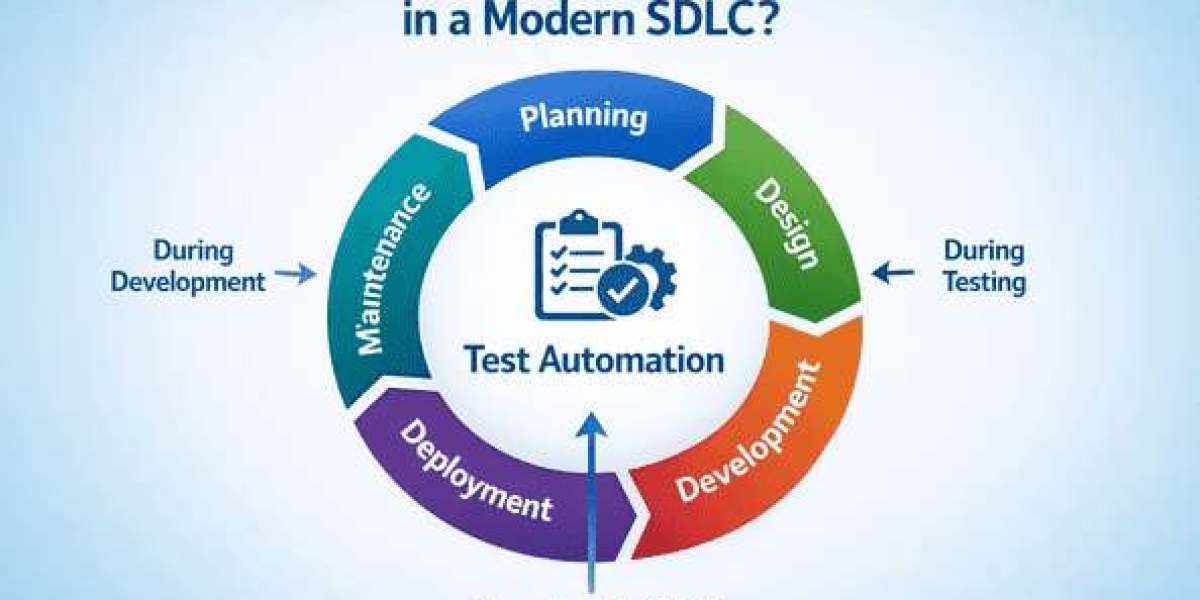

Test automation is no longer a side activity handled late in the release cycle. In modern software development life cycles (SDLCs), it plays a central role in how teams manage risk, deliver faster, and maintain confidence as systems evolve. Yet many teams still struggle with where test automation should actually live—both in the process and in the organization.
This article explores how test automation fits into a modern SDLC, what has changed compared to traditional models, and how teams can place automation where it delivers real value instead of friction.
How the SDLC Has Changed
Modern SDLCs are iterative, continuous, and highly automated. Continuous integration, continuous delivery, and frequent deployments mean feedback loops must be short and reliable. Testing can no longer be treated as a phase that happens after development is “complete.”
In this environment, test automation becomes a mechanism for continuous validation rather than a gate at the end of the pipeline. The focus shifts from asking when to test to understanding how quickly teams can detect risk.
Test Automation Starts Before Code Is Written
In a modern SDLC, test automation often begins earlier than many teams expect. During planning and design, teams define acceptance criteria, contracts, and expected behaviors that later translate into automated checks.
This early alignment reduces ambiguity and prevents defects from moving downstream. When automation is driven by intent rather than implementation details, it strengthens shared understanding across teams.
Test Automation During Development
During active development, test automation provides fast, local feedback to engineers. Unit tests, component tests, and API-level checks validate behavior as changes are introduced.
At this stage, the goal is not maximum coverage but high signal. Tests should help developers understand whether a change is safe without slowing them down. Well-placed automation here enables confident refactoring and supports small, incremental changes.
Integration and System-Level Validation
As features come together, test automation shifts focus toward integration points. APIs, services, and workflows are validated to ensure they behave correctly when combined.
This layer often delivers the highest return on investment. Integration tests catch issues that unit tests cannot, while remaining faster and more stable than heavy end-to-end UI tests. Some modern tools, including Keploy, demonstrate how validating real API behavior can make this layer both resilient and maintainable.
Test Automation in CI/CD Pipelines
CI/CD pipelines are where test automation becomes operational. Automated tests act as confidence signals that guide decisions around promotion, rollback, and release readiness.
In a modern SDLC, not every test runs on every commit. Fast, high-signal tests run continuously, while slower or broader suites are triggered selectively. This layered execution model keeps pipelines efficient without sacrificing reliability.
Test Automation Beyond Pre-Production
Modern SDLCs increasingly blur the line between pre-production and production validation. Monitoring, observability, and synthetic checks complement traditional test automation by providing real-world feedback.
Production insights help teams understand which tests matter most and where gaps exist. Instead of treating release as the end of testing, teams use production signals to refine and improve future automation.
Ownership and Responsibility
Where test automation belongs is also an ownership question. In modern teams, automation is a shared responsibility. Developers, QA engineers, and platform teams collaborate to ensure tests remain relevant and trustworthy.
When test automation is owned collectively, it reflects real engineering priorities instead of becoming a disconnected quality artifact.
Common Misplacements of Test Automation
Many teams misplace test automation by over-investing in brittle UI tests or isolating all automation into a late-stage phase. These approaches slow feedback and increase maintenance costs.
In a modern SDLC, test automation works best when it is distributed across stages, aligned with risk, and continuously refined as the system evolves.
The Right Place for Test Automation Today
Test automation belongs everywhere risk exists, but not in the same form everywhere. Early stages benefit from fast, focused checks. Later stages require broader behavioral validation. Production feedback closes the loop.
When placed thoughtfully, test automation becomes an enabler of speed rather than a constraint. It supports modern development by making change safer, not by trying to prevent it.