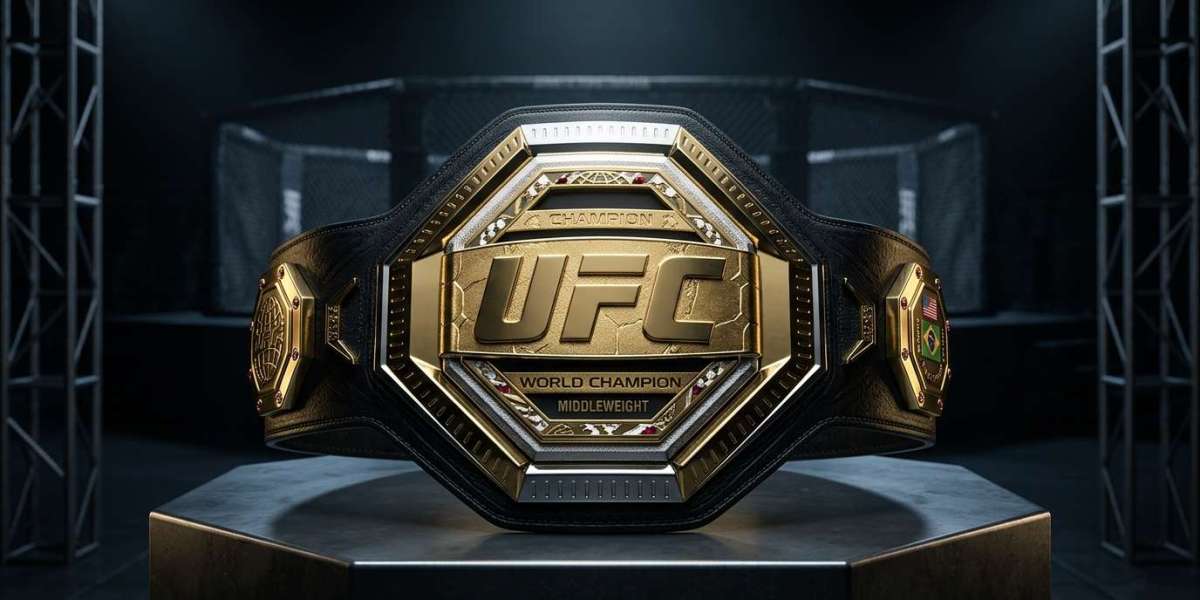

In the world of professional combat sports, the UFC belt stands as the definitive measure of technical superiority. While fans often focus on the spectacle of a knockout or the intensity of a submission, the championship title serves as the ultimate recognition of a fighter’s ability to master every facet of the fight game. Achieving this status requires a rare combination of physical conditioning, tactical intelligence, and adaptability.
In this article, we delve into the technical nuances that define a champion and explain why the UFC belt is the most difficult achievement in modern athletics.
The Mastery of Multiple Disciplines
The era of the "specialist" in the UFC has effectively ended. To compete for a championship today, a fighter must be proficient in a diverse array of martial arts, including wrestling, Brazilian Jiu-Jitsu (BJJ), Muay Thai, and Western boxing. The UFC belt is not just awarded for winning; it is awarded for demonstrating the ability to neutralize an opponent's greatest strength while exploiting their weaknesses across all three phases of combat.
The Wrestling Baseline
Modern champions almost universally possess a high level of wrestling competence. This is not necessarily to secure takedowns, but for defensive purposes. An elite wrestler can dictate where the fight takes place. If a striker cannot stop a wrestler from clinching them against the fence, they lose their ability to utilize their speed and range. The champion’s belt is often held by those who have the best "takedown defense," allowing them to force their opponents to fight on their own terms.
The Evolution of Brazilian Jiu-Jitsu
BJJ in the UFC has moved beyond the hunt for spectacular submissions. Champions now utilize "positional dominance." They focus on controlling the opponent's hips and posture to land strikes, which creates openings for submissions. The transition from a defensive position to a match-ending maneuver is the hallmark of a true title contender.
Tactical Intelligence: The "Fight IQ" Factor
Physical talent will get a fighter into the Top 10, but "Fight IQ" is what earns them the UFC belt. This refers to the ability to make split-second decisions under extreme duress.
Distance Management: A champion understands the "danger zone." They know exactly how far they need to be to land their strikes while remaining out of range of their opponent's counters. This spatial awareness is refined over thousands of hours of sparring.
Pacing and Energy Efficiency: A five-round title fight is a marathon, not a sprint. Champions do not waste energy on unnecessary movements. They expend effort only when it creates a clear tactical advantage, such as changing levels for a takedown or throwing a combination that forces an opponent to defend.
Adaptability: The best fighters have "Plan B." If their primary strategy is neutralized, they have the technical breadth to shift their approach mid-fight. Watching a champion adjust their stance or strategy between rounds is a masterclass in professional intelligence.
The Physical Architecture of a Champion
While we often focus on the mental and technical aspects, the physical requirements for a UFC title are extreme. The human body is pushed to its absolute limits during an eight-to-ten-week championship training camp.
The Importance of Core Stability
Everything in the Octagon—from throwing a punch to sprawling to stop a takedown—originates in the core. Champions invest heavily in rotational core strength, which allows them to generate power from awkward angles. This is why a punch from a champion often looks "effortless" yet carries the force to end a fight instantly.
Cardiovascular Resilience
The ability to maintain a high-intensity output for 25 minutes is the most significant physical barrier for contenders. Many fighters look world-class in the first two rounds, only to fade under pressure. A champion’s cardiovascular system is conditioned to handle the adrenaline dump and the physical fatigue that comes with high-stakes combat. This is achieved through specific anaerobic threshold training, ensuring they remain dangerous until the final bell.
The Evolution of Coaching Systems
The rise of the "Super Camp" has changed the game. Fighters now surround themselves with specific coaches for each discipline: a striking coach, a wrestling coach, and a BJJ coach, all orchestrated by a head coach who oversees the overall strategy. This specialization ensures that a champion is never "missing a piece" of their game. They are constantly exposed to new techniques and training methodologies, which keeps them ahead of the curve.
Why the UFC Belt Stays at the Top
The design and meaning of the UFC belt have remained constant even as the sport has evolved. It represents the pinnacle because the competition is truly global. With the UFC scouting talent from every continent, the path to the title is filled with the most diverse and dangerous athletes in history. Holding the belt means you have proven yourself against styles and techniques that are constantly changing, making it the most difficult trophy to defend in professional sports.
Conclusion: The Technical Gold Standard
The UFC belt is more than just a symbol; it is the physical manifestation of technical mastery. For the fans, it provides a clear hierarchy and a goal for every competitor to strive toward. For the fighters, it is the validation of a life spent studying the art of combat. As the sport continues to advance, the technical requirements for the title will only increase, ensuring that whoever wears the gold remains, indisputably, the best fighter in the world.