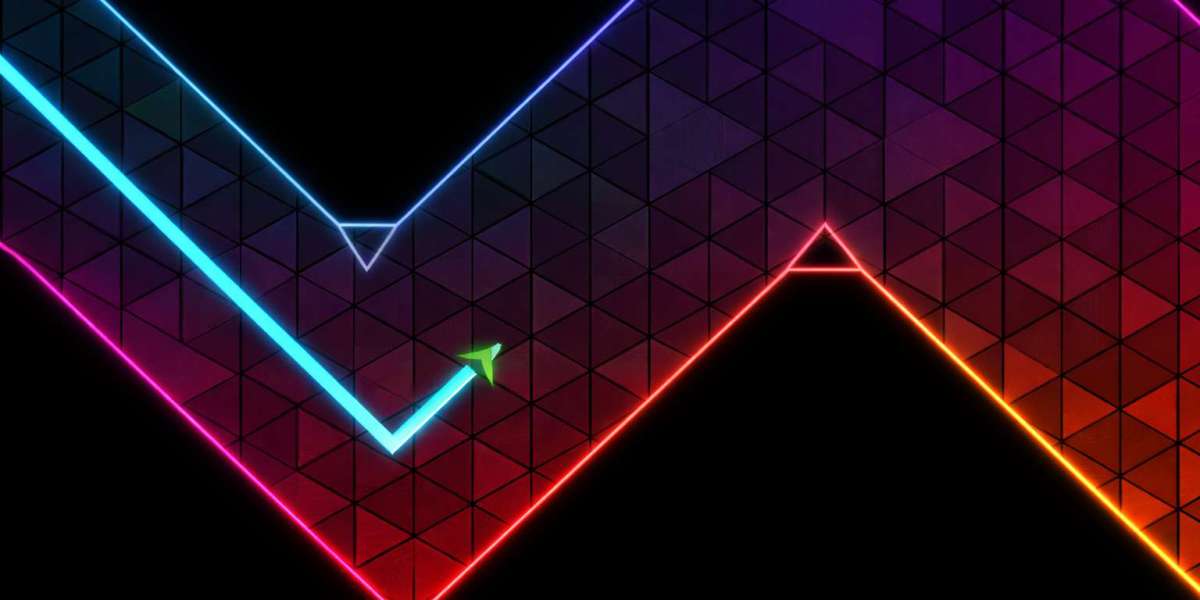

Geometry Dash is often described as simple on the surface but incredibly deep in practice. Created by Robert Topala under RobTop Games , the game challenges players with fast reactions and precise timing. Among all its forms, the wave mode—sometimes called “wwave”—offers a completely different experience. Rather than just being another mechanic, the wave can be seen as a symbol of mastery, discipline, and even creativity within the game.
The Wave as a Language of Movement
The wave mode is unique because it turns movement into a kind of visual language. Instead of jumping or flying freely, the player creates a zigzag pattern that reflects every input they make. Each tap or hold becomes a “stroke,” almost like drawing lines on the screen.
This makes wave gameplay feel less like controlling a character and more like shaping motion itself. Skilled players can create smooth, controlled patterns that look elegant, while beginners often produce uneven and chaotic lines. In this way, the wave mode visually represents a player's level of skill.
Rhythm Beyond Music
Although Geometry Dash is built around music, the wave mode introduces a different kind of rhythm. It is not just about following the beat of the song, but about maintaining a consistent internal rhythm.
Players must develop a sense of timing that goes beyond what they hear. Their inputs must form a steady pattern, especially in tight sections. This creates a balance between external rhythm (music) and internal rhythm (player control), making the gameplay more complex and engaging.
The Psychology of Precision
Wave gameplay is as much mental as it is physical. The pressure of tight spaces and fast speeds can cause players to panic, leading to mistakes. Staying calm is essential.
Interestingly, many players perform better when they stop overthinking. Instead of consciously reacting to every obstacle, they rely on instinct and muscle memory. This mental shift—from active thinking to automatic execution—is a key part of mastering the wave.
Failure as a Learning Tool
One of the defining features of wave gameplay is how often players fail. Crashing into obstacles can repeatedly be frustrating, but it also creates a powerful learning process. Each failure provides immediate feedback, showing exactly where the mistake happened.
Over time, players begin to recognize patterns and adjust their movements. This trial-and-error approach helps build precision and confidence. In this sense, the wave mode teaches persistence and resilience.
Minimalism and Difficulty
The design of the wave mode is surprisingly minimal. It uses only one main input and simple diagonal movement. Yet from this simplicity comes extreme difficulty.
This reflects a broader idea in game design: simple rules can create complex challenges. The wave mode does not rely on complicated mechanics. Instead, it pushes a basic concept—direction control—to its limits. This is part of what makes it so satisfying to master.
Expression Through Gameplay
Beyond difficulty, the wave mode allows for personal expression. Different players have different styles of control. Some prefer smooth, flowing movements, while others use quick, sharp inputs.
Level creators also use the wave to express creativity. They design patterns that feel unique, sometimes matching the music or creating visual illusions. This turns wave sections into more than just obstacles—they become a form of digital art.
Community Identity and Skill Recognition
In the community of Geometry Dash , wave skill is often seen as a badge of honor. Players who can handle complex wave sections are respected for their precision and dedication.
This has led to a kind of identity around the wave. Some players even specialize in it, focusing on improving their control and completing wave-heavy levels. The mode has become a way for players to prove their skill and stand out.
The Balance Between Frustration and Satisfaction
The wave mode creates a unique emotional experience. On one hand, it can be extremely frustrating, especially when players fail repeatedly. On the other hand, success feels incredibly rewarding.
This balance is what keeps players engaged. The difficulty makes every achievement meaningful. Completing a hard wave section is not just about progress—it feels like overcoming a real geometry dash wave challenge.
Conclusion: The Essence of Mastery
The wave mode in Geometry Dash represents the essence of what makes the game special. It takes a simple idea and transforms it into a deep, challenging, and expressive experience.
More than just a gameplay mechanic, the wave is a test of focus, a tool for creativity, and a symbol of skill. For many players, mastering the wave is not just a goal—it is a journey that defines their experience with Geometry Dash .